What Hyundai certified collision repair actually means
Hyundai certified collision repair is a manufacturer-backed designation given to independent body shops that meet specific standards for training, tooling, equipment, and repair procedures. The certification means a shop has invested in required equipment and agreed to follow Hyundai's repair procedures. It does not mean Hyundai owns or operates the shop — many certified facilities are entirely independent businesses.
What Hyundai collision center requirements cover
To earn certification, shops have to satisfy requirements across four main areas:
Technician training and I-CAR certification
Hyundai requires key personnel to hold current credentials from the Inter-Industry Conference on Auto Collision Repair (I-CAR). I-CAR Gold Class means the entire shop maintains ongoing training across all repair disciplines. Beyond that, Hyundai provides vehicle-specific training covering materials, structural design, and safety systems in its current lineup — including advanced high-strength steel, aluminum components, and ADAS.
Specialized equipment
Modern collision repair needs equipment that many general shops don't have:
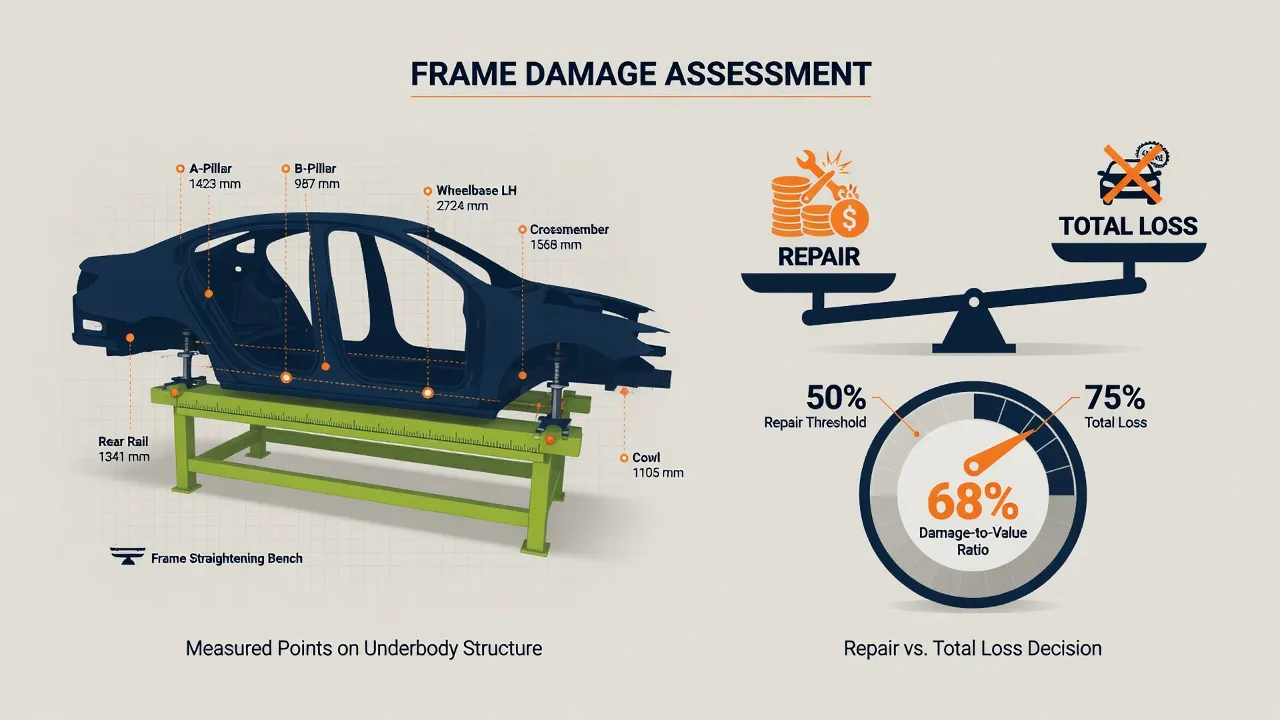
- Structural measuring and straightening systems meeting Hyundai's unibody construction tolerances
- Aluminum repair equipment with dedicated tools to prevent metal cross-contamination
- Welding equipment configured for specific Hyundai steel grades
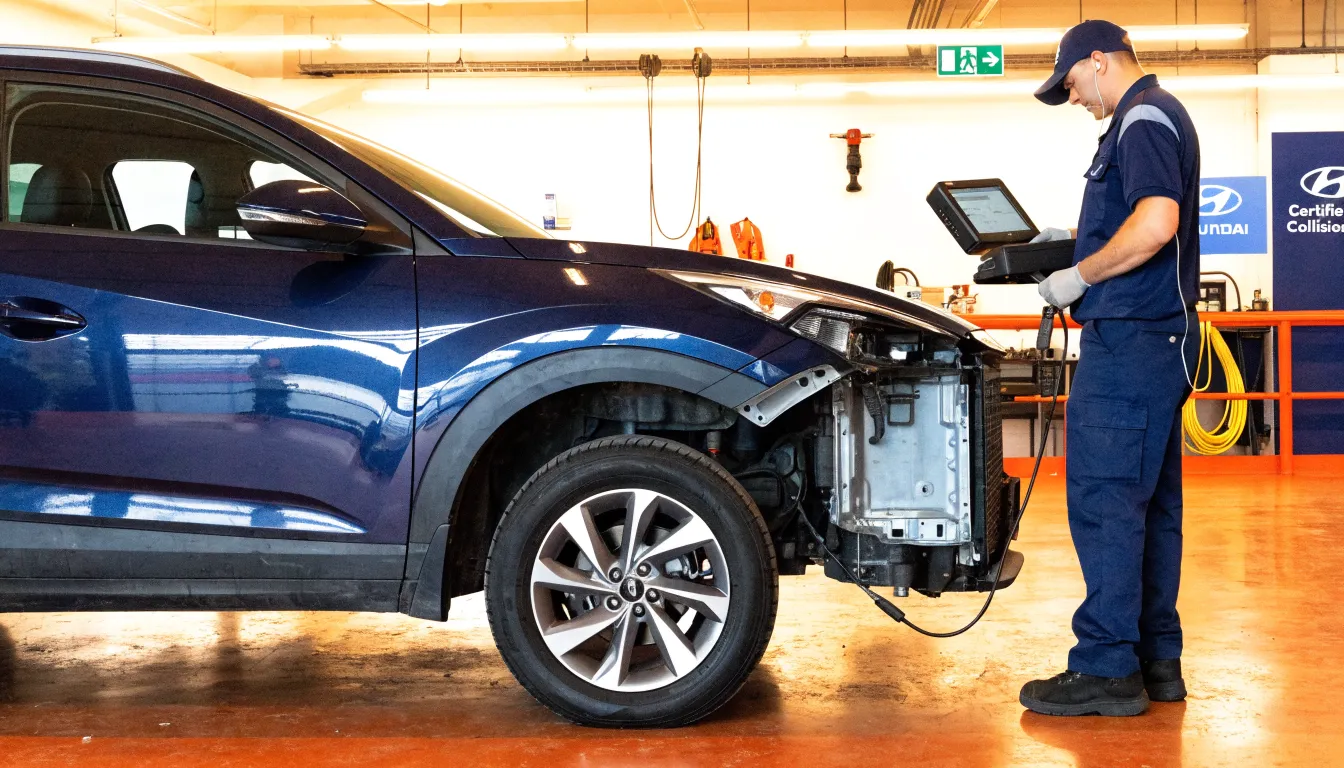
- ADAS calibration tools for the sensors, cameras, and radar units that need recalibration after structural repairs
OEM parts and repair documentation
Certified shops must use Hyundai OEM parts — components manufactured to Hyundai's specifications — rather than generic aftermarket alternatives. They also have to follow Hyundai's published repair procedures, which are accessible through the automaker's technical information systems.
How shops become certified Hyundai repair shops
Shops apply through Hyundai Motor America or regional representatives. Hyundai checks the applicant's equipment, staffing, and training against program requirements. Any gaps have to be closed before certification is granted — which is why not every well-regarded shop qualifies. The equipment investment alone can be substantial, which explains why certified shops aren't evenly distributed across all markets.
Certification isn't permanent. Shops go through periodic re-verification and have to maintain training currency and equipment standards to stay in the network.
OEM vs. aftermarket parts: what Hyundai owners should understand
Hyundai OEM parts are manufactured to the same specifications as original components — matching exact dimensions, material grades, and coatings. They typically need less adjustment during installation and preserve the vehicle's original structural performance if it's in another collision.
Aftermarket parts are made by third parties and are generally less expensive, but quality varies a lot. Some earn CAPA certification, which tests for fit and finish. Others are untested imports. For cosmetic panels on older vehicles, aftermarket parts can make financial sense. For structural components or safety systems, OEM parts are the more conservative choice.
The Insurance Institute for Highway Safety has documented how structural integrity affects crash outcomes — and that principle applies directly to repair quality.
Hyundai's certification program requires OEM parts, which is one of the key things that separates certified shops from standard repair facilities.
What happens with your warranty?
The Magnuson-Moss Warranty Act generally prevents manufacturers from voiding warranties just because an independent shop did the repairs. But if a non-certified shop does improper structural work that causes subsequent problems, Hyundai may deny related warranty claims. Using a certified facility eliminates that ambiguity — repairs are documented and they follow Hyundai's procedures.
A real-world scenario: what certification meant for one Hyundai owner
Marcus owned a Hyundai Sonata Hybrid that got rear-ended at moderate speed. Damage looked cosmetic at first, but the adjuster flagged potential structural damage to the rear subframe. His insurer directed him to a DRP shop — a solid general facility, but not Hyundai certified. When Marcus asked whether the shop was equipped to handle the Sonata Hybrid's battery area and rear structural components, he didn't get a clear answer.
He found a certified Hyundai collision center 12 miles away. The shop followed Hyundai's rear structural repair procedure, replaced the subframe with OEM parts, and ran post-repair ADAS calibration. He got written documentation. The certified shop cost about $400 more than the DRP estimate, but his insurer recovered part of that after reviewing the itemized OEM parts costs.
Insurance considerations for Hyundai certified body shops
Car owners have the right to choose their own repair facility. Most states explicitly protect this. Insurers can recommend shops, but they generally can't legally require a specific one. When an insurer pushes toward a non-certified shop, owners can decline and ask for a certified Hyundai shop instead.
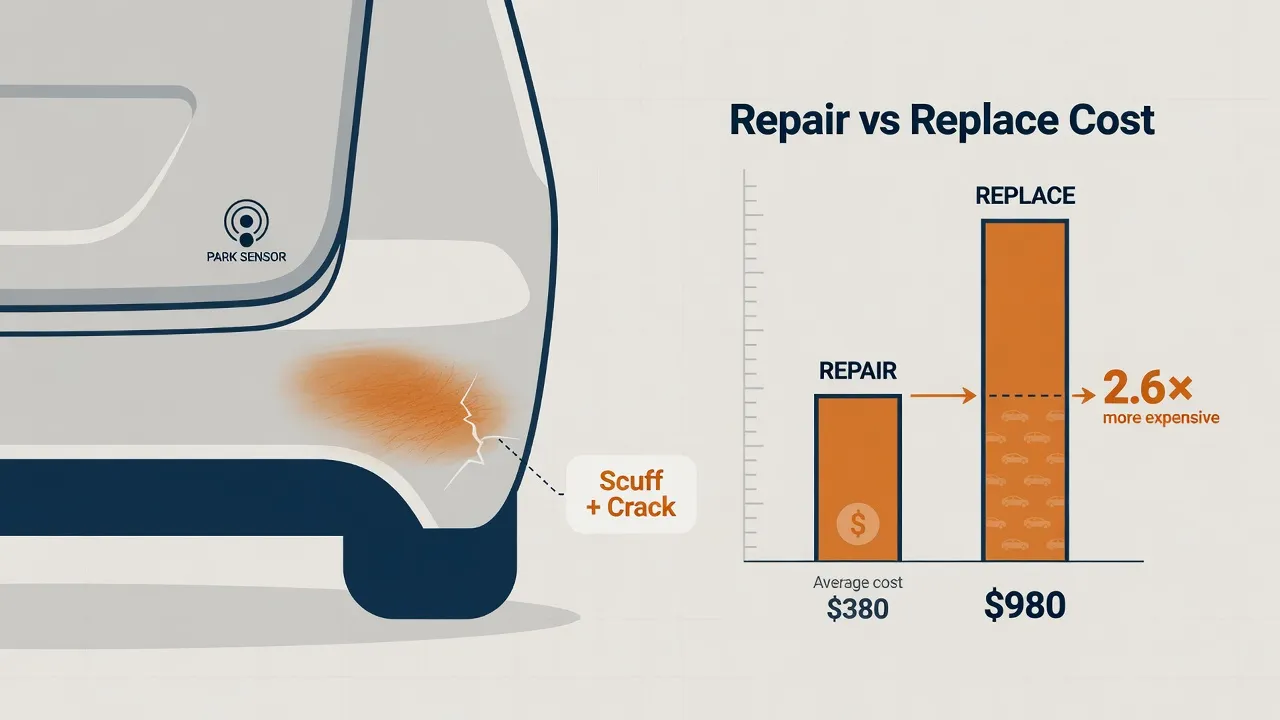
Insurers may push back on OEM parts costs. Some insurers default to authorizing aftermarket or salvage parts because OEM costs more. Certified shops typically advocate for OEM parts with documentation explaining why they're necessary. Owners can negotiate directly, and some states regulate the right to OEM parts on newer vehicles — worth checking before authorizing any repairs.
Initial estimates often need supplements. Structural issues only become visible after teardown. Certified shops routinely submit revised documentation as additional damage is found.
How to find a certified Hyundai body shop near you
Use Hyundai's official locator
Hyundai Motor America maintains a certified collision center locator on its website, searchable by ZIP code. This is the most reliable starting point — certification status changes, and third-party lists go stale.
Verify the certification directly
Shops sometimes display Hyundai certification logos after their certification has lapsed. Before committing, ask for current certification documentation and confirm it's through Hyundai's program specifically, not just a generic certification.
Questions worth asking:
- Is this shop currently enrolled in Hyundai's certified collision center network?
- Do technicians hold current I-CAR credentials and Hyundai-specific OEM training?
- Will repairs use Hyundai OEM parts?
- Does the shop have calibration equipment for Hyundai ADAS systems?
Check additional credentials
Hyundai certification matters, but other signals do too. I-CAR Gold Class indicates ongoing shop-wide training. ASE credentials reflect individual technician competency. Reviews specifically mentioning Hyundai repairs, structural work, or supplement experience with insurers give useful real-world context.
Maria's experience: finding a certified shop after an insurance dispute
Maria owned a three-year-old Hyundai Elantra that got sideswiped in a parking garage, damaging the driver's door, B-pillar, and surrounding panels. Her insurer's initial estimate was $2,800 and specified aftermarket door components.
After checking her state's insurance rules, Maria learned that insurers must disclose when aftermarket parts are used and must warrant their fit and finish. She contacted a certified Hyundai shop, which confirmed that the B-pillar required OEM structural components per Hyundai's repair procedure — no quality-tested aftermarket alternative existed for that section.
The shop submitted a supplement. About a week later, the insurer approved OEM parts. Final repair cost $3,600. Maria kept the written documentation of repair procedures and OEM part numbers with her vehicle title.
What to expect during the Hyundai certified repair process
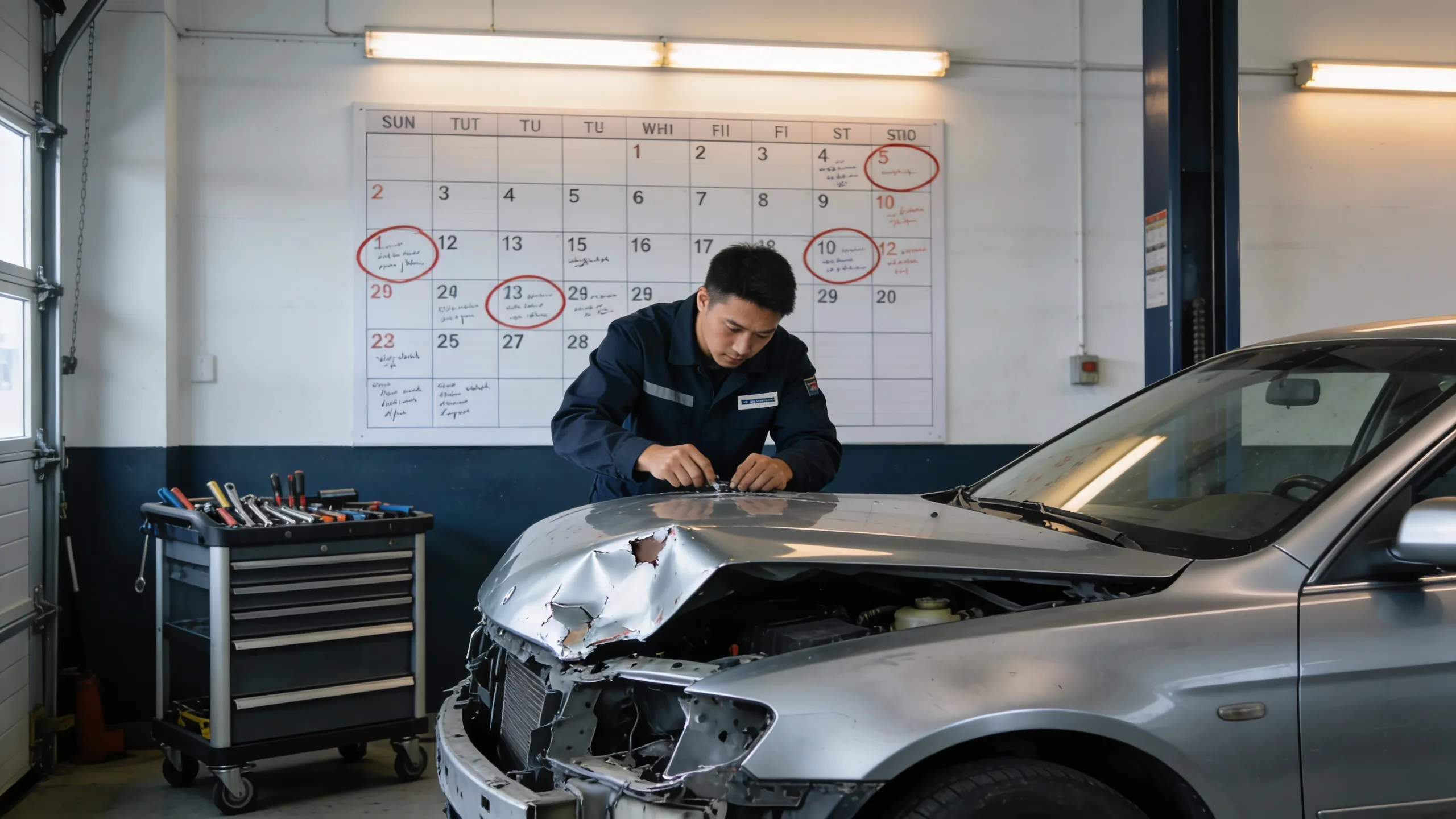
A significant structural repair typically moves through these stages:
-
Initial assessment (Day 1): The shop writes a preliminary estimate based on visible damage. It's often incomplete because structural issues only appear after disassembly.
-
Teardown and supplement (Days 2-4): Additional damage gets documented and submitted to the insurer as a supplement.
-
Parts ordering (Days 3-7): OEM parts come through the Hyundai dealer network. Back-ordered parts extend timelines. Ask about availability early.
-
Structural and body repair (Days 5-12): Structural repairs, straightening, panel replacement, and welded components are completed before any cosmetic work starts.
-
Paint and finish (Days 10-15): Matching Hyundai's metallic and specialty finishes requires careful blending into adjacent panels.
-
ADAS calibration and final inspection (Days 12-16): Safety systems get recalibrated, and the shop does a test drive before releasing the vehicle.
Total time for significant structural repairs usually runs two to four weeks. Minor damage can be done in two to five business days.
Kevin's story: ADAS recalibration after a Hyundai repair
Kevin brought his Hyundai Santa Fe to a certified shop after a front-end collision that deployed the airbags. Structural repairs were straightforward. ADAS recalibration required more attention.
The technician explained that both the radar unit and front-facing camera needed recalibration because the structural repair had slightly changed the vehicle's geometry. Calibration requires a controlled indoor environment with specific target distances — it can't be done in a parking lot. The shop had the equipment on site, so no separate dealership visit was needed.
After calibration, the shop verified that forward collision warning, automatic emergency braking, and lane-keep assist were all working correctly. Kevin drove away with safety systems restored to pre-collision specification. A shop without the right equipment couldn't have confirmed that.
Key takeaways
-
Hyundai certified collision repair is a manufacturer-backed designation for shops that meet Hyundai's standards for training, equipment, parts sourcing, and repair procedures.
-
Certification isn't permanent. Shops must stay compliant to remain in the network. Always verify current status through Hyundai's official locator.
-
OEM parts are required at certified shops and offer guaranteed fitment and structural performance. Insurers may try to substitute aftermarket parts. Owners generally have the right to push back — check your state's insurance regulations.
-
ADAS recalibration is required after structural repairs on most current Hyundai vehicles. Only shops with the right equipment and training can do this correctly.
-
You choose your repair facility. Insurer recommendations don't override that right. Certified Hyundai repair shops are a legitimate and defensible choice regardless of what an insurer suggests.
-
Documentation matters. Written repair records, procedures followed, OEM part numbers installed, and calibration results protect your interests throughout the vehicle's life.
Sources
- I-CAR — collision repair training and certification standards
Frequently asked questions
Does using a non-certified shop void my Hyundai warranty?
The Magnuson-Moss Warranty Act generally prevents manufacturers from voiding warranties just because an independent shop did the work. But if a non-certified shop does improper structural repairs that cause subsequent problems, Hyundai may have grounds to deny related warranty claims. A certified shop eliminates that ambiguity through documented, specification-compliant repairs.
Can I take my Hyundai to any body shop if my insurance has a preferred network?
In most states, yes. Car owners generally have the legal right to choose their own repair facility. Insurers can recommend DRP shops, but they can't require them. Certified Hyundai repair shops are legitimate choices that insurers need to accommodate, though cost discussions about OEM parts may come up.
What's the difference between Hyundai certified collision repair and I-CAR Gold Class?
These are separate but complementary. I-CAR Gold Class is a shop-wide training credential — it means all technicians maintain ongoing technical training. Hyundai certification is vehicle-specific: the shop meets Hyundai's requirements for training, equipment, and parts standards. A shop can hold one without the other, though the best certified Hyundai shops typically carry both.
Will a Hyundai certified shop cost more than a regular body shop?
Often, yes. Primarily because OEM parts cost more than aftermarket alternatives, and certified technicians command higher labor rates that reflect their specialized training and equipment investment. The difference varies by repair type and market. For structural repairs or vehicles with active safety systems, the additional cost is often worth it for the precision and documentation you get.
How do I know if a Hyundai shop is actually currently certified?
The most reliable method is Hyundai Motor America's official certified collision center locator at hyundaiusa.com. Hyundai updates this list as shops enter and exit the program. You can also ask shops directly for current Hyundai certification documentation — legitimate certified shops produce this without hesitation.
Does Hyundai certification cover all models, including electric vehicles like the Ioniq?
Hyundai's certification program covers its passenger vehicle lineup, but shops may hold certifications for specific vehicle lines or technologies. The Ioniq 5 and Ioniq 6 involve high-voltage battery systems that require additional technician qualifications. If you drive an EV, ask specifically whether the shop is trained and equipped for high-voltage system repairs and whether their certification extends to Hyundai's electric vehicle lineup. Not all certified Hyundai shops are equally set up for EV-specific work.