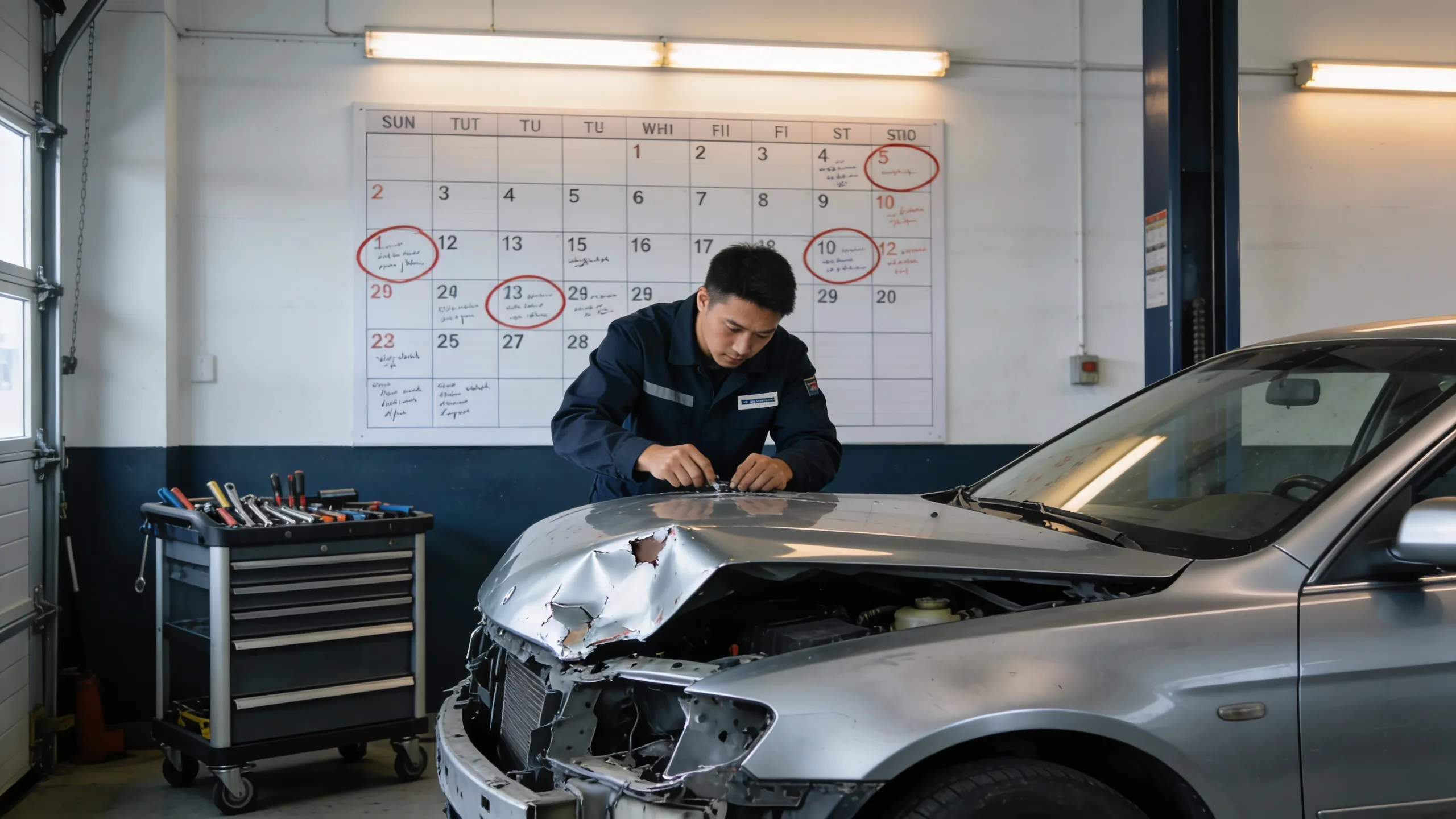
Minor collision repairs (single-panel dent, bumper scuff) take 1–3 days. Moderate damage (bumper replacement, fender work with paint) takes 1–2 weeks. Major structural repairs run 3–8 weeks, and severe rebuilds with parts delays can stretch past 3 months. The biggest variable is rarely the damage itself — it’s parts availability and insurance supplement approvals.
Understanding the collision repair timeline before bringing the car in sets realistic expectations, helps with rental car planning, and gives you the knowledge to ask the right questions. This guide breaks down repair durations by damage type, explains the most common causes of delay, and outlines practical steps that can shorten the process. For a complete overview of what happens from start to finish, see the collision repair process guide.
Collision repair timelines at a glance
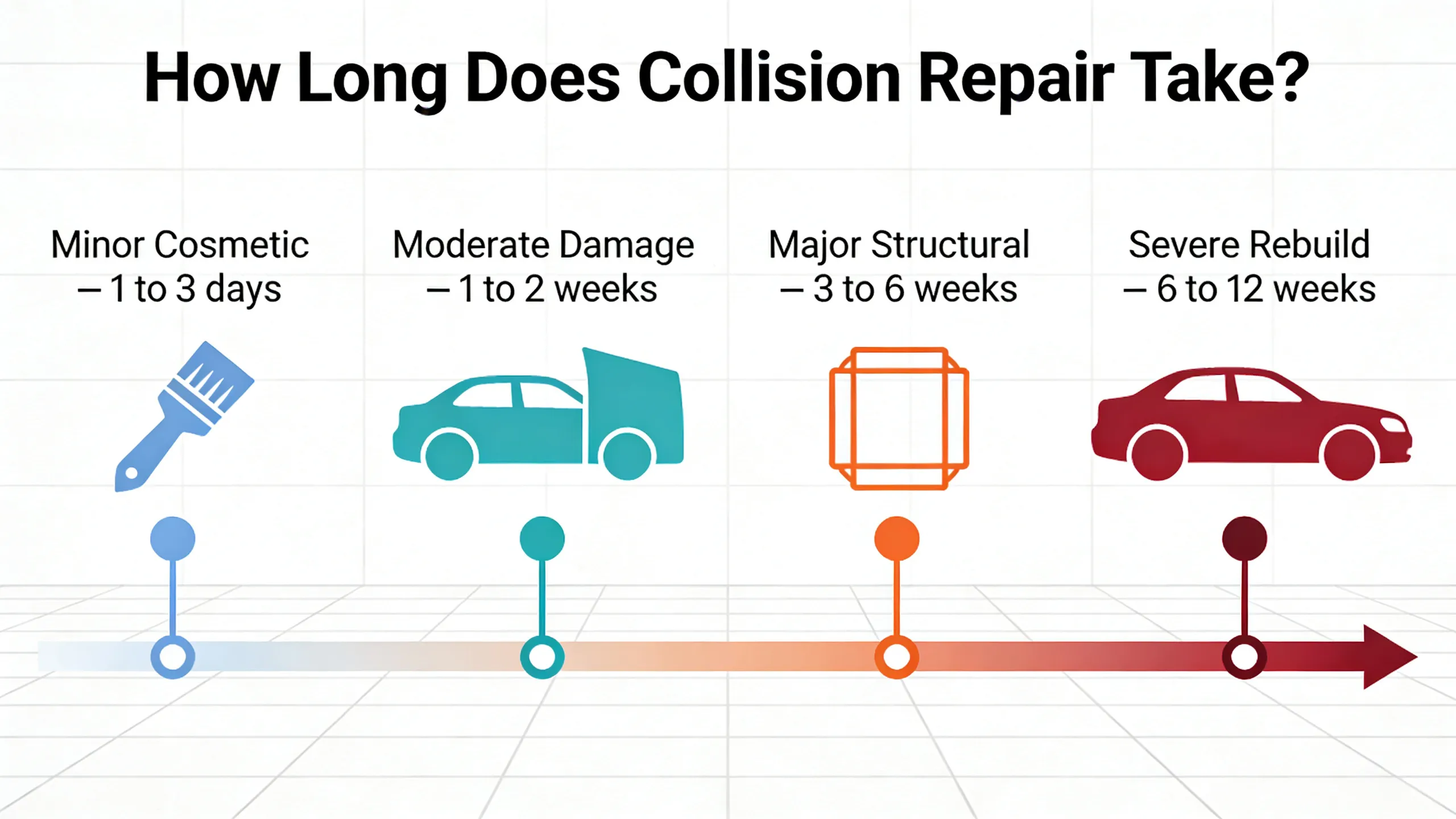
Collision repair typically takes 1–3 days for minor cosmetic damage, 1–2 weeks for moderate panel work, 3–6 weeks for structural repairs, and 6–12 weeks for full rebuilds. Parts backorders and insurance approval delays are the two most common reasons timelines stretch beyond these ranges.
Most collision repairs fall into one of four damage categories. Here's what you can expect from each, based on industry data from CCC Intelligent Solutions, which tracks millions of collision claims annually.
| Damage Category | Typical Timeline | Common Examples |
|---|---|---|
| Minor cosmetic | 1–3 days | Small dents, paint scuffs, bumper scratches |
| Moderate damage | 1–2 weeks | Panel replacement, fender work, partial paint jobs |
| Major structural | 3–6 weeks | Frame straightening, airbag deployment, significant body panel damage |
| Severe / full rebuild | 6–12 weeks | Extensive structural damage, major mechanical involvement, rare parts vehicles |
These ranges represent calendar time from drop-off to pickup under normal shop conditions. They don't account for extended insurance delays, unusual parts backlogs, or complex vehicles, all of which can push timelines well beyond what's shown.
Factors that determine how long collision repair takes
No two collision repairs are identical. Two cars with nearly identical damage can have very different auto body repair times. Five variables account for most of that variation.
Damage severity
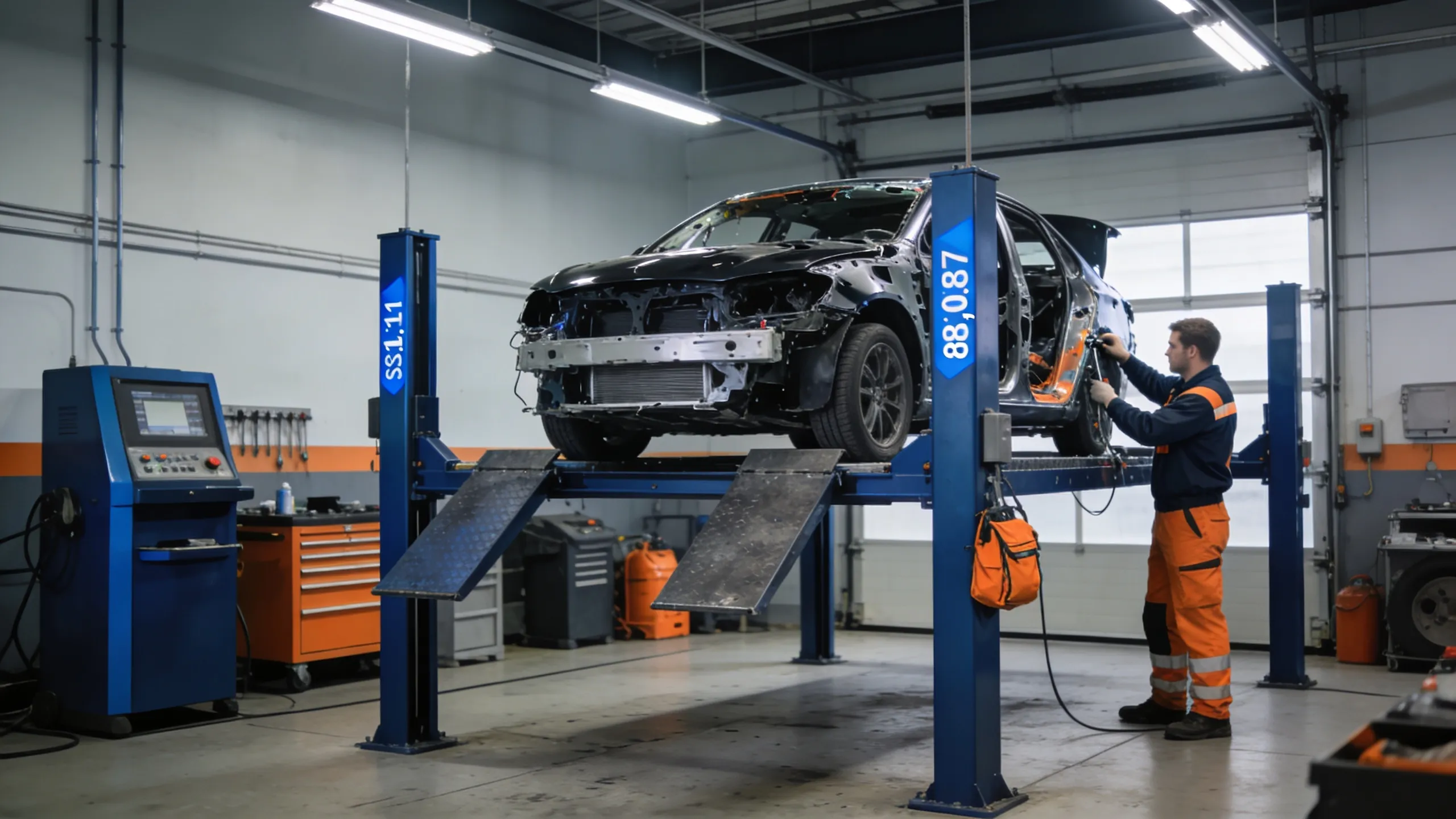
This is the single largest driver of repair duration. Cosmetic damage (a scratch, a small dent, a cracked trim piece) requires far less labor than structural damage. Structural damage involves realigning the vehicle's frame or unibody (the welded steel structure forming a modern car's skeleton), replacing crushed panels, or addressing damage that reached suspension, drivetrain, or safety systems.
Shops typically discover the full extent of damage during teardown, after disassembly begins. What looks like a bent fender from the outside can reveal buckled inner structure underneath. That discovery process often changes the original timeline estimate, sometimes significantly.
Parts availability and backorders
Parts availability has become a major driver of extended collision repair timelines. Supply chain disruptions since 2020 created persistent shortages for certain OEM (Original Equipment Manufacturer) parts, and those gaps haven't fully resolved. Newer vehicle models are especially affected, some 2023–2025 parts carry lead times of two to four weeks or longer.
Shops can order parts when an estimate is written, but until the vehicle arrives and teardown is complete, they often don't know exactly which parts are needed. That creates unavoidable gaps between ordering and repair start dates.
Insurance approval delays
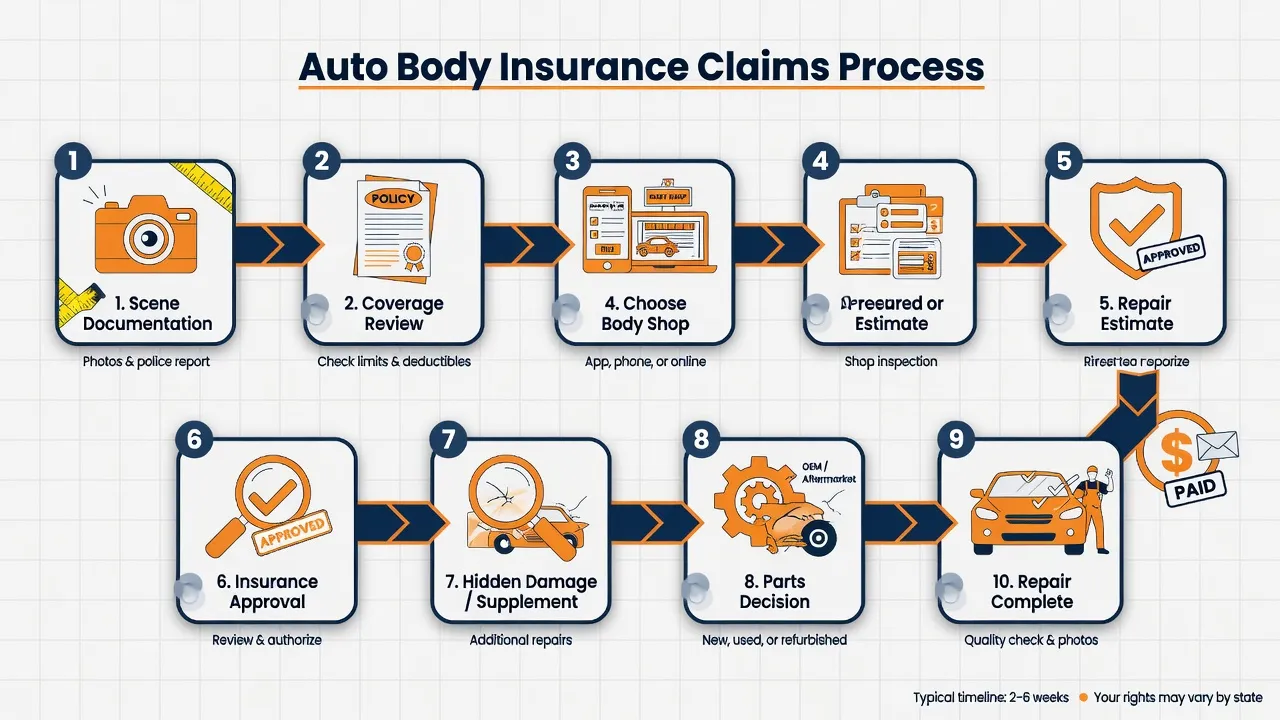
When insurance is involved, the claims process adds its own timeline. An adjuster must assess the damage, approve the repair estimate, and authorize the shop to begin work. That process typically takes three to seven business days. If the estimate changes mid-repair, which is common when hidden damage is found, the shop must submit a supplement and wait for a second approval before proceeding.
For a deeper look at managing the claims process, see the insurance claim guide for collision repair.
Shop workload and scheduling
Even after all parts are ordered and insurance has approved the job, the shop's own schedule affects how long repairs take. High-volume shops with multiple bays can often start sooner, while smaller operations may have a waiting period before a technician is assigned. Most shops also batch certain tasks, all vehicles going through paint, for instance, are often processed together to maximize booth efficiency. That means a car might wait a day or two to enter the paint cycle even when the body work is complete.
Vehicle complexity (luxury, EV, ADAS)
Vehicle type has a growing impact on how long body shop repair takes. Luxury vehicles often require OEM-authorized repair procedures and specific tooling that general shops may not carry. Electric vehicles (EVs) add complexity around high-voltage battery systems and specialized components. Vehicles equipped with Advanced Driver Assistance Systems (ADAS), the cameras, radar, and sensors behind features like automatic emergency braking and lane-keeping assist, require recalibration after many collision repairs, adding one to three hours to the final stage of the job.
Collision repair timeline by repair type
Beyond broad damage categories, specific repair types have their own typical durations. Here's what car owners can expect for the most common collision repair work.
Bumper repair (1–3 days)
Bumper repairs are among the fastest jobs in the shop. Minor cracks, scuffs, and small impacts that don't damage underlying structure or sensors can often be completed in one to three business days. If the bumper requires full replacement rather than repair, expect two to five days total when the part is in stock.
Modern bumpers increasingly house parking sensors, radar modules, and cameras. When those components are damaged, recalibration adds time to the job, sometimes a full extra day. See the bumper repair service page for more detail on what these repairs involve.
Fender and panel work (3–7 days)
Fender repairs and body panel replacements typically take three to seven business days. The variation depends on whether the panel is repaired or replaced, the extent of adjacent damage, and paint matching complexity. A single fender replacement on a common vehicle with an in-stock part might be done in three days. A repair requiring color blending across multiple adjacent panels pushes toward the higher end of that range.
Paint and refinishing (2–5 days)
Paint work alone, for a single panel or a localized refinishing job, takes two to five business days. That includes surface preparation, primer application, color coat, clear coat (the protective outer layer of automotive paint), and curing time. Shops typically require 24 to 48 hours after painting before the vehicle is ready for delivery, giving the clear coat time to fully harden.
Full repaints covering the entire vehicle take considerably longer, one to three weeks, because every panel must be prepared, masked, painted, and cured in sequence. For a breakdown of what automotive refinishing involves, see the auto painting service page.
Frame straightening (1–3 weeks)
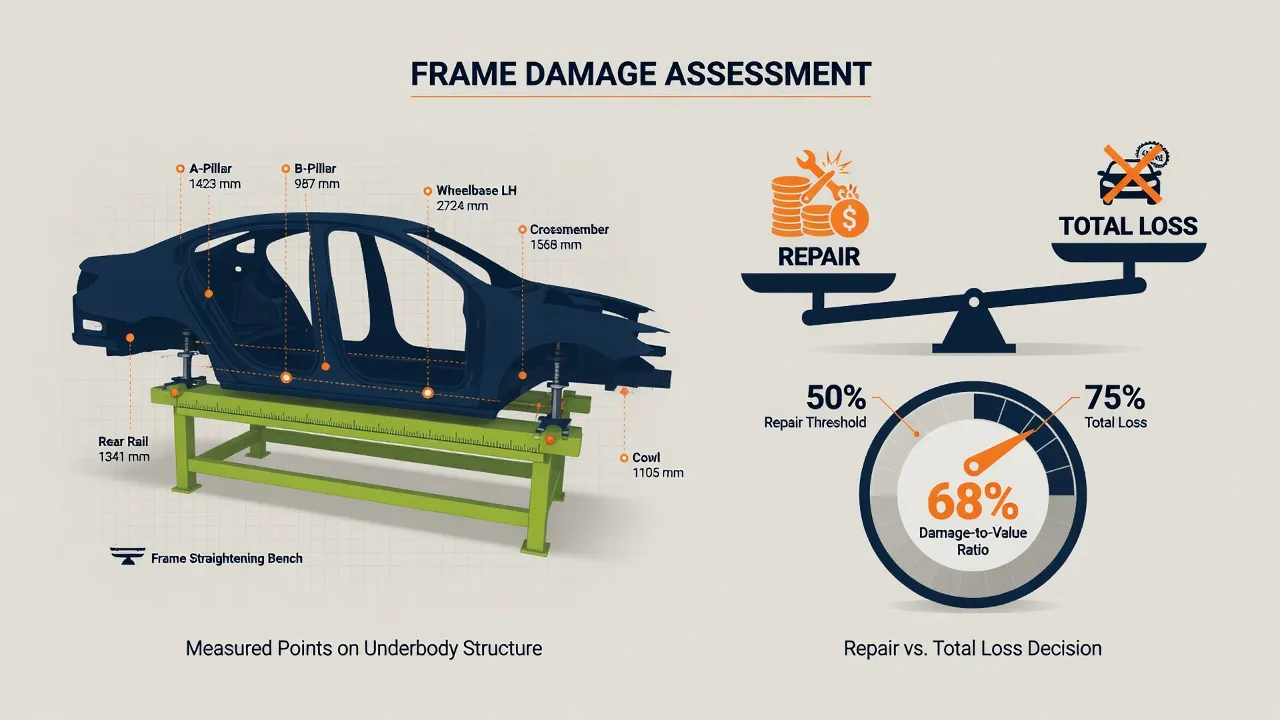
Frame straightening, or more accurately structural repair since most modern vehicles use unibody construction rather than a traditional separate frame, is among the most time-intensive collision repairs. The process involves measuring the vehicle's geometry against factory specifications, pulling deformed metal back to position using hydraulic equipment, and verifying alignment at multiple structural points.
A straightforward structural repair with no additional complications typically takes one to two weeks. When structural damage combines with extensive panel damage, drivetrain repairs, or airbag replacement, the timeline reaches two to three weeks or beyond. For a detailed explanation of the process, see the frame repair service page.
Full collision rebuild (4–12 weeks)
Full collision rebuilds involve extensive damage across multiple systems, structural, mechanical, electrical, and cosmetic. These repairs require the most parts, the most labor hours, and the most coordination between insurance supplements and shop workflow. On complex vehicles or those requiring rare parts, the car repair after accident duration can reach 12 weeks or longer. At this level of damage, some insurers may declare the vehicle a total loss instead of authorizing a full repair.
Why collision repair takes longer than the original estimate
Even with an accurate initial estimate, many collision repairs run longer than originally quoted. Here are the most common reasons.
Hidden damage discovered at teardown
Initial estimates are based on visible damage. Once a shop begins disassembly, damage hidden behind panels, beneath bumper covers, or inside the engine bay becomes visible. Inner structure damage, cracked mounting brackets, and bent support beams are common finds that weren't apparent from the outside. This isn't the shop making mistakes, it's just how collision physics works.
Teardown discovery is a normal part of the collision repair process. But it does extend the timeline, because the shop must document the additional damage and, when insurance is involved, wait for supplement approval before ordering newly discovered parts.
Supplement approvals
A supplement is an updated estimate submitted to the insurance company when additional damage is found after the original claim was approved. Insurers typically require their own review before authorizing additional repair costs. That review can take two to five business days, during which the shop may pause work entirely while waiting for approval.
Complex repairs often involve multiple supplements. Each one adds another review cycle and another potential delay. On a major structural repair, three or four supplements isn't unusual.
Back-ordered parts (especially for new models)
When an OEM part isn't in the local distribution network, the shop has three choices: wait for the OEM part, source an aftermarket equivalent, or explore used OEM parts from salvage sources. Each involves trade-offs in cost, fit, and insurer acceptance. If the vehicle is under factory warranty, some automakers require OEM parts, which means waiting, regardless of the delay.
According to I-CAR, the industry's primary collision repair training organization, parts procurement is one of the leading contributors to extended repair cycles industry-wide. Ask the shop specifically whether any ordered parts are on backorder and what the estimated arrival date is. Get that in writing if you can.
Paint curing and weather conditions
Paint requires time and controlled conditions to cure. Most auto body shops use heated paint booths to speed curing, but vehicles still need a minimum holding period, typically 24 to 48 hours, before the paint film is hard enough for delivery. In high-humidity climates or during temperature swings, curing slows down, particularly for water-based paint systems.
High-volume shops may also have limited booth availability, causing short gaps between when body work is complete and when the vehicle enters the paint queue. A day or two of waiting is common.
How to speed up collision repair
You can take concrete steps to reduce delays and shorten the repair timeline. None guarantee a faster outcome, but each addresses one of the common bottlenecks.
Choose a shop with parts inventory
High-volume shops often maintain supplier relationships that give them faster access to common parts. Some pre-order parts before the vehicle even arrives, based on photo estimates. When evaluating shops, ask whether parts are in stock for your specific repair or how quickly they can be sourced. It's a direct question that directly affects your timeline.
Get insurance pre-approval
If the car isn't drivable and is being towed to the shop, having the insurance adjuster complete the initial assessment before the car arrives, or as quickly as possible after, eliminates one common waiting period. Some insurers offer virtual or photo-based estimates that can be submitted before the vehicle reaches the shop, allowing earlier authorization to order parts.
Ask about alternative parts options
When an OEM part has a long backorder, a quality aftermarket part or a recycled OEM part from a certified salvage source may be available immediately. You have the right to understand your parts options. Both OEM and quality aftermarket parts can produce excellent results, the right choice depends on vehicle age, warranty status, and insurance coverage terms.
Communicate proactively
Shops typically notify you when significant additional damage is found, but staying engaged shortens the cycle. Responding quickly to decisions, approving a supplement, authorizing an alternative part, confirming a repair scope, prevents multi-day gaps caused by waiting for the owner's input. Designating a primary contact and responding within the business day typically produces faster turnaround.
Rental car duration: what insurance covers
Planning for rental car coverage is one of the more practical parts of navigating a collision repair. Most car owners have a limited window before rental costs come out of pocket. Know your limits before you need them.
Standard coverage periods
Most auto insurance rental reimbursement policies cover a daily allowance, typically $30 to $50 per day, for a set maximum number of days or a total dollar cap, whichever comes first. Common policy limits range from 15 to 30 days. A moderate repair taking 10 business days will likely stay within that window. A major structural repair taking four to six weeks almost certainly won't.
Policy terms vary significantly by insurer and coverage level. Review your rental reimbursement limits before the repair begins, not after the rental bill arrives. Insurance processes and coverage limits vary by state and carrier. Always consult your specific policy for applicable terms.
What to do if repairs take longer
When repairs extend beyond the rental coverage window, you have a few options. First, contact the insurer to request an extension. When delays are caused by parts backorders or supplemental damage approvals, many insurers will extend rental coverage to match, especially if the delay was outside your control.
Second, ask the shop for a written status update documenting the cause of the delay. That documentation supports any extension request and creates a record if a coverage dispute comes up later. Third, consider whether a lower-cost rental category would stretch your coverage further during the repair period.
Key takeaways
Understanding how long collision repair takes helps car owners plan effectively and avoid surprises. Here are the most important points to carry forward:
- Minor cosmetic repairs typically take 1–3 days. Moderate damage takes 1–2 weeks. Structural repairs run 3–6 weeks. Full rebuilds can reach 12 weeks or longer.
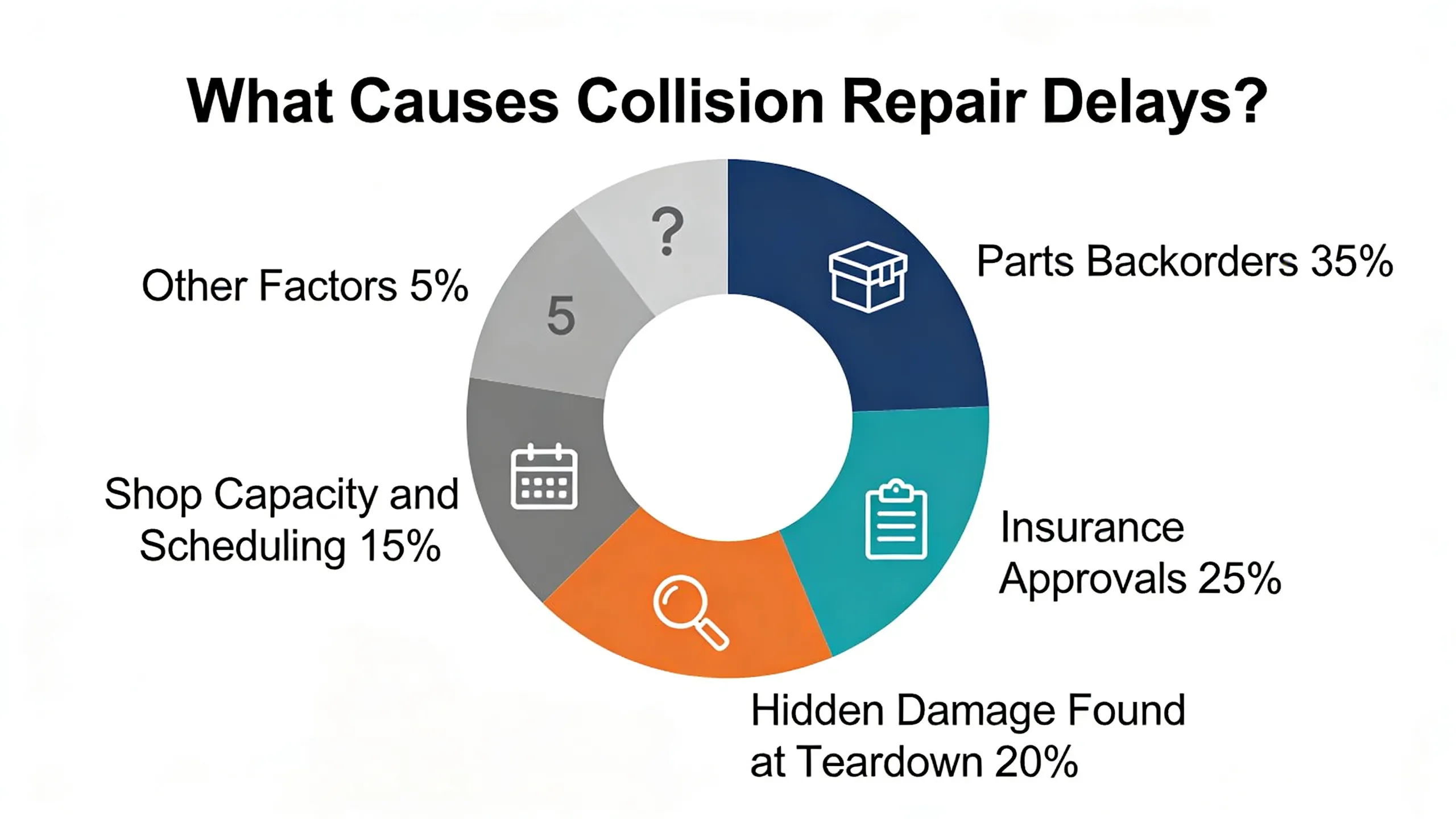
- Parts availability and insurance approvals are the two most common causes of delays beyond the actual repair labor time.
- Teardown nearly always reveals more damage than the initial estimate captures. Car owners should treat the first estimate as a starting point, not a guaranteed final scope.
- Vehicle complexity matters. Luxury vehicles, EVs, and ADAS-equipped cars require additional steps that extend timelines compared to standard vehicles.
- Rental car coverage has limits. Reviewing the policy before the repair starts, not during, is the best way to avoid unexpected out-of-pocket rental costs.
- Proactive communication with the shop and insurer is the most effective tool car owners have to keep the repair moving.
Finding a qualified shop that communicates clearly about timelines, supplements, and parts status is as important as the repair itself. Browse collision repair shops in your area to compare certified providers and read what other car owners have experienced. Car owners in Illinois and similar Midwest markets prone to winter collision damage can search auto body shops in Illinois for shops with strong insurance supplement coordination.
Frequently asked questions
How long does minor collision repair take?
Minor collision repair, covering cosmetic damage such as small dents, paint scratches, and scuffs without structural involvement, typically takes one to three business days. If parts are needed, the timeline may extend to five business days. Repairs that involve sensors or cameras embedded in bumpers or body panels add time for recalibration.
Why is my car taking so long at the body shop?
The most common reasons for extended repair time are parts backlogs, insurance supplement approvals, and hidden damage found at teardown. When all three compound, a two-week estimate can stretch to four weeks or more. Asking the shop for a specific status update, which parts are on order, what approvals are pending, is the most direct way to get a clear timeline.
Can I speed up collision repair?
Car owners can shorten the repair timeline by responding quickly to insurance and shop communications, asking about alternative parts sources when OEM parts are on backorder, and choosing shops that pre-order parts before the vehicle arrives. Starting insurance documentation as early as possible, ideally before drop-off, eliminates days of waiting for claim authorization.
How long will I need a rental car during repair?
Rental car needs align closely with the repair timeline. Minor repairs (1–3 days) require a short rental. Moderate repairs (1–2 weeks) fall within standard rental reimbursement windows for most policies. Major repairs (3–6 weeks) frequently exceed standard coverage limits. Car owners should verify their policy's daily allowance and maximum coverage days before the repair begins and request extensions from the insurer in writing if the repair runs long due to parts or supplement delays.
Do luxury cars take longer to repair?
Yes. Luxury vehicles require OEM-specific procedures and specialized equipment, have limited parts availability outside dealer channels, and carry more complex sensor systems requiring post-repair calibration. Expect timelines at the higher end of each damage range. Confirm upfront that the shop is authorized to perform OEM repairs for your vehicle's brand.