Does Car Insurance Cover Tornado Damage? What You Need to Know

A tornado warning can turn into a total-loss vehicle in a matter of minutes. When the storm clears and car owners survey the damage, crumpled roofs, shattered glass, debris-punctured panels, the first question is almost always the same: does car insurance cover tornado damage?

insurance-claimsApr 24, 202611 min read
AS

Ambika Sharma

Brings 12 years of project management and technical operations experience to Auto BodyShop Near. Ambika oversees partnerships, city expansion, and listing quality across all states.

A tornado warning can turn into a total-loss vehicle in a matter of minutes. When the storm clears and car owners survey the damage, crumpled roofs, shattered glass, debris-punctured panels, the first question is almost always the same: does car insurance cover tornado damage?

The short answer is yes, but only if the policy includes comprehensive coverage. Standard liability insurance and collision coverage do not apply to tornado damage. Understanding exactly which coverage protects against natural disasters, what tornado-related damage is included, and how to navigate the claim process can mean the difference between a smooth recovery and weeks of financial uncertainty.

This guide covers coverage types, what qualifies for a claim, documentation strategies, total loss decisions, and how to find a qualified auto body shop to handle repairs.


What type of car insurance covers tornado damage?

Comprehensive coverage is the policy add-on that pays for vehicle damage caused by events other than collisions. Tornado damage falls squarely into this category. Insurers classify tornadoes as natural disasters, meaning comprehensive coverage, not collision coverage, handles the claim.

Comprehensive vs. collision coverage explained

Many car owners carry both comprehensive and collision coverage, but the two serve entirely different purposes:

Coverage Type What It Covers Tornado Damage?
Liability Damage to other people's vehicles or property No
Collision Damage from hitting another car or object No
Comprehensive Theft, fire, weather events, falling objects, animals Yes

Collision coverage applies when a vehicle makes physical contact with another car or stationary object, a tornado does not meet that definition. Even if wind sends a car airborne and it lands on another vehicle, comprehensive handles the claim, not collision.

Comprehensive is optional in most states. Car owners carrying only liability, the legal minimum in nearly all states, have no coverage for tornado damage. Reviewing the policy declarations page before storm season clarifies exactly what is in place.


What tornado damage does comprehensive insurance cover?

Comprehensive coverage for tornado damage extends across a wide range of destruction scenarios. The Insurance Information Institute notes that comprehensive policies cover sudden, accidental damage beyond the driver's control, a description that fits tornadoes precisely.

Flying debris and impact damage

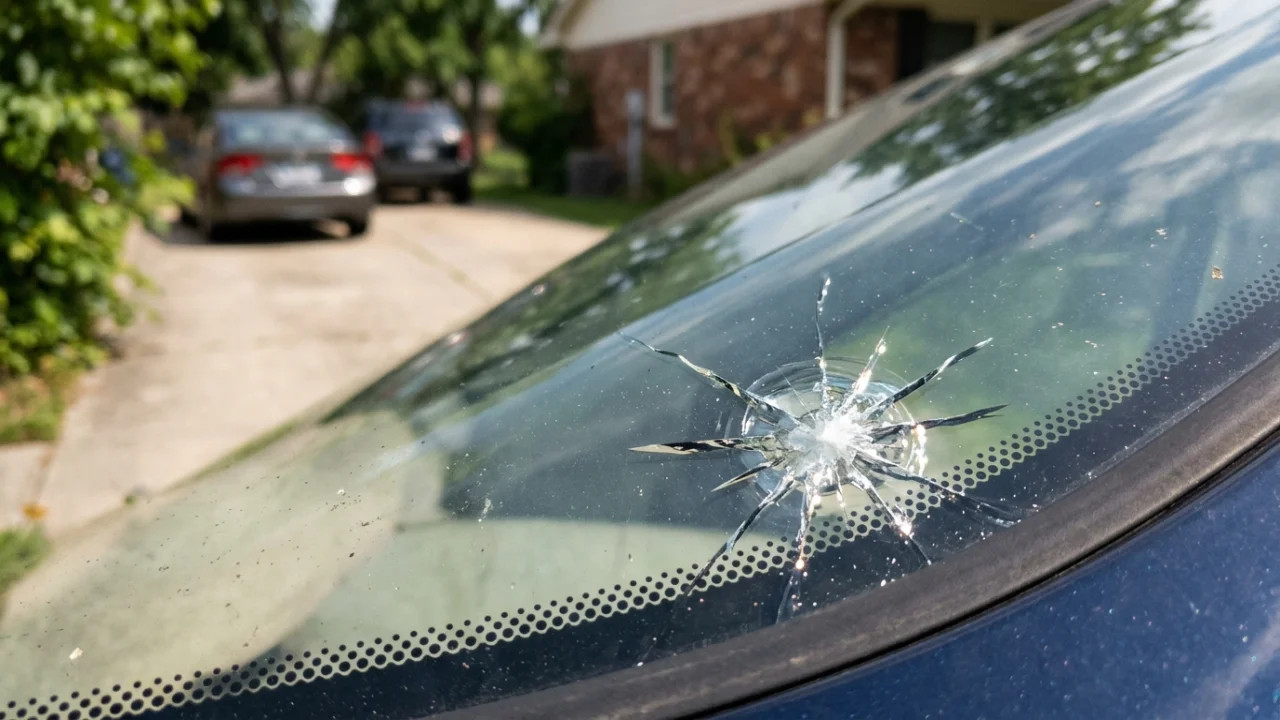
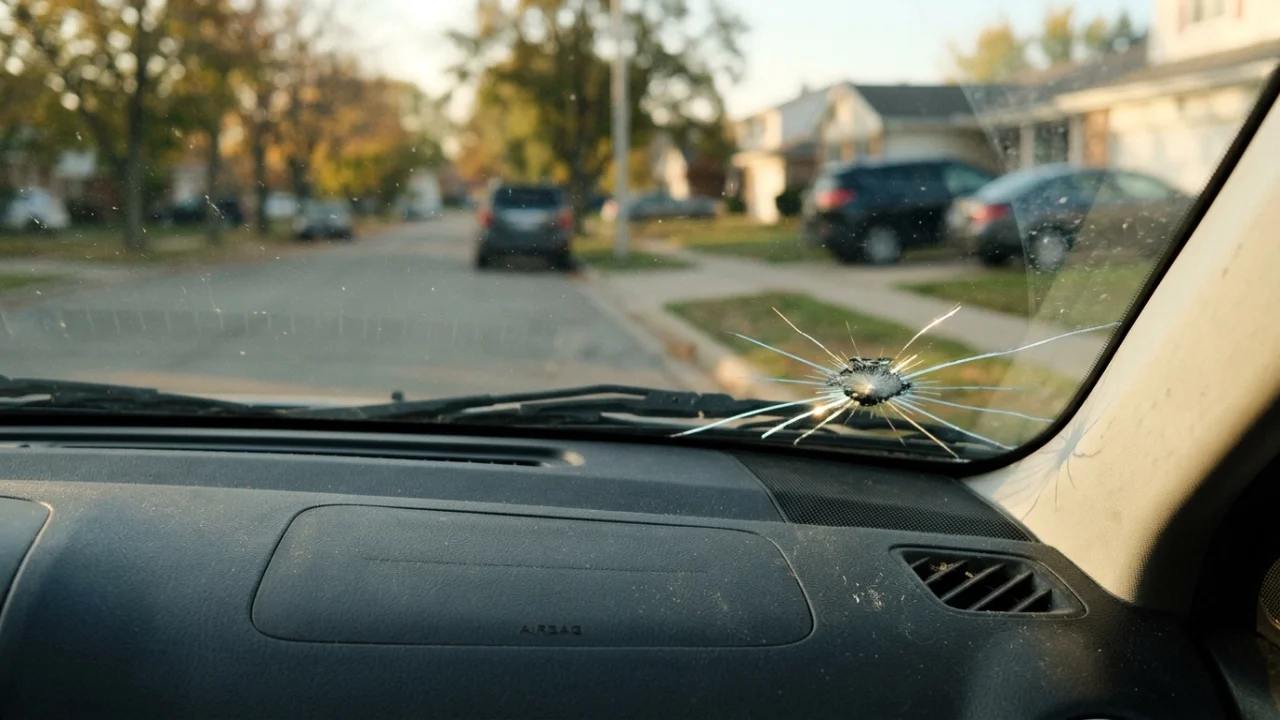
Tornadoes generate wind speeds between 65 and 300+ miles per hour, turning everyday objects into projectiles. Tree branches, fence posts, roofing materials, and other debris can dent body panels, crack windshields, and puncture roofs. Comprehensive coverage pays for repairs to these impact points, including any associated paint work.

Hail damage

Many tornadoes bring significant hail, which causes a distinct pattern of small dents across the hood, roof, and trunk. This type of damage is typically repaired using paintless dent repair (PDR), a technique that uses specialized tools to massage dents out from behind the panel without disturbing the factory paint. For more detail on how this process works, see the complete guide to hail damage repair.

Flooding associated with the storm

Tornadoes frequently accompany severe thunderstorms capable of producing flash flooding. If rising water enters a vehicle's cabin or engine compartment, comprehensive coverage typically applies, but only if the flooding was a direct result of the storm event. Standard flood coverage rules apply: water must enter from outside the vehicle, not result from a mechanical failure.

Roof and structural crush damage

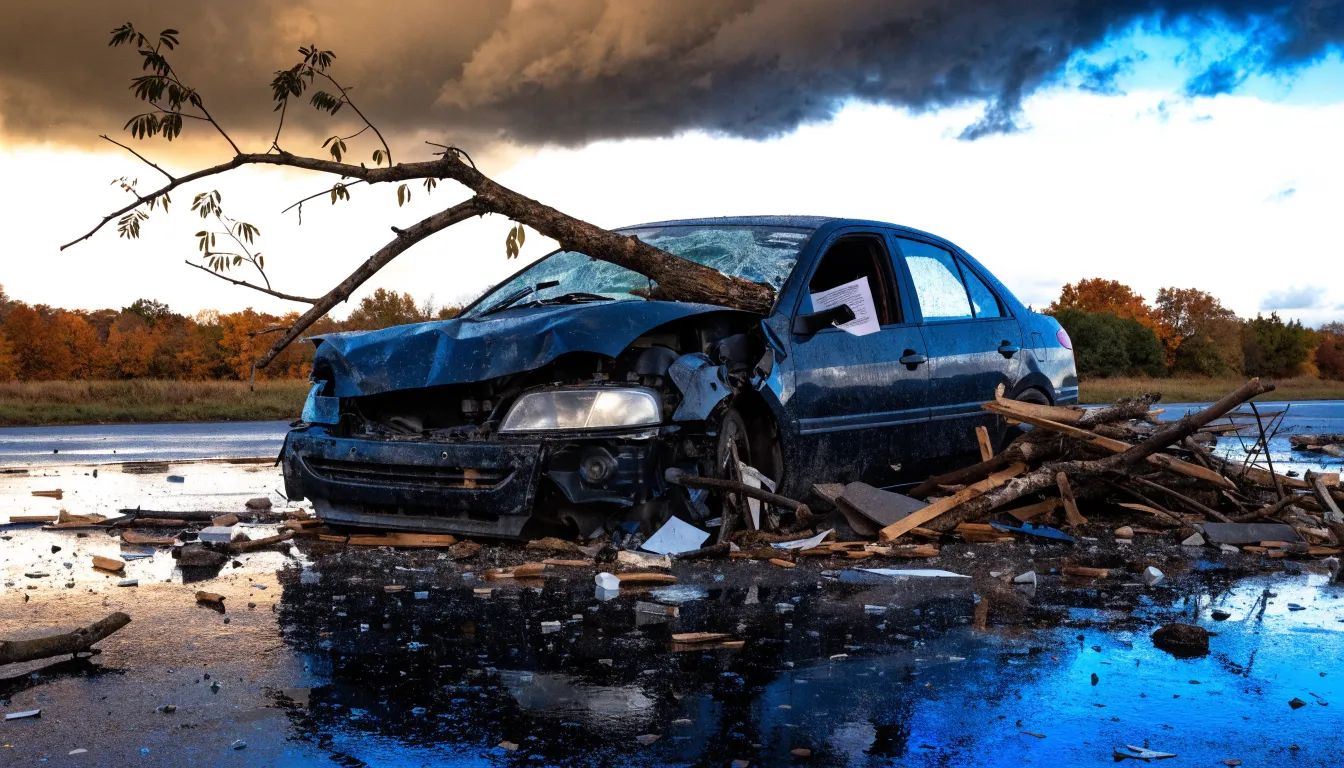
Falling trees, utility poles, or building materials can crush a vehicle's roof or structural components. This is among the most severe tornado damage scenarios because it can compromise the vehicle's safety structure, sometimes pushing the repair cost past the total-loss threshold.

Windshield and glass damage

Shattered or cracked glass from wind-driven debris is covered under comprehensive. Some policies include a glass-specific rider that waives the deductible for windshield repairs and replacements, worth checking before filing a claim.


What tornado damage is NOT covered?

Understanding the limits of comprehensive coverage prevents surprises during the claims process.

Mechanical breakdown: If the tornado shakes loose a component that was already wearing out, a cracked belt, a leaking seal, the insurer may attribute that damage to pre-existing wear rather than storm causation. Coverage applies to sudden storm-related damage, not underlying mechanical issues revealed by the event.

Personal property inside the vehicle: Comprehensive coverage protects the vehicle itself, not items stored inside. Laptops, tools, sporting equipment, or clothing damaged by a tornado are typically covered under renters or homeowners insurance, not auto insurance.

Pre-existing damage: Insurers document vehicle condition before settling claims. Damage that existed before the tornado, prior dents, rust, broken lights, is excluded from the settlement.

Avoidable exposure: Leaving a vehicle in a known flood zone despite evacuation orders can complicate claims in some states, though this is rare in tornado scenarios where damage happens with little warning.


Real scenarios: how tornado damage plays out

Scenario 1, The near-miss: Sarah's sedan in Oklahoma City was struck by flying debris when a tornado passed nearby. Dents across the hood and roof plus a cracked windshield were covered by her comprehensive policy, minus her $500 deductible. The shop handled the insurance estimate directly, and she had the car back in four days.

Scenario 2, The total loss: A large tree fell on Marcus's three-year-old pickup, crushing the cab. The $18,400 repair estimate represented nearly 90% of the truck's actual cash value (ACV), triggering a total loss declaration. He received a settlement check for the ACV minus his deductible and used it toward a replacement vehicle.

Scenario 3, The documentation dispute: Jennifer's SUV flooded during a tornado-associated thunderstorm. Her insurer questioned whether the flooding was storm-related. She provided National Weather Service records and timestamped photos, and the claim was approved.

These cases share one theme: thorough documentation protects the car owner's claim when questions arise.


How to file a tornado damage insurance claim

Filing a tornado car damage insurance claim follows a structured process. Acting promptly and methodically improves both speed and settlement outcome.

Step 1: Ensure safety first

Downed power lines, unstable structures, and gas leaks pose serious risks after a tornado. The Federal Emergency Management Agency (FEMA) recommends waiting for an official all-clear before approaching the vehicle or affected area.

Step 2: Document the damage thoroughly

Before moving the vehicle or allowing repairs, photograph and video every angle of the damage. Effective documentation includes:

  • Wide shots showing the vehicle's full exterior from all four sides
  • Close-up shots of each damaged area, with something for scale if possible
  • Interior photos if water or debris entered the cabin
  • Photos of surrounding context, fallen trees, debris fields, damage to nearby structures
  • Timestamp verification, ensure the device's clock is set correctly

This creates a clear record linking the damage to the storm event, critical if the insurer raises causation questions.

Step 3: Prevent further damage

Most policies include a duty-to-mitigate clause, car owners are expected to take reasonable steps to prevent additional damage. Covering a broken window or moving the vehicle out of continued exposure is appropriate. Keep receipts for any materials; these costs may be reimbursable.

Step 4: Contact the insurer promptly

Most insurers have 24-hour claims lines and mobile apps. When reporting, provide the policy number, describe the damage, note whether the vehicle is drivable, and ask about rental car coverage.

Step 5: Receive the adjuster's assessment

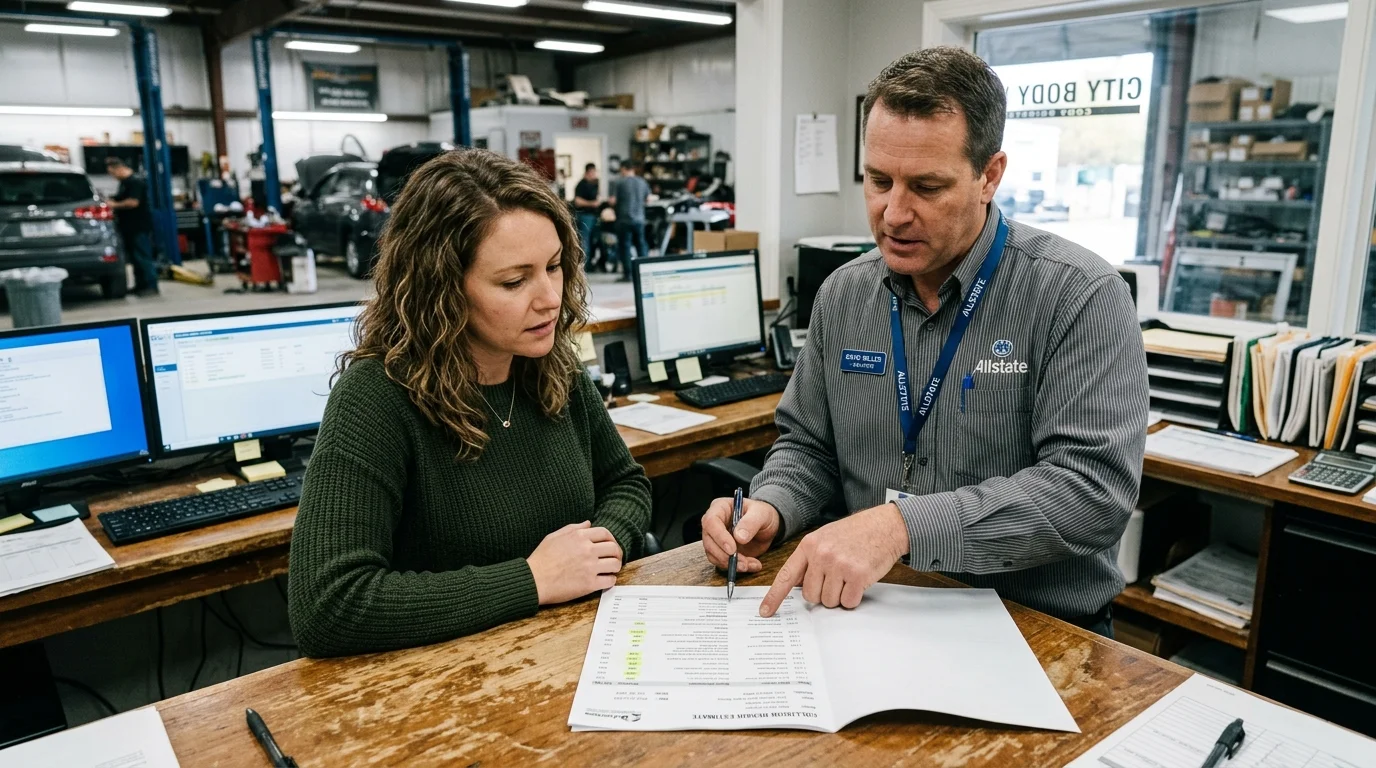
The insurance adjuster, the insurer's representative who evaluates damage and determines the settlement amount, will inspect the vehicle in person or through the insurer's photo submission app. Car owners have the right to get an independent repair estimate from a qualified auto body shop. If the shop's estimate exceeds the adjuster's figure, the insurer may issue a supplement. Choosing an experienced collision repair shop that works with insurance claims regularly makes this process smoother.

Step 6: Authorize repairs or accept the settlement

Once terms are agreed, the car owner authorizes the shop to proceed, or accepts the ACV settlement and transfers the title in a total loss situation.


Total loss vs. repair: how insurers decide

When tornado damage is severe, the insurer may declare the vehicle a total loss rather than authorize repairs. This happens when the estimated repair cost reaches or exceeds a certain percentage of the vehicle's ACV. The threshold varies by state, most fall between 75% and 100% of ACV, with many states using 75% to 80%.

How actual cash value is calculated

ACV reflects the vehicle's market value immediately before the storm, based on the vehicle's age, make, model, trim level, mileage, condition, and local comparable sales. Car owners who believe the ACV offer is too low can negotiate, documentation of recent maintenance, upgrades, or higher-priced comparable vehicles supports a stronger settlement. The National Association of Insurance Commissioners (NAIC) offers consumer guidance on disputing total loss valuations.

When structural damage tips the scale

Roof crush and severe structural damage from falling trees or debris frequently results in total loss declarations. Frame repair on severely compromised modern vehicles is expensive because they use unibody construction, the structural integrity is distributed throughout the body rather than in a separate frame, making comprehensive structural restoration both costly and safety-critical.


Deductible considerations for tornado damage claims

The deductible is the amount the car owner pays before insurance coverage begins. A $500 deductible on comprehensive coverage means the insurer pays everything above $500 for a covered claim.

For minor tornado damage, a few small dents, a cracked side mirror, the repair cost may not exceed the deductible. In those cases, filing a claim makes little financial sense. A body shop estimate clarifies whether the repair cost justifies the claim.

For extensive damage, the deductible is simply subtracted from the settlement. A $12,000 repair with a $1,000 deductible results in an $11,000 insurance payment.

Car owners in tornado-prone states, Texas, Oklahoma, Kansas, and Missouri, may also weigh the long-term premium impact before filing multiple comprehensive claims within a short period.


Does car insurance cover a rental car after tornado damage?

Rental car coverage, sometimes called "loss of use" coverage, is a separate policy add-on, not automatically included with comprehensive. Car owners with rental coverage should request a vehicle immediately after filing the claim. Coverage typically carries daily and total limits (for example, $40 per day up to $1,200), so choosing a rental within those parameters avoids out-of-pocket overage. Without rental coverage, temporary transportation costs fall entirely on the car owner, a meaningful expense when extensive tornado damage takes weeks to repair.


Documentation tips that protect your claim

Clear documentation is the single most effective step a car owner can take after tornado damage. Poorly documented claims are more likely to face delays, disputes, or reduced settlements.

Key documentation practices:

  • Photograph every angle before any repairs or vehicle movement, wide shots and close-ups of each damage point
  • Back up immediately to cloud storage so photos survive if the phone is damaged in follow-up weather
  • Screenshot the National Weather Service storm report for the date and location to establish the storm occurred
  • Get any available police or emergency management report, official records support causation
  • Keep a written log of every insurer contact: date, time, representative name, and what was discussed
  • Save all receipts for towing, emergency repairs, tarps, and rental vehicles

Finding the right auto body shop after tornado damage

After insurer approval, choosing a qualified auto body shop shapes the quality and durability of the repair. Tornado damage typically involves multiple damage types at once, dents, shattered glass, paint damage, and potentially structural issues, so the shop's range of capabilities matters.

Look for shops with experience handling storm damage insurance supplements, the ability to perform both paintless dent repair (PDR) and conventional bodywork, I-CAR Gold Class certification indicating advanced technician training, and a written repair warranty. Shops with established direct repair relationships with major insurers can also accelerate the supplement and approval process.

Car owners in storm-prone states can browse auto body shops in Texas or search by state at AutoBodyShopNear. com to find local shops experienced with tornado and hail damage repair.


Frequently asked questions

Does comprehensive coverage automatically include tornado damage?
Yes. Comprehensive coverage is designed for vehicle damage from events outside the driver's control, including tornadoes, hail, flooding, fire, and falling objects. Tornado damage is covered subject to the deductible.

What if my car is only covered by liability insurance?
Liability insurance covers damage the policyholder causes to others, not to their own vehicle. Car owners with liability-only coverage have no protection for tornado damage; repair or replacement costs fall entirely on the owner.

How long does a tornado damage claim take to settle?
Timelines vary by insurer, damage severity, and regional claim volume. After a widespread tornado outbreak, backlogs can extend the typical one-to-two-week process. Thorough documentation and prompt communication with the insurer generally helps accelerate the timeline.

Can the insurer deny a tornado damage claim?
Yes, if the policy lacks comprehensive coverage, the coverage lapsed, or the damage cannot be tied to the storm event. Strong documentation significantly reduces the risk of a denial based on causation questions.

Should I get multiple repair estimates after tornado damage?
Getting an independent estimate is always advisable, even when the insurer recommends a Direct Repair Program (DRP) shop. Car owners have the legal right to choose their own repair facility, and comparing estimates ensures the settlement covers the actual repair cost.

Does filing a tornado claim raise my insurance premium?
Comprehensive natural disaster claims are often treated differently from collision claims, but this varies by insurer and state. Car owners should ask their insurer directly about rate impact before filing a claim for minor damage near the deductible threshold.


Key takeaways

  • Does car insurance cover tornado damage? Yes, comprehensive coverage covers flying debris, hail, associated flooding, and structural crush damage.
  • Liability-only and collision-only policies provide no protection for tornado damage. Review the declarations page to confirm comprehensive coverage is in place.
  • Document damage thoroughly with photos and weather records before any repairs begin.
  • Total loss is declared when repair costs reach the state's threshold, typically 75% to 80% of ACV. Car owners can negotiate a low settlement with supporting documentation.
  • Rental car coverage is a separate add-on; without it, rental costs come out of pocket.
  • Get a shop estimate before filing a claim for minor damage, the repair cost may not exceed the deductible.
  • Car owners have the legal right to choose their own repair facility regardless of insurer recommendations.

Tornadoes strike fast. Reviewing comprehensive coverage before storm season puts car owners in the strongest position to recover quickly when damage occurs.

Insurance processes and coverage vary by state and carrier. Review your specific policy for details. Consult a licensed insurance professional for guidance on your situation.


Last updated: May 2026

Related Articles
Newsletter

Get repair tips in your inbox

No spam, no sales pitches. Just practical advice on collision repair, insurance claims, and car maintenance — twice a month.

Join 2,400+ car owners. Unsubscribe anytime.