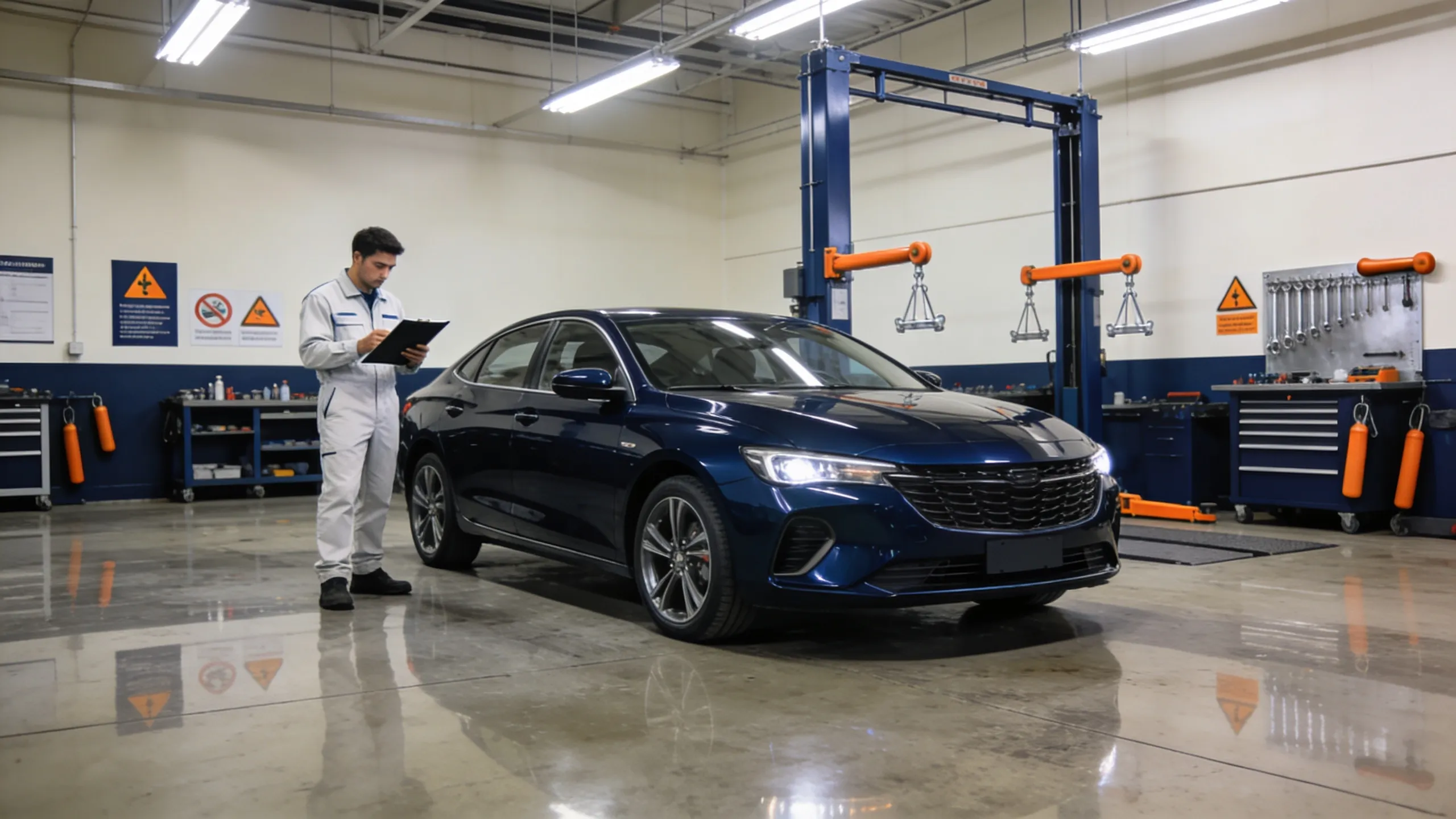
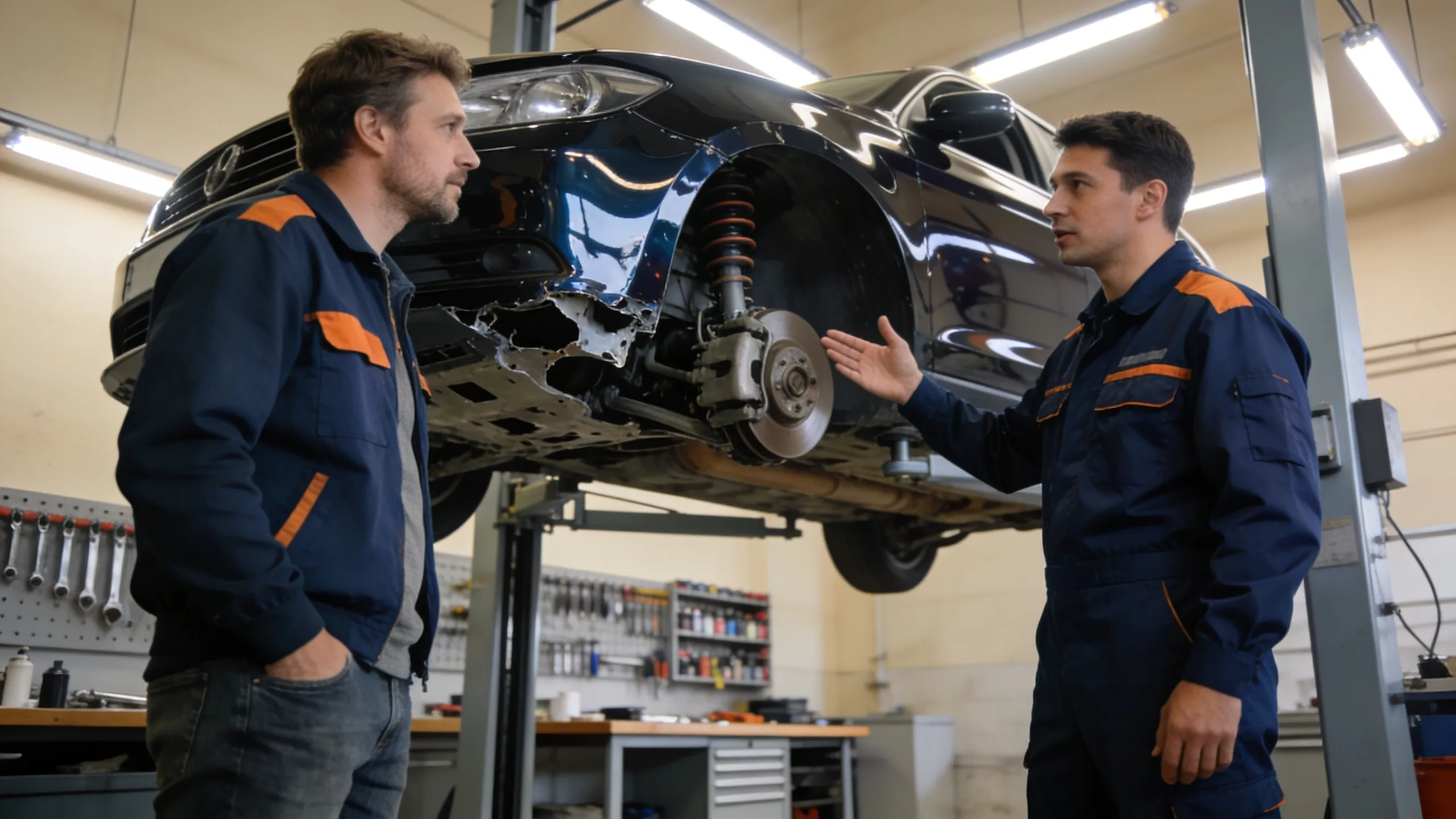
Knowing how to choose an auto body shop is one of the most practical skills a car owner can have, and most people only think about it in the minutes after an accident. That's a tough time to start researching.
This guide covers the factors that separate a quality collision repair shop from a mediocre one: what certifications actually mean, how to read a warranty, what questions to ask before handing over the keys, and which red flags signal a shop worth avoiding. The goal is to give you enough working knowledge to make a confident decision, regardless of which shop you end up choosing.
One thing to know upfront: you have the legal right to choose your own repair facility. An insurance company can recommend a shop, but in most states it can't require one. That distinction matters, and this guide explains how to use it.
For a broader overview of what actually happens during a repair, see the complete collision repair guide.
Why Your Choice of Body Shop Matters
Not every auto body shop produces the same results. The difference isn't always obvious at first, a fresh coat of paint covers a lot. But it shows up over time in fit, finish, corrosion resistance, and whether safety systems work correctly after the repair.
Quality Varies More Than Most People Expect
Collision repair spans a wide range of complexity. Cosmetic jobs, minor dents, scratch touch-ups, leave relatively little room for disaster. Structural repairs are different. Bent frames, deployed airbags, crumple zone damage: these require precision, proper equipment, and technicians who understand how modern vehicle architecture absorbs and distributes crash energy.
Many vehicles built after 2018 use high-strength steel, aluminum, and multi-material construction. Repair these incorrectly and you compromise the vehicle's ability to protect occupants in a future crash. Beyond structure, most modern vehicles have ADAS sensors that must be recalibrated after certain repairs. A shop without the right equipment simply can't do that work to standard.
Quality also varies in less technical ways. Communication responsiveness, estimate transparency, and how a shop handles disputes affect the experience as much as the repair outcome itself.
Your Right to Choose (Even with Insurance)
Many car owners don't realize they control the shop selection, not the insurer. Insurance companies maintain networks called Direct Repair Programs (DRP), pre-negotiated lists of approved shops, and may steer policyholders toward them, sometimes aggressively.
In most states, an insurer cannot legally require you to use a specific shop. The right to choose applies to both at-fault and first-party claims. If your shop's estimate runs higher than the insurer's, you and the shop may need to negotiate that gap. But the choice of where your car gets repaired is yours.
Knowing this changes the dynamic when you start evaluating options.
8 Factors to Evaluate When Choosing an Auto Body Shop
The eight criteria below matter most when comparing collision repair shops. No single factor tells the whole story, but together, certifications, warranty, reviews, estimates, equipment, vehicle expertise, insurance relationships, and communication, they produce a reliable picture of shop quality before you commit.

1. Certifications (I-CAR Gold Class, OEM, ASE)
Certifications indicate that a shop and its technicians have met defined training or equipment standards. Not a guarantee of perfect work, but one of the most objective signals available.
I-CAR Gold Class: Awarded by the Inter-Industry Conference on Auto Collision Repair (I-CAR), Gold Class certification requires technicians to complete ongoing training to stay current on repair procedures and vehicle technology. Gold Class shops represent roughly 20% of collision repair facilities in the US. Verify a shop's status at the I-CAR Gold Class shop locator.
OEM certifications: Programs offered by Tesla, Honda ProFirst, GM, Ford, and others certify that a shop has the specific tools, equipment, and training to repair that brand according to factory procedures. OEM certification matters most for newer vehicles, aluminum-intensive models, and electric vehicles.
ASE certification: The Automotive Service Excellence (ASE) credential certifies individual technicians rather than shops. A shop with multiple ASE-certified technicians signals a culture of training. Verify credentials at ASE. com.
Certifications don't replace good judgment, but shops that pursue and maintain them are generally more invested in quality than shops that don't bother.
2. Warranty policy
A legitimate collision repair shop offers a written warranty on its work, covering both parts and labor. Warranty terms vary, but reputable shops typically offer:
- Lifetime warranties on paint and body work (the most common in competitive markets)
- 1–3 year warranties on mechanical work performed during repair
- Parts warranties that match or exceed the parts manufacturer's coverage
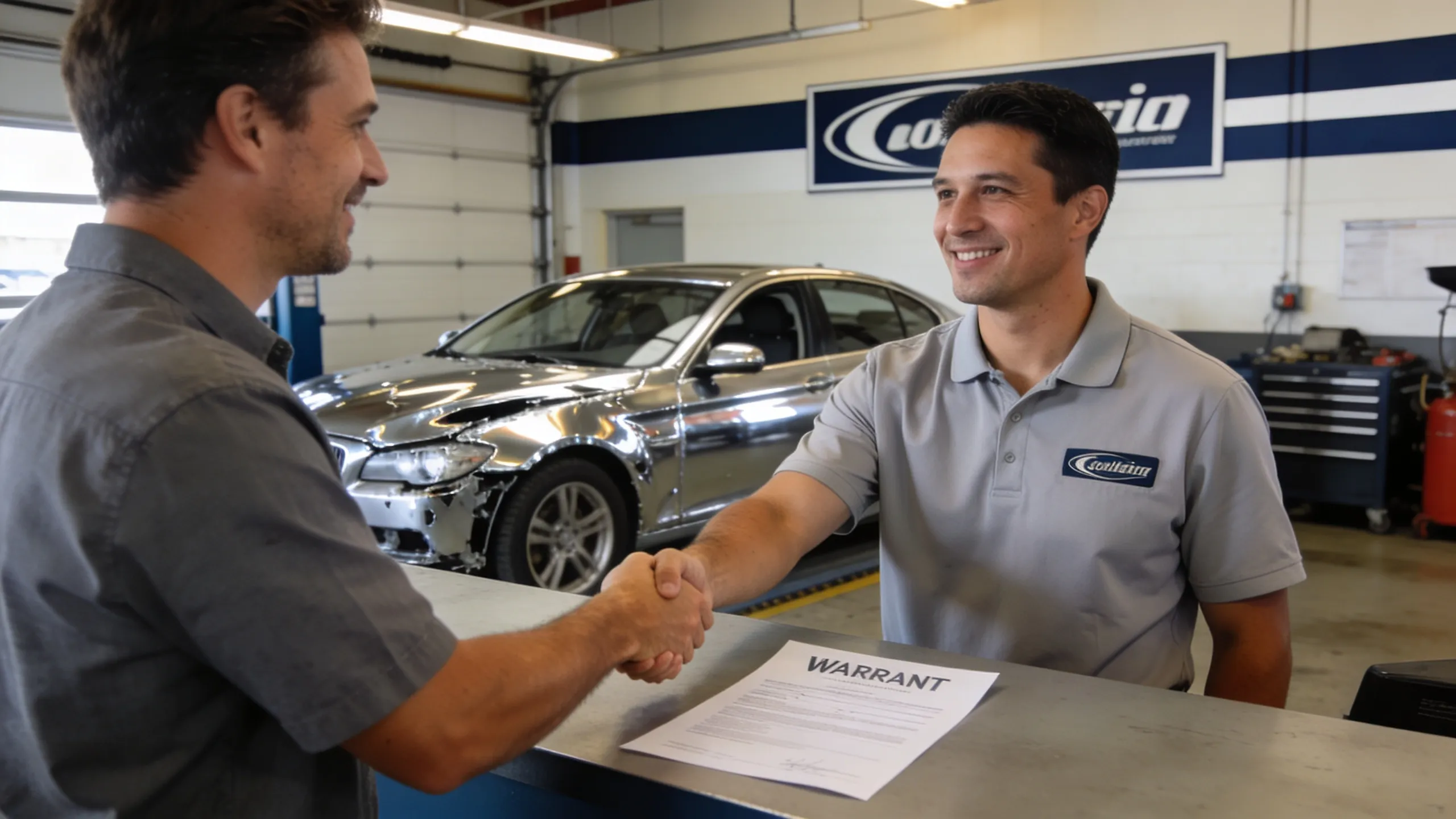
Before committing, ask to see the warranty in writing. Understand what it covers, what voids it, and whether it transfers if you sell the vehicle. A shop that hedges on warranty details or offers only a verbal promise is telling you something.
For a detailed breakdown of what collision repair warranties should include, see our guide on collision repair warranty coverage.
3. Online reviews and reputation
Online reviews capture something certifications don't: how the shop actually behaves with customers. Check Google reviews, Yelp, and the Better Business Bureau (BBB) profile.
What to look for:
- Volume: A shop with 200+ reviews gives more signal than one with 12.
- Recency: Reviews from the past 6–12 months reflect current quality better than older ones.
- Response patterns: How a shop responds to negative reviews often reveals more about its character than the negative review itself.
- Specifics: Reviews that mention communication, timeline, and repair quality carry more weight than generic five-star ratings.
No shop has a perfect record. The overall pattern and how complaints are handled is what matters.
4. Estimates and transparency
A quality shop gives you a detailed written estimate before any work begins. That estimate should itemize:
- Labor hours per operation
- Parts (OEM, aftermarket, or reconditioned) with pricing
- Paint materials and supplies
- Any sublet work (work sent to a third-party specialist)
Transparency at the estimate stage is a preview of how the shop will communicate throughout the repair. Shops that produce vague or bundled estimates are harder to hold accountable later.
Get at least two or three estimates for any significant repair. Large price differences usually come from differing scope, what repairs are included, not shop quality alone. Ask each shop to explain major line items.
5. Equipment and technology
Modern collision repair requires equipment that's genuinely specialized. For late-model vehicles, a shop should have:
- Frame measuring and straightening equipment: Modern vehicles use unibody construction, not traditional frames. Proper measuring systems confirm structural geometry is restored to spec.
- Welding equipment: MIG brazing, squeeze-type resistance spot welding (STRSW), and aluminum welding are required for many modern vehicles, not all shops have all three.
- ADAS calibration tools: Shops repairing vehicles with cameras, radar, or sensors need calibration targets, scan tools, and the correct procedures to perform calibration to standard.
- Paint mixing and matching systems: Color accuracy requires computerized mixing and spectrophotometer technology.
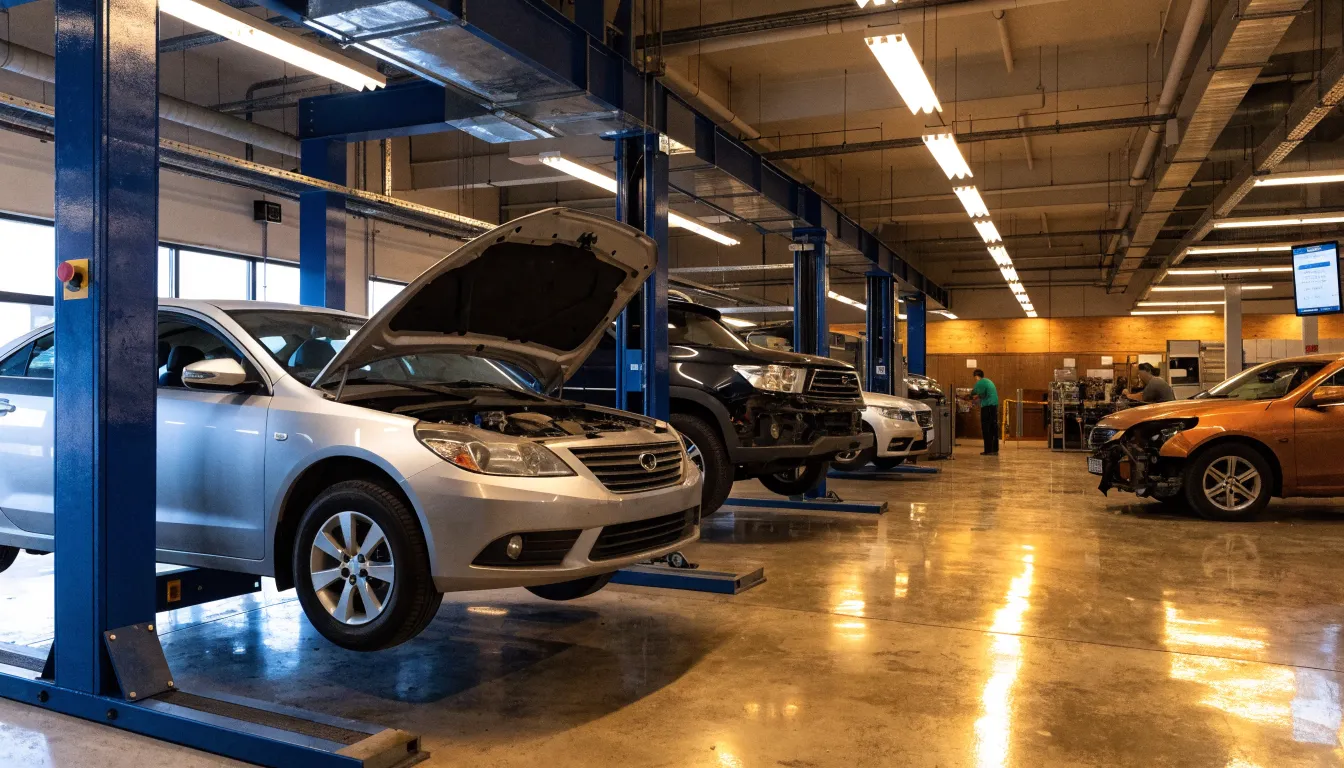
For significant repairs, visiting the shop before committing is reasonable. Clean, organized facilities tend to reflect operational discipline. Outdated or visibly neglected equipment is a warning worth heeding.
6. Experience with your vehicle type
Not all shops repair all vehicles equally well. A shop that primarily handles domestic trucks may not be the right choice for a European luxury sedan with an aluminum-intensive structure. A shop strong on mainstream collision work may not have the tooling for an EV.
Ask directly: "Have your technicians been trained on this make and model?" and "Do you have OEM repair procedures for this vehicle?" Shops with OEM certification for a specific brand have demonstrably invested in the right tools and training for it.
This matters most for newer, higher-end, or technically complex vehicles. For older mainstream vehicles, most qualified shops will handle the work competently.
7. Insurance relationships (DRP vs independent)
Whether a shop is part of an insurer's Direct Repair Program (DRP) affects how to evaluate it. DRP shops have pre-negotiated pricing agreements with insurers, which speeds up claims handling and reduces hassle for you. The trade-off: those same pricing arrangements can create pressure to keep repair costs down, sometimes below what the job actually requires.
Independent shops that accept all insurance but operate outside DRP networks have more flexibility to advocate for what they believe the repair needs. The trade-off there: more back-and-forth between you, the shop, and the insurer to resolve supplement disputes.
Neither is categorically better. The right choice depends on the repair, the specific shop, and the insurance situation. More on this in the DRP vs. independent section below.
8. Communication and customer service
Collision repair takes longer than most people expect. Parts availability, hidden damage, and insurance supplements all extend timelines. A shop that communicates proactively, sending updates without you having to call, is objectively easier to work with.
Before committing, ask:
- "How will you keep me updated on progress?"
- "Who is my point of contact if I have questions?"
- "How do you handle supplements when additional damage is found?"
The answers reveal whether communication is a priority or an afterthought.
Questions to Ask Before Dropping Off Your Car
Asking the right questions before committing to a shop can prevent expensive surprises. These 10 questions reveal how a shop operates, certifications, parts, warranty, ADAS capability, communication, all before your vehicle enters the bay.
- Are you I-CAR Gold Class certified? If yes, ask when the certification was last renewed.
- Do you have OEM certification for my vehicle's make? Relevant for newer, specialty, or EV vehicles.
- Will you use OEM or aftermarket parts? Understand the difference and whether insurance covers OEM.
- Can I see a written, itemized estimate before work begins? Non-negotiable for significant repairs.
- What is your warranty policy, and can I see it in writing? Clarify coverage period and what voids it.
- Do you perform ADAS recalibration in-house? If the vehicle has driver assistance systems, this matters.
- How will you communicate with me during the repair? Ask about update frequency and contact method.
- How do you handle additional damage discovered after teardown? The supplement process should be explained clearly.
- What is the estimated repair timeline? Understand how they account for parts delays.
- Can I speak with a technician directly about my repair? A shop that welcomes this is usually confident in its work.
If a shop grows impatient with these questions or can't answer them clearly, that's your answer.
Red Flags That Signal a Bad Auto Body Shop
Certain behaviors reliably signal a shop worth avoiding. Take these seriously regardless of price or convenience:
- Requesting full payment upfront: legitimate shops require a deposit at most; full payment before work starts is a hard stop
- Unusually low estimates: significantly below competitors usually means missing scope, substandard parts, or a bait-and-switch where the bill grows once your car is in the bay
- Pressure to decide immediately: "this price is only good today" has no place in professional collision repair
- Reluctance to put things in writing: estimates, warranties, and commitments should all be documented; a shop that resists is one you shouldn't trust
- No physical address or unstable location: mobile repair operations and unlicensed shops offer no accountability if something goes wrong
- No visible certifications: absence of certifications isn't automatically disqualifying, but a shop with no credentials at all warrants more scrutiny
- Discouraging insurance contact: reputable shops work through normal insurance channels; they don't ask you to avoid your insurer
- Poor cleanliness or disorganization: a visibly disorganized shop usually reflects how the work gets done
If something feels wrong when you visit or call a shop, trust that instinct. It's usually right.
DRP Shops vs Independent Shops: What's the Difference?
This distinction trips up a lot of car owners. A Direct Repair Program (DRP) shop operates under a pre-negotiated agreement with one or more insurers. An independent shop accepts insurance but sets its own pricing and repair standards. Each has real trade-offs that depend on the repair and your specific situation.
Pros and Cons of Each
| Factor | DRP shop | Independent shop |
|---|---|---|
| Insurance process | Streamlined, insurer and shop communicate directly | More back-and-forth between shop, insurer, and owner |
| Supplement handling | Pre-negotiated rates may limit supplements | More flexibility to negotiate full scope |
| Parts selection | Insurer agreements may favor aftermarket parts | Shop may be more willing to advocate for OEM parts |
| Repair advocacy | Pricing pressure can limit what repairs are authorized | Shop can advocate for what it believes is necessary |
| Convenience | Often faster claims handling, rental car coordination | More owner involvement in the process |
| Quality | Varies, DRP status alone doesn't indicate quality | Varies, independence alone doesn't indicate quality |
| Accountability | Insurer has build on if work quality falls short | Owner must pursue disputes directly |
When to Go DRP and When to Go Independent
DRP shops may be the right choice when:
- The repair is straightforward and the shop has strong independent reviews
- Minimizing hassle is the top priority
- The insurer's DRP network includes shops with solid reputations
Independent shops may be the right choice when:
- Your vehicle requires specialized repairs (EV, aluminum construction, OEM-certified procedures)
- The insurer's preferred shops have poor reviews or limited capabilities
- You want to advocate for OEM parts or a specific repair approach
- Prior experience with DRP shops has produced unsatisfactory results
Neither path is inherently better. The specific shop's quality, certifications, and reputation matter more than whether it's DRP or independent.
How to Check a Body Shop's Credentials
Verifying credentials takes less than 10 minutes and meaningfully reduces the risk of choosing a shop that isn't equipped for your repair.
I-CAR Gold Class Lookup
Visit goldclass. i-car. com and search by zip code or shop name. The directory shows current Gold Class shops, recent training certifications, and specialty areas. A shop that claims Gold Class but doesn't appear in the directory has either let the certification lapse or is misrepresenting itself. Both are problems.
OEM Certification Programs
Most major manufacturers publish certified repair facility lists:
- Tesla Approved Body Shop Network
- Honda ProFirst Certified
- Ford Certified Collision Network
- GM Collision Repair Network
- Volkswagen Group Certified Collision Program
Search "[your vehicle brand] certified collision repair" to find the manufacturer's official locator. OEM certification matters most for vehicles under five years old, EVs, and vehicles with aluminum construction.
BBB and State Licensing
Check the Better Business Bureau for complaint history and accreditation status. BBB accreditation isn't a quality certification, but a pattern of unresolved complaints tells you how a shop handles disputes, and that matters.
State licensing requirements vary. Most states require auto body shops to hold a valid business license; some require specific repair facility registration. The state's DMV or consumer protection office typically maintains a lookup. NHTSA's consumer resources at NHTSA. gov also cover consumer rights in the repair process.
Don't Panic (But Don't Rush Either)
After an accident, there's pressure to get things moving. The insurance company might push you toward their "preferred" shops. A tow truck driver might have a suggestion. Your coworker might know a guy.
Take a breath. Unless the car is completely undrivable, you've usually got time to do some research. A few hours spent now can save you thousands of dollars and weeks of headaches later.
The first 24 hours should be about documentation, not decisions. Photograph the damage from multiple angles. Get the other driver's information. File a police report if there's significant damage. Call your insurance company to start the claim.
Red Flags to Watch Out For
Some things should send you to a different shop immediately:
- Pressure to decide right now. Good shops don't need to rush you.
- Reluctance to put anything in writing. Everything should be documented.
- Vague descriptions of the work — "We'll figure it out once we get in there" without any specifics.
- No warranty offered. Quality work comes with confidence behind it.
- Cash-only discounts that skip the insurance process. This is often fraud, and you'll have no recourse if something goes wrong.
- Estimates that are dramatically lower than everywhere else. They're either missing damage, planning inferior parts, or padding supplements later.
- Online reviews that keep mentioning the same problems.
Getting Multiple Estimates
Get at least two or three estimates before committing. This isn't just a price exercise — it's about understanding what the repair actually requires.
Be skeptical if one estimate is dramatically lower than the others. Either they've missed damage, they're planning to use inferior parts, or they'll hit you with "supplemental" charges once the car is torn apart.
When comparing estimates, look at more than the total. Check what parts they're using — OEM, aftermarket, or recycled — and whether they've accounted for the same scope of work. Ask about paint quality and warranty terms.
After the Repairs: What to Check
Don't just drive off when you pick the car up. Take a few minutes to look it over:
- Check paint color match in daylight, from different angles
- Open and close all doors, the hood, and the trunk — everything should align properly
- Look for overspray on trim, glass, or rubber seals
- Test all lights, sensors, and electronic systems
- Check panel gaps — they should be consistent on both sides
- Look underneath for anything loose
- Take it for a drive and listen for sounds that weren't there before
Take photos when you pick it up. If problems show up later, you'll have a documented starting point.
If you notice issues, bring them up before you leave. Reputable shops fix problems on the spot or set up a follow-up. If they're dismissive or make excuses, document everything and loop in your insurance company.
The best body shops treat every car like it's their own. They take pride in the invisible work — the structural repairs and corrosion protection you'll never see — because that's what actually determines whether your car is safe.
Finding a good shop takes some effort, but it's worth it. A quality repair protects your car's value, your safety, and your peace of mind. Take your time, ask questions, and trust your gut. If something feels off, it probably is.
Key Takeaways
Choosing the right auto body shop comes down to three things: verifiable credentials, transparent communication, and clear documentation.
- Check certifications first: I-CAR Gold Class and OEM certification are the most meaningful signals of technical capability. Verify both through official directories before committing.
- Get estimates in writing: Detailed, itemized estimates protect you if disputes come up later. Vague estimates are a warning sign.
- Ask the 10 questions: They reveal how a shop operates before your car ever enters the bay.
- Know your rights: You choose the shop, not your insurer. Understanding this leads to better outcomes in most insurance-involved repairs.
- Watch for red flags: Pressure tactics, no written warranty, and unusually low estimates are reliable signals to keep looking.
- Use credentials as a filter, not a guarantee: Certifications narrow the field. Reviews and direct conversations provide the texture certifications don't.
Car owners who find a quality shop before they need one are in the best position. Those who need to find one right after an accident can still make a good decision. The factors above apply either way.
To start finding certified shops in your area, browse auto body shops in California, auto body shops in Texas, and auto body shops in Florida. For more on what to expect during the repair itself, see the full guide to collision repair services.
For a deeper look at how certifications affect repair quality, see the upcoming article on certified collision repair standards.
Frequently Asked Questions
How do I find a good auto body shop near me?
Search for I-CAR Gold Class shops at goldclass. i-car. com by zip code, then check Google reviews for shops with 50+ ratings above 4.3 stars. For vehicles under five years old, also check OEM certification for your make. Compare at least two written estimates to verify scope and pricing before deciding.
Should I use the body shop my insurance recommends?
It depends on the shop's independent reputation. DRP shops are convenient and often handle claims efficiently, but car owners are not legally required to use them. Check Google reviews and I-CAR certification independently. If the shop checks out, convenience is a reasonable factor. If reviews are poor, choosing a different shop is the car owner's right.
What certifications should a collision repair shop have?
The two most meaningful certifications are I-CAR Gold Class and OEM certification for your vehicle's brand. I-CAR Gold Class confirms ongoing technician training; OEM certification confirms brand-specific tools and procedures. ASE-certified technicians add further confidence. None are legally required, but shops that hold them have demonstrably invested in quality, which significantly reduces repair risk.
How do I know if a body shop did a good job?
Inspect the vehicle before leaving the lot. Check that panel gaps are even, paint color and texture match surrounding panels, all trim is reinstalled, warning lights are off, and ADAS features function correctly. Ask for pre-repair and post-repair scan documentation, plus any ADAS calibration records. These confirm safety systems were verified before delivery.
Can my insurance company force me to use a specific shop?
In most states, no. Insurers can recommend or steer policyholders toward DRP shops, but can't legally require a specific facility. State regulations vary, check with your state's Department of Insurance for details. Car owners who choose a different shop can generally do so, though they may need to manage supplement disputes more actively.
What's I-CAR Gold Class certification?
I-CAR Gold Class is a shop-level certification requiring annual training across estimating, structural repair, refinishing, and electrical/ADAS roles. Awarded by the Inter-Industry Conference on Auto Collision Repair, it's the most widely recognized ongoing training credential in the industry. Roughly 20% of US shops hold it. Verify status at goldclass. i-car. com.