Marcus thought the tap at a stoplight was minor, so he drove home and parked his sedan. Two days later, he noticed the trunk sat unevenly, and the car drifted slightly right on a flat road. At the shop, technicians measured the structure and found hidden rear frame movement. That moment is common for drivers who don't see visible body damage right away. The biggest surprise is often the car chassis repair cost — because structural work depends on more than dents and paint.
In 2026, repair pricing varies by damage depth, vehicle design, labor rates, and whether sensors need recalibration. A small bend may cost under $1,200, while severe structural correction can cross $10,000. Understanding the range helps owners compare estimates, ask better questions, and avoid rushed decisions. Before approving repairs, it's worth getting a detailed inspection from local frame repair services.
What is chassis damage and why does it matter?
Many people use the words chassis, frame, and body as if they mean the same thing. They don't. The chassis is the vehicle's core structure that supports major systems, including suspension, steering, and drivetrain components. The frame is the main load-bearing section of that structure. On many modern cars, the body and frame are integrated into one shell called a unibody.
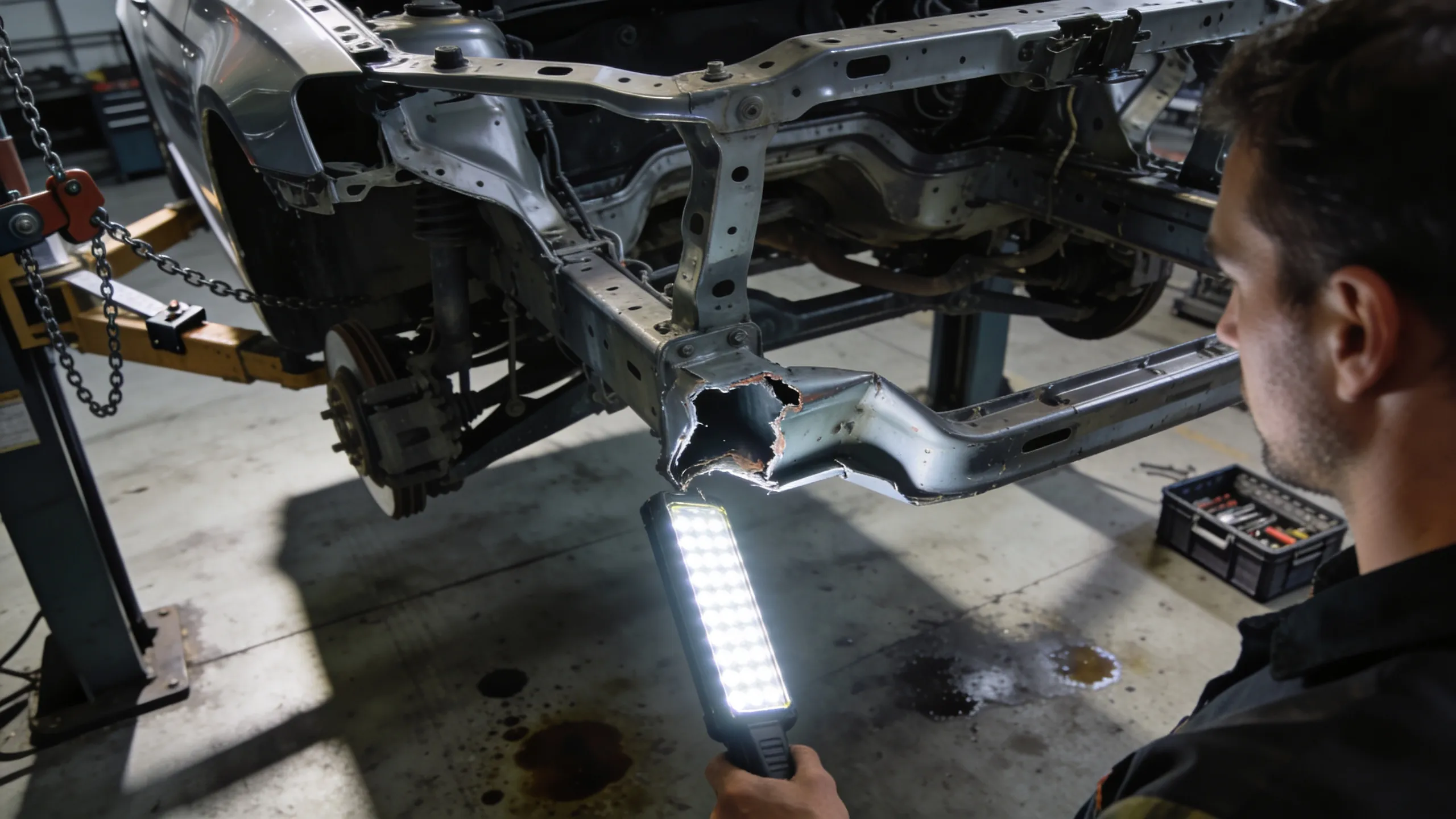
Chassis damage means that structural parts moved, bent, twisted, or cracked from impact. Even small changes can affect wheel alignment, tire wear, braking balance, and airbag timing. That's why structural repair is different from cosmetic body work. A bumper cover can look fine while hidden rails under it are bent.
Safety is the biggest reason this damage matters. Crash energy is designed to flow through specific zones in a controlled way. If those zones are altered, future impact protection may change. Organizations like the IIHS and NHTSA emphasize structural integrity in overall vehicle safety performance. In practical terms, fixing chassis damage protects handling now and crash performance later.
How much does car chassis repair cost in 2026?
National 2026 pricing shows a wide spread because every collision transfers force differently. Two cars with similar exterior dents can have very different structural outcomes once measured on a frame machine. Most professional shops now rely on digital measuring systems and manufacturer repair procedures, which improves precision but can raise labor hours.
Below is a practical cost guide for common structural scenarios:
| Repair type | Typical 2026 cost range | What is usually included |
|---|---|---|
| Minor chassis damage | $600–$1,200 | Basic pulls, measuring, alignment checks |
| Moderate frame straightening | $1,000–$3,000 | Multi-point pulls, structural measurements, setup time |
| Severe structural damage | $3,000–$10,000+ | Extensive pulls, sectioning, reinforcement repairs |
| Unibody repair | $1,500–$5,000 | Rail/apron/floor correction, weld points, alignment |
| Full frame replacement | $5,000–$15,000 | Major disassembly, replacement frame work, reassembly |
These ranges reflect repair labor and standard structural processes. Final totals often increase when shops add suspension parts, wheel alignments, scan diagnostics, and advanced driver-assistance system calibrations. On newer cars, camera and radar calibration can add meaningful cost after structure work is complete.
Material type also matters. High-strength steel and mixed-material construction require strict methods, approved weld techniques, and model-specific repair plans. That can increase labor time compared to older vehicle structures. Drivers comparing a collision repair estimate should focus on line-item detail, not headline price alone. A complete estimate usually explains measuring, pulls, parts, scans, and post-repair verification.
Marcus in Phoenix: a frame damage story
Marcus T., a 2019 Honda Accord owner in Phoenix, was rear-ended in slow traffic and expected only bumper work. During teardown, the shop found slight movement in the rear body panel area and adjacent structural points. His insurer approved a frame measurement, then Marcus requested three independent estimates to compare methods.
The quotes came back at $2,100, $2,800, and $3,400. The lowest estimate included fewer measurement steps and no documented post-repair verification. Marcus chose the $2,800 shop because it used dedicated frame-straightening equipment and provided before-and-after measurement printouts. That decision gave him clearer quality evidence, even at a mid-range price.
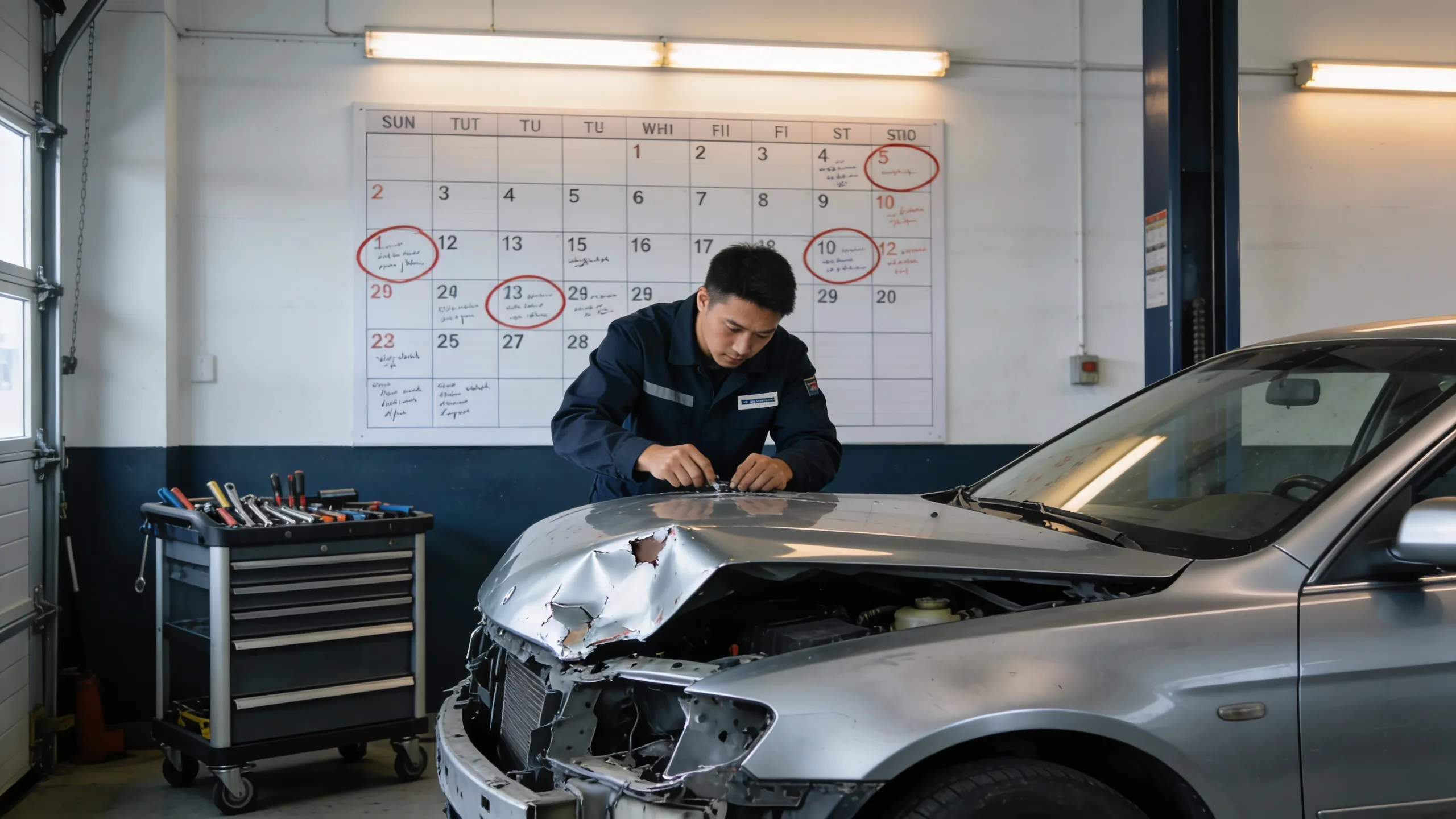
Repairs took four days, including structural pulls, alignment checks, and final inspection. The Accord passed post-repair inspection, and steering feel returned to normal.
What factors affect car frame repair cost?
Vehicle type and construction
Vehicle architecture strongly affects labor hours and repair strategy. A compact sedan with accessible rear rails may need less disassembly than a luxury SUV with layered panels and tight packaging. Trucks with separate frames can require heavy mounting work, while crossovers with unibody construction may need complex pull sequencing. Newer vehicles also use stronger steels, which improve crash performance but demand strict repair procedures. That combination can raise the average car frame repair cost, even when visible damage looks moderate.
Damage severity and location
Cost rises quickly when damage reaches suspension pickup points, crumple zones, or cabin-adjacent structures. A minor bend at one rail end is simpler than distortion across multiple reference points. Location matters because technicians must restore factory dimensions in three directions, not just one visible line. Hidden buckles behind quarter panels often increase teardown time. In many cases, the true frame straightening cost is clear only after full measurement and partial disassembly.
Labor rates and geographic variation
Structural labor rates vary by metro area, shop certification level, and local operating costs. Markets with high technician demand and higher property costs usually post higher hourly rates. That's why the same repair plan may price differently across states or cities. Geographic context helps set realistic expectations before requesting a frame damage estimate.
How to get an accurate frame damage estimate
A reliable estimate starts with process, not guesswork. First, request a structural inspection at a shop that uses computerized measuring equipment. Ask for documented measurements tied to factory reference points. Without that data, pricing is often a rough placeholder.
Second, request an itemized written estimate. It should separate structural labor, parts, diagnostics, alignments, and calibrations. This format makes side-by-side comparison easier when collecting multiple quotes.
Third, ask whether the shop follows manufacturer repair procedures for your exact year, make, and model.
Fourth, confirm what happens after repair. A quality plan includes post-repair measurement verification, test drive checks, and final alignment documentation.
Fifth, ask about supplements — added costs found during teardown. Knowing supplement policy early helps avoid billing surprises.
Get at least two or three estimates, then compare scope before price. The best value is often the estimate with complete documentation and clear quality controls.
Unibody vs body-on-frame: how construction type affects repair cost
Unibody vehicles combine body and frame into one integrated shell. Most modern sedans, hatchbacks, and crossovers use this design to reduce weight and improve efficiency. In unibody repairs, force can travel across multiple connected panels, so technicians must track movement across a wider structure. That's one reason unibody repair cost often includes more measuring time and precision setup.
Body-on-frame vehicles — common in many trucks and some large SUVs — place the body on a separate steel frame. This design can simplify certain structural replacements, because the body and frame are distinct assemblies. Repairs may still be expensive, though, when heavy components need removal or when frame rails require major correction.
Construction type doesn't guarantee a cheaper bill either way. Actual cost depends on where damage occurred, how far dimensions moved, and whether parts must be replaced or straightened. The key question to ask any shop: how will you verify restored geometry and safe load paths? That conversation gives more value than comparing average numbers alone.
When chassis damage leads to a total loss
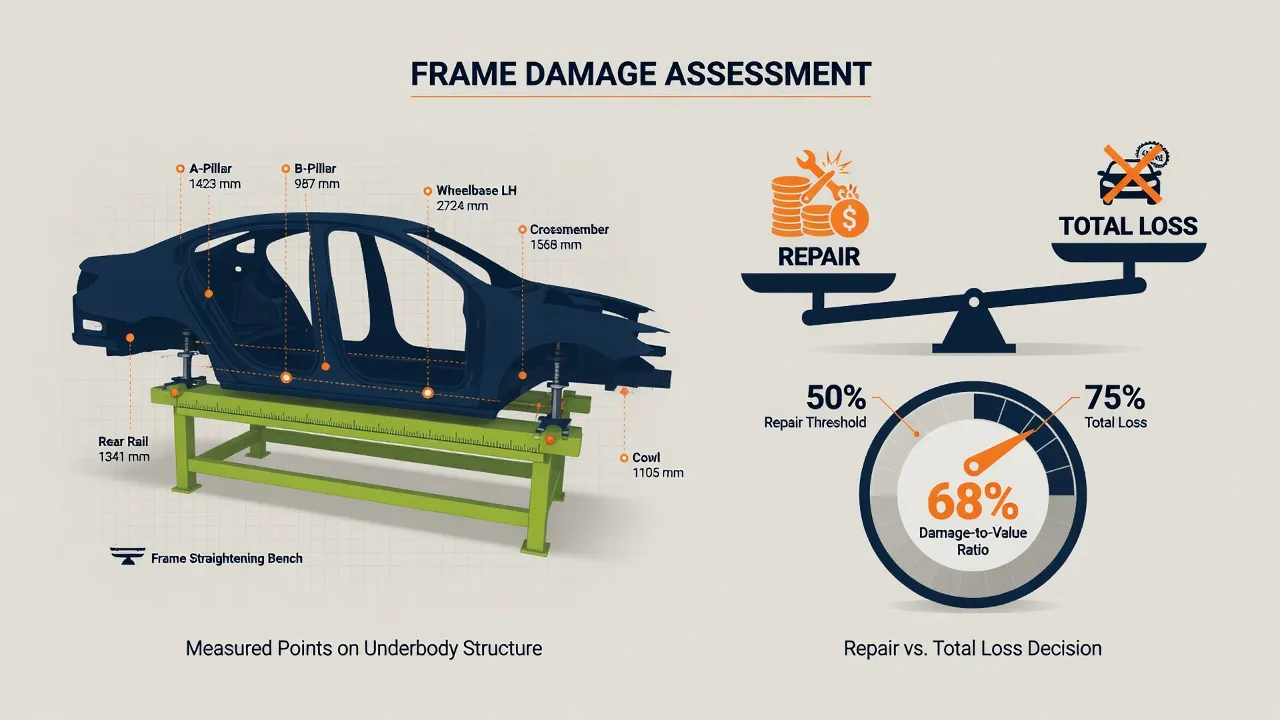
Insurers often compare repair cost against a vehicle's actual cash value when deciding total loss status. In many states and policies, the practical threshold is often around 70% to 80% of vehicle value, though rules vary by jurisdiction and insurer method. If projected structural, mechanical, and calibration costs cross that level, the vehicle may be declared a total loss instead of repaired.
Carlos R. in Chicago is a recent example. His 2016 Honda Civic had significant front structural deformation after a multi-vehicle crash. Early estimates appeared manageable, but teardown revealed additional rail and apron damage plus sensor-related costs. The insurer ultimately declared the Civic a total loss when full repairs approached threshold limits.
Even when repair remains possible, ask about diminished value. Diminished value is the market price reduction after a car has a documented accident history — especially with frame involvement. Buyers and dealers often discount previously damaged vehicles, even after proper repairs. Understanding this tradeoff helps owners decide whether to proceed with repair, negotiate insurance outcomes, or consider replacement.
Sources
- CCC Intelligent Solutions — collision repair cost benchmarks and industry data
- Insurance Information Institute — auto insurance and repair cost statistics
- I-CAR (Inter-Industry Conference on Auto Collision Repair) — collision repair industry training standards
- NHTSA Vehicle Safety — federal vehicle safety and crashworthiness standards
Frequently asked questions about car chassis repair cost
Q1: How much does car chassis repair cost on average?
Most drivers see a broad range, from about $600 for minor correction to $5,000 or more for major structural work. Severe cases can exceed $10,000, especially when multiple structural zones and recalibrations are involved. Average pricing depends on vehicle type, repair method, and local labor rates.
Q2: Can chassis damage be fully repaired?
Yes, many cases can be repaired to manufacturer dimensions when qualified technicians use proper measuring systems and procedures. Success depends on damage location, material type, and whether replacement or sectioning is needed. Post-repair measurement reports and alignment documentation help confirm quality and safety.
Q3: Does insurance cover chassis repair?
Insurance often covers structural repair when collision coverage applies and claim terms are met. Deductibles, limits, and policy language affect final out-of-pocket cost. Insurers may also require approved estimates, supplement review, and repair documentation before paying the complete amount.
Q4: How long does frame repair take?
Minor repairs may finish in two to three days, while moderate to severe structural jobs often take four to ten days. Parts delays, teardown findings, and calibration scheduling can extend timelines. Shops that provide milestone updates usually give the clearest timeline expectations.
Q5: Does frame damage affect my car's resale value?
In many markets, yes. Vehicles with recorded frame damage often sell for less than comparable clean-history vehicles. The reduction varies by brand, age, repair quality, and buyer demand. Keeping complete repair records can help support value during resale discussions.
Key takeaways
- Car chassis repair cost in 2026 ranges from roughly $600 for minor issues to $10,000+ for severe structural damage.
- Reliable pricing requires digital structural measurements, itemized estimates, and post-repair verification documents.
- Vehicle construction, damage location, and local labor rates all influence final cost more than visible dents alone.
- Unibody repair and body-on-frame repair follow different methods, but either can become expensive with deep structural movement.
- Insurance may cover repairs, yet total loss decisions often appear when projected cost nears 70% to 80% of vehicle value.
- Drivers can reduce risk by comparing scope — not just price — and choosing shops with documented quality controls.