Overview
A small rust spot on a door panel can cost less than a tank of gas to fix. That same car, left untreated for two more years, can end up with frame corrosion that costs more to repair than the vehicle is worth. Understanding auto rust repair cost before the damage progresses is one of the most valuable things a car owner can do for their budget.
This guide breaks down the full cost picture — from minor surface oxidation to structural frame rust. Repair methods, realistic price ranges, DIY versus professional comparisons, and the warning signs that mean a car may not be worth repairing.
How Rust Severity Determines Repair Cost
Not all rust is the same. The type present on a vehicle is the single biggest factor in determining car rust repair cost. Auto body professionals categorize corrosion into four levels, and the price jumps significantly at each stage.
Surface Rust
Surface rust is the earliest stage — light orange discoloration where the clear coat has been chipped or worn thin. The metal isn't yet compromised. A body shop will sand away the oxidation, apply rust-inhibiting primer, and repaint the area. Typical cost: $150 to $400 per panel.
Bubble Rust
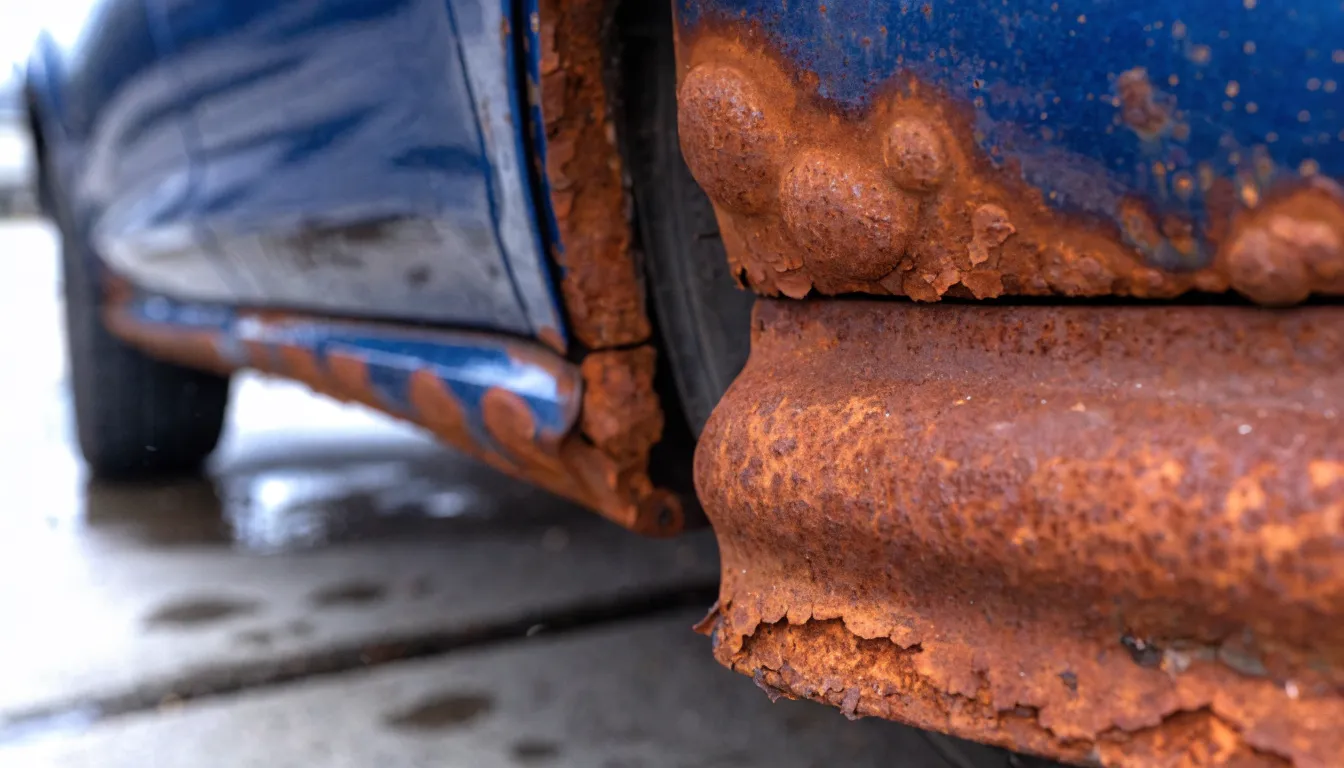
Bubble rust appears as paint that has lifted away from the metal in blistered patches. Moisture has worked past the paint layer, and rust is spreading laterally beneath it. Repair requires removing all affected paint, treating or grinding the corroded metal, applying filler if needed, and repainting. Typical cost: $400 to $1,000 per panel.
Penetrating Rust
Penetrating rust has eaten entirely through the metal, leaving holes or paper-thin sections. The metal can't simply be treated — it must be replaced. Body shops cut out the rusted section and weld in new metal called a patch panel, then refinish the area. Typical cost: $1,000 to $2,500 per panel, depending on how much metal needs replacement.
Structural Rust
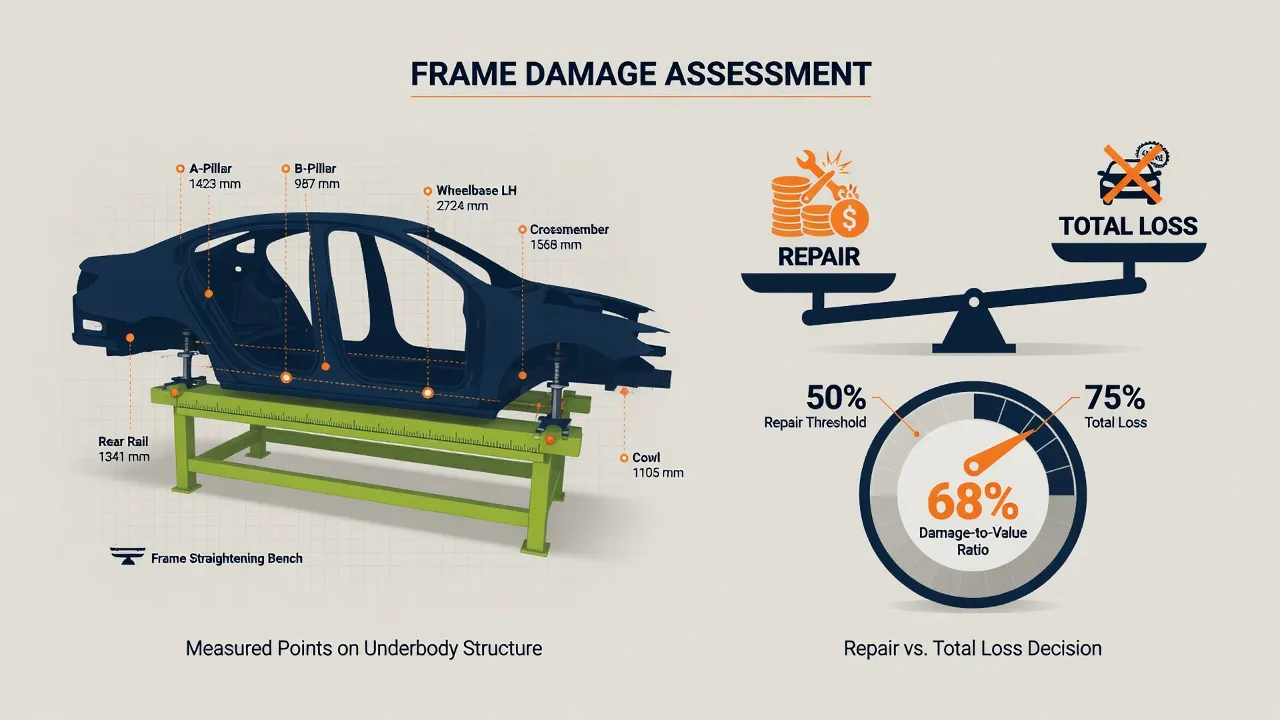
Structural rust affects the frame or unibody — the steel skeleton that manages crash forces and maintains rigidity. This is both a financial and a safety problem. A compromised frame can fail in a collision. Frame rust repair is the most expensive category. Typical cost: $2,000 to $3,500 or more. A vehicle with significant structural corrosion may be declared a total loss.
Auto Rust Repair Cost Breakdown by Severity
| Rust Severity | What It Looks Like | Repair Method | Typical Cost Range |
|---|---|---|---|
| Surface rust | Orange spots, faded discoloration | Sand, prime, repaint | $150-$400 per panel |
| Bubble rust | Lifted, blistered paint | Strip, treat, fill, repaint | $400-$1,000 per panel |
| Penetrating rust | Holes, soft or crumbling metal | Patch panel weld + repaint | $1,000-$2,500 per panel |
| Structural rust | Frame, subframe, floor pan damage | Frame section replacement or total loss | $2,000-$3,500+ |
Note: Labor rates vary by region. Metro-area shops typically charge 40% to 60% more per hour than shops in smaller markets. A $600 repair in a rural Midwest town may run $900 to $1,000 in a coastal metro.
Common Rust Repair Locations and Their Costs
Where rust appears on a vehicle affects both the repair method and the price. Some locations are more labor-intensive to access and repair than others.
Door Panels and Quarter Panels
Door and quarter panels are among the most commonly rusted areas, especially where road salt is used in winter. These are flat, accessible panels that body shops can often repair efficiently.
- Surface rust on a door: $150 to $350
- Bubble rust on a door: $400 to $800
- Penetrating rust requiring a patch: $800 to $1,800
- Full door shell replacement (when rust is extensive): $1,200 to $2,500 including labor and paint
Wheel Wells and Rocker Panels
Wheel wells and rocker panels (the structural sills running along the bottom of the car between the front and rear wheels) are frequent rust targets. Both are constantly exposed to water, road debris, and salt spray. Rocker panels also carry structural load in many unibody vehicles.
- Wheel well rust treatment: $300 to $900
- Rocker panel repair: $500 to $1,500
- Full rocker panel replacement: $1,000 to $2,500
Floor Pan and Frame
The trunk floor and passenger compartment floor pan are hidden from view — which is why rust there often goes undetected until it's severe. Frame rust is most common on trucks and older body-on-frame vehicles, though unibody vehicles (most modern cars) face similar risks in floor pans and structural sills.
- Small floor pan patch weld: $400 to $900
- Extensive floor pan rust (multiple sections): $1,500 to $3,000+
- Localized frame section repair: $1,500 to $2,500
- Extensive frame rust: Often approaches or exceeds the vehicle's market value
DIY Rust Repair vs. Professional Repair
Car owners sometimes attempt rust repair at home. DIY can work for minor surface rust. It has real limitations beyond that.
Surface rust — orange spots that haven't yet lifted the paint — is a reasonable DIY project. The process involves sanding to bare metal, applying a rust-inhibiting primer, feathering in matched touch-up paint, and adding a clear coat layer. Typical DIY material cost: $30 to $150. The trade-off is quality. Professional body shops use paint-matching equipment and controlled spray booths that produce seamless results. DIY work is usually visible on close inspection, though it adequately stops rust from spreading on a high-mileage vehicle.
Bubble rust, penetrating rust, and structural corrosion should go to a professional. Patch panel installation requires MIG or TIG welding that most car owners don't have. Structural rust directly affects crash safety, and improper repairs create real risk. Professional repairs also carry workmanship warranties. DIY work doesn't. Rust converter products ($15 to $50 at auto parts stores) can slow surface rust spread temporarily — but they're not a substitute for professional repair on advanced corrosion.
What Affects the Final Cost of Rust Repair
Several variables determine where a specific repair falls within the cost ranges above.
Geographic labor rates: Shops in major metro areas charge $80 to $150 per hour. Smaller markets often run $55 to $85 per hour.
Vehicle make and model: Luxury and European vehicles often cost more to repair due to parts availability, panel design complexity, and certification requirements.
Extent of hidden damage: Rust spreads behind panels invisibly. A shop often finds more corrosion once a panel is stripped, and estimates may increase accordingly.
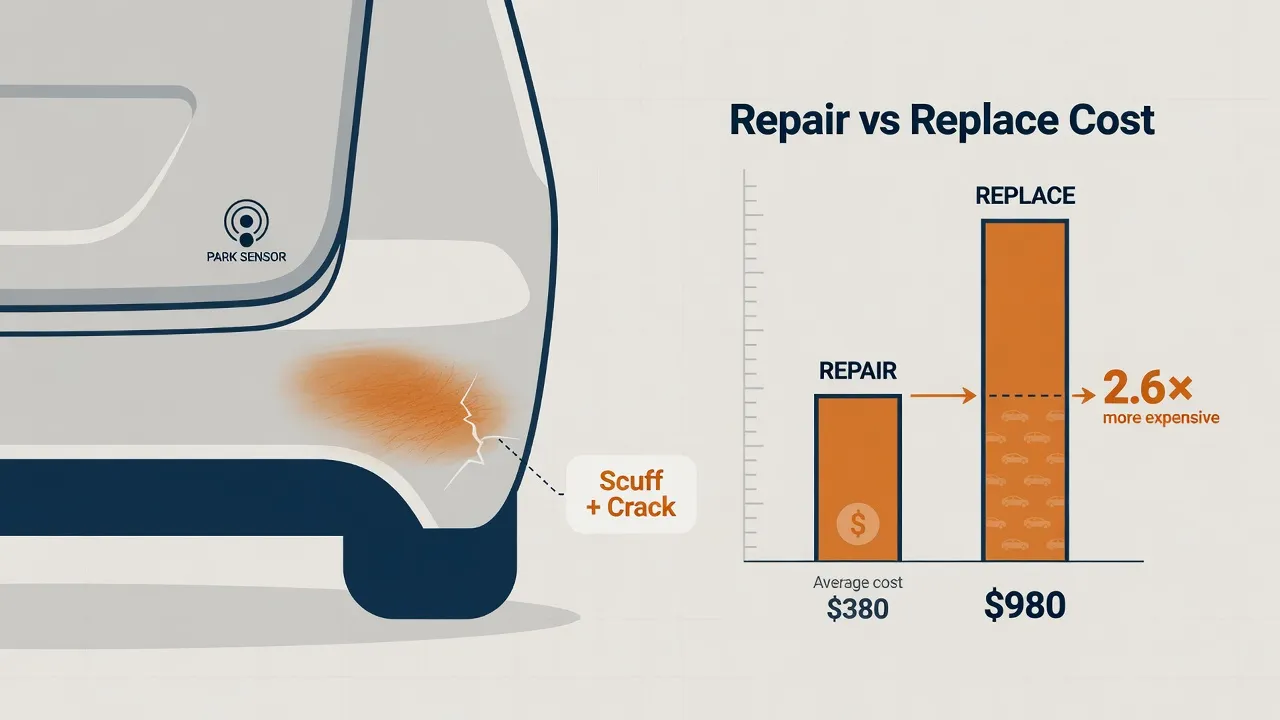
Panel replacement vs. repair: Replacing an entire panel can sometimes cost less than extensive metalwork, particularly on older vehicles with available used parts.
Paint matching complexity: Two-stage and three-stage paint — used on most modern vehicles — requires more time to match and blend than single-stage paint.
A Look at Real Repair Scenarios
Scenario 1 — Surface rust on a pickup truck door
A pickup truck owner noticed two quarter-sized rust spots on the driver's door after a winter of road salt exposure. A body shop quoted $280 to sand, prime, and spot repaint the area. Had the owner waited two more winters, those spots would likely have developed into bubble rust with a much larger repair bill.
Scenario 2 — Rocker panel bubble rust on a sedan
A car owner discovered paint bubbling along both rocker panels during a pre-purchase inspection on a used sedan. The body shop found rust had spread roughly 18 inches along each rocker. After stripping both panels, treating the metal, applying filler to minor pitting, and repainting, the total cost was $1,350. Completing the repair before the bubbling progressed to penetrating rust prevented a much larger bill.
Scenario 3 — Frame rust on an older SUV
An SUV owner sought an estimate for a 14-year-old vehicle with visible frame corrosion. The shop found two main frame rails had thinned to a fraction of their original thickness. The repair estimate came in at $3,200. With the vehicle's market value at approximately $4,500, the owner chose to sell rather than repair.
Rust Treatment for Cars: Prevention and Early Intervention
The most affordable rust repair is the one that never becomes necessary.
- Rustproofing or undercoating: A protective barrier applied to the vehicle's underside. Cost: $100 to $400. Most effective on new or newer vehicles.
- Regular undercarriage washing: Removes road salt before it works into metal seams. Many car washes offer undercarriage wash for $2 to $10.
- Touch-up paint on chips: Treating stone chips before bare metal is exposed prevents surface rust from starting. Touch-up paint kits cost $10 to $30.
When surface rust or minor bubble rust is found, professional shops can apply rust converter (which transforms iron oxide into a paintable compound) or cavity wax injection (sprayed into door seams and rocker panels to prevent rust inside enclosed sections). Cavity wax injection typically costs $150 to $350.
When to Walk Away: Frame Rust and the Total Loss Question
Whether to repair a rusted vehicle or cut losses is one of the harder decisions a car owner faces. Several factors inform it.
Compare repair cost to market value: If rust repair cost approaches or exceeds 50% to 75% of the vehicle's current market value, repair is often not financially justified — especially for older vehicles with other maintenance needs ahead.
Understand the safety implications: A frame with severely thinned or perforated steel doesn't absorb crash energy as designed. The National Highway Traffic Safety Administration (NHTSA) sets vehicle safety standards that inform how structural integrity is evaluated after any damage, including corrosion.
Check for rust-related recalls: Some vehicles have documented rust problems in specific areas. Manufacturers occasionally issue recall programs or corrosion warranty extensions. The NHTSA recall database lets car owners check by VIN for active programs.
Getting an Accurate Rust Repair Estimate
Rust estimates frequently change once work begins. Hidden corrosion behind panels is common, and shops often can't see its full extent until the panel is stripped. To get a more reliable number:
- Ask the shop to probe surrounding areas for soft metal before writing the estimate
- Ask what additional costs would result if the rust turns out to be worse than visible
- Get two to three estimates, especially for penetrating or structural rust
- Ask whether the plan involves patching, full panel replacement, or treatment only — each has different durability implications
The Automotive Service Association (ASA) notes that written estimates and clear communication about supplemental costs are standard expectations for body repair work.
Key Takeaways
Auto rust repair cost spans a wide range because rust itself ranges from trivial surface oxidation to serious structural failure.
- Surface rust: $150 to $400 per panel — the most affordable point to act; catching it here saves significant money
- Bubble rust: $400 to $1,000 per panel — requires stripping, treating, and repainting the affected area
- Penetrating rust: $1,000 to $2,500 per panel — involves metalwork and welding that requires professional equipment
- Structural/frame rust: $2,000 to $3,500 or more — may not be financially justified depending on vehicle value
- DIY is appropriate for surface rust only — anything beyond requires professional repair for safety and quality
- Prevention is the best investment: rustproofing, undercarriage washing, and prompt paint chip touch-up prevent expensive stages from developing
- Get multiple estimates for complex rust repairs and ask each shop to explain what happens if they find more damage once the panel is stripped
Sources
- CCC Intelligent Solutions — collision repair cost benchmarks and industry data
- Insurance Information Institute — auto insurance and repair cost statistics
Frequently Asked Questions About Auto Rust Repair Cost
How much does it cost to fix rust on a car?
Rust repair cost depends on severity. Surface rust runs $150 to $400 per panel. Bubble rust costs $400 to $1,000. Penetrating rust requiring metalwork runs $1,000 to $2,500. Structural or frame rust starts at $2,000 and can exceed $3,500. Local labor rates and vehicle type also affect final pricing.
Is rust repair covered by car insurance?
Standard auto insurance — collision and comprehensive — doesn't cover rust damage. Rust is classified as a maintenance issue, not an insurable event. If rust was worsened by a collision, there may be partial coverage depending on the specific policy. Car owners should review their policy or contact their insurer directly.
Can rust be fully fixed on a car?
Surface rust and bubble rust can be repaired to a near-original appearance when caught early. Penetrating rust can be structurally addressed with patch panels. Severe structural rust is sometimes not fully repairable to factory safety standards, which is why some vehicles are written off rather than repaired.
How long does rust repair take?
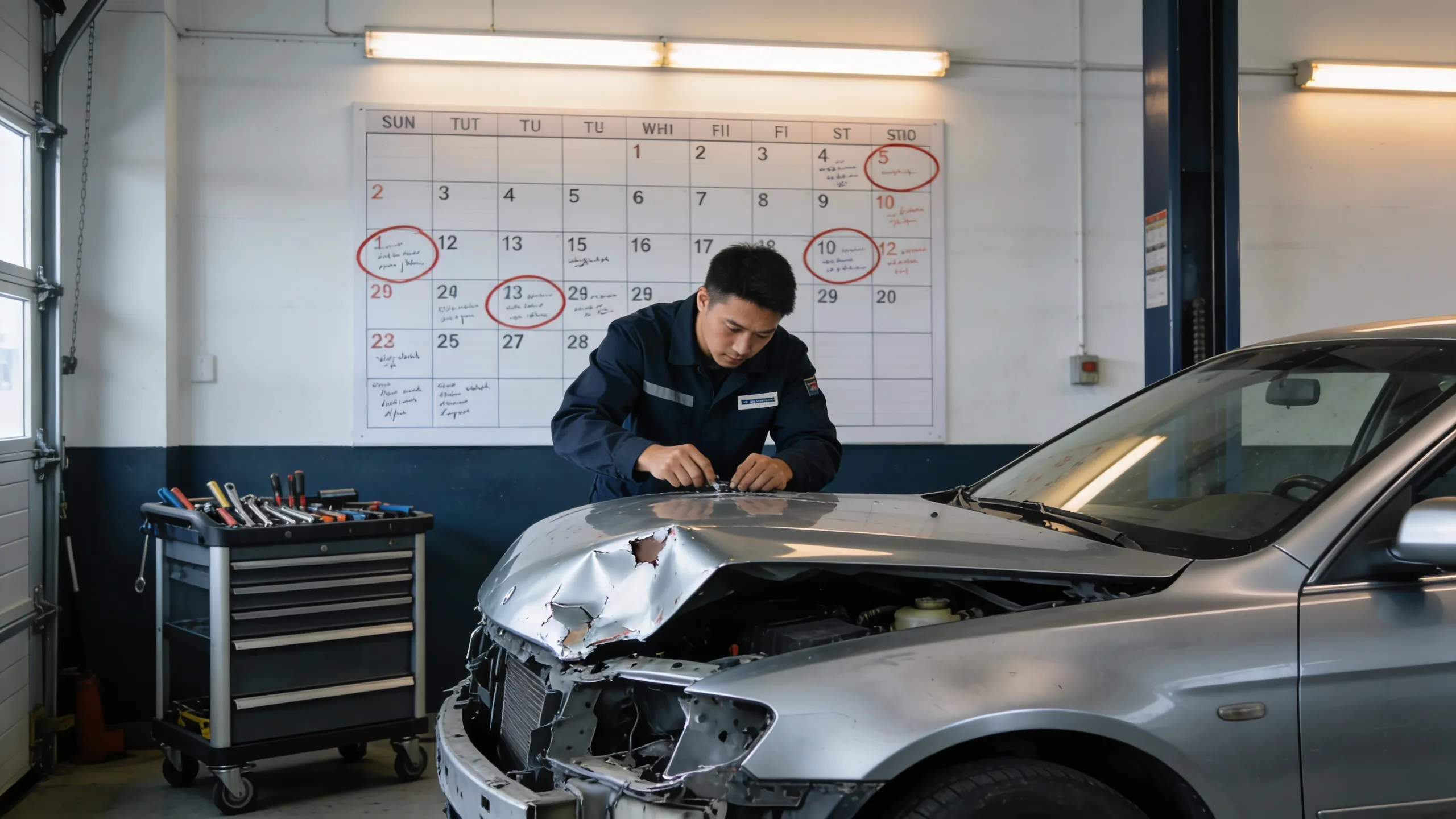
Surface rust touch-up takes a few hours to one day. Bubble rust or patch panel repairs typically take two to four days. Extensive frame rust repairs can take a week or more. Timelines vary by shop workload and repair complexity.
Does rust lower a car's resale value?
Yes. Visible rust — even surface rust — signals to buyers that a vehicle may have deeper corrosion or maintenance neglect. The value impact is sharpest for structural rust, which buyers and inspectors treat as a serious red flag.
What is the best rust treatment for cars?
Prevention is most effective: rustproofing on new vehicles, cavity wax injections in seam areas, and prompt touch-up of paint chips before bare metal is exposed. For existing surface rust, professional sanding, primer, and repaint is the most durable solution. Chemical rust converters are a lower-cost option for surface oxidation but aren't a substitute for professional repair on advanced rust.