Why Audi vehicles require specialized collision repair
Most modern Audi models use the Audi Space Frame (ASF) architecture — aluminum alloys, ultra-high-strength steel, and carbon fiber-reinforced polymer. This creates real repair challenges because aluminum behaves fundamentally differently from steel.
Key differences:
- Standard heat-and-pull techniques can weaken or destroy aluminum structural components
- Aluminum work-hardens rapidly, becoming brittle with repeated flexing or hammering
- Aluminum welding requires specialized equipment, different shielding gases, and separate work areas to prevent galvanic corrosion
- Most Audi models contain ADAS with sensors, cameras, and radar units requiring recalibration after repairs
Without proper ADAS recalibration, safety features like lane-keeping assist, adaptive cruise control, and automatic emergency braking may malfunction — even if the car looks perfect.
What Audi's certification program requires of body shops
Technician training requirements
Technicians must complete Audi-specific training through I-CAR-recognized programs, including:
- Aluminum welding certification
- Structural repair procedures
- Adhesive bonding
- ADAS recalibration
Training is often model-specific. Techniques vary across Audi models due to different alloys and structural designs. Certified shops must consult Audi's ElsaPro workshop information system for every repair — not rely on general industry practices.
Equipment requirements
Certified shops invest heavily in specialized equipment:
- Dedicated aluminum repair area physically separated from steel work areas
- Aluminum-specific MIG welding equipment with correct shielding gas mixtures
- Aluminum-rated frame measurement and straightening equipment
- OEM-approved ADAS calibration tools for each Audi model system
- Approved paint systems matching Audi's multi-layer factory finish specifications
The investment typically runs $150,000 to over $300,000. That's why most body shops don't pursue certification.
Repair procedure compliance
Shops must follow Audi's published repair procedures exactly:
- Audi OEM parts for all structural components
- Specific adhesives and fasteners per repair manuals
- Repair sequences matching the factory build process
- Periodic audits to verify compliance
Audi OEM parts: what they are and why they matter
OEM (Original Equipment Manufacturer) parts are manufactured to the same specifications as factory-installed components. For structural pieces — A-pillars, B-pillars, subframes, crumple zones — using OEM parts is a safety issue. Full stop.
Audi's crash management system is an integrated unit. Each structural component absorbs and redirects crash energy in a specific sequence. Aftermarket structural parts may look similar but rarely match the same metallurgical specifications. A component that's 10% off in hardness from factory specs can alter how the entire crash structure performs the next time it's hit.
For non-structural cosmetic parts, aftermarket options may be acceptable depending on vehicle age and insurance coverage. Many states require insurers to disclose when aftermarket parts are specified, and some allow policyholders to request OEM parts for newer vehicles.
What Audi collision repair costs: a realistic overview
Audi collision repair costs more than equivalent work on standard steel-bodied vehicles. Several factors drive this.
Cost factors specific to Audi repair
Aluminum labor rates: Aluminum repair takes 30% to 50% longer than equivalent steel repairs. Technicians must work carefully to avoid over-stressing the material.
OEM parts pricing: Audi OEM parts often run two to four times the cost of aftermarket alternatives for common collision components.
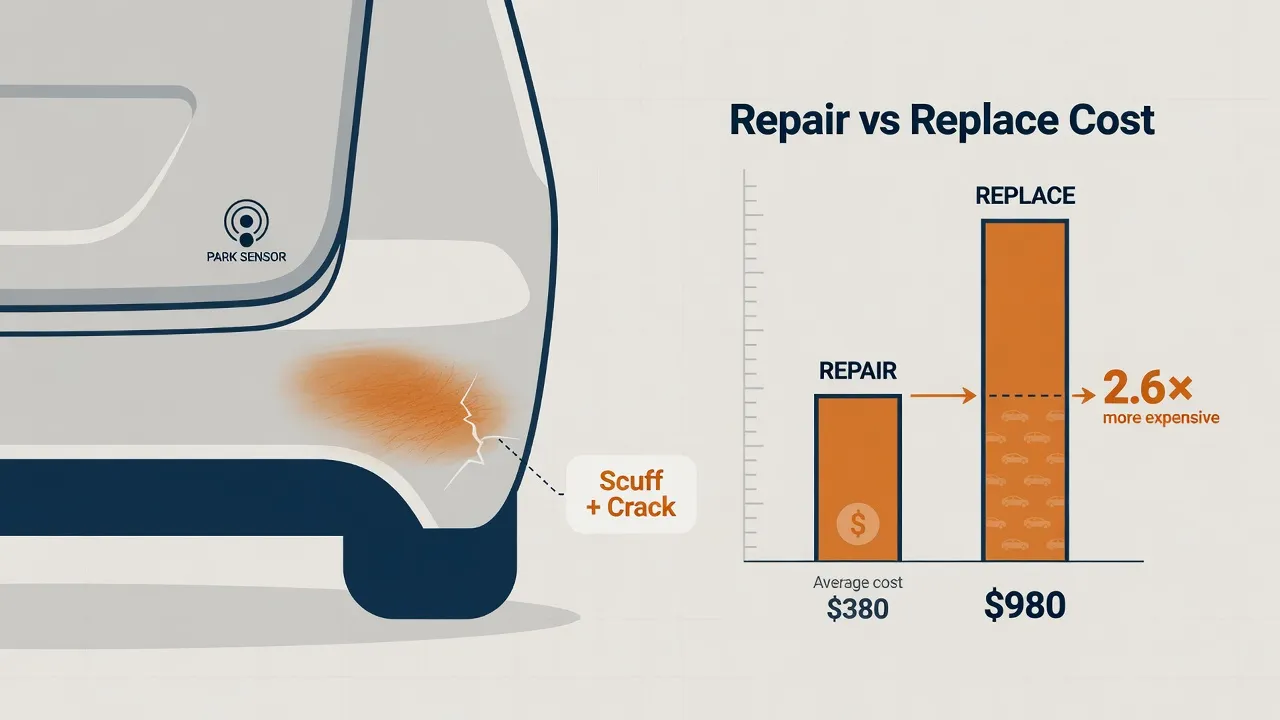
ADAS recalibration: Each sensor or camera requiring recalibration adds $250 to $600 or more. A front-end collision may require multiple separate recalibration procedures.
Specialty equipment overhead: Shops spread certified equipment costs across repair orders, which shows up in higher hourly labor rates.
Typical cost ranges by damage type
| Damage Type | Estimated Repair Range | Key Cost Drivers |
|---|---|---|
| Minor front bumper repair | $800 to $1,800 | Sensor recalibration, paint matching |
| Front-end collision | $5,000 to $18,000+ | Structural aluminum repair, OEM parts, ADAS recalibration |
| Side impact | $3,500 to $12,000+ | Structural assessment, aluminum repair, glass |
| Rear-end collision | $2,500 to $9,000+ | Rear camera and sensor recalibration |
| Structural/frame repair | $4,000 to $20,000+ | Severity-dependent; total loss varies |
These 2026 estimates vary by geographic labor rates, specific Audi model, and damage severity. Labor rates in major metro areas run 30% to 50% higher than national averages.
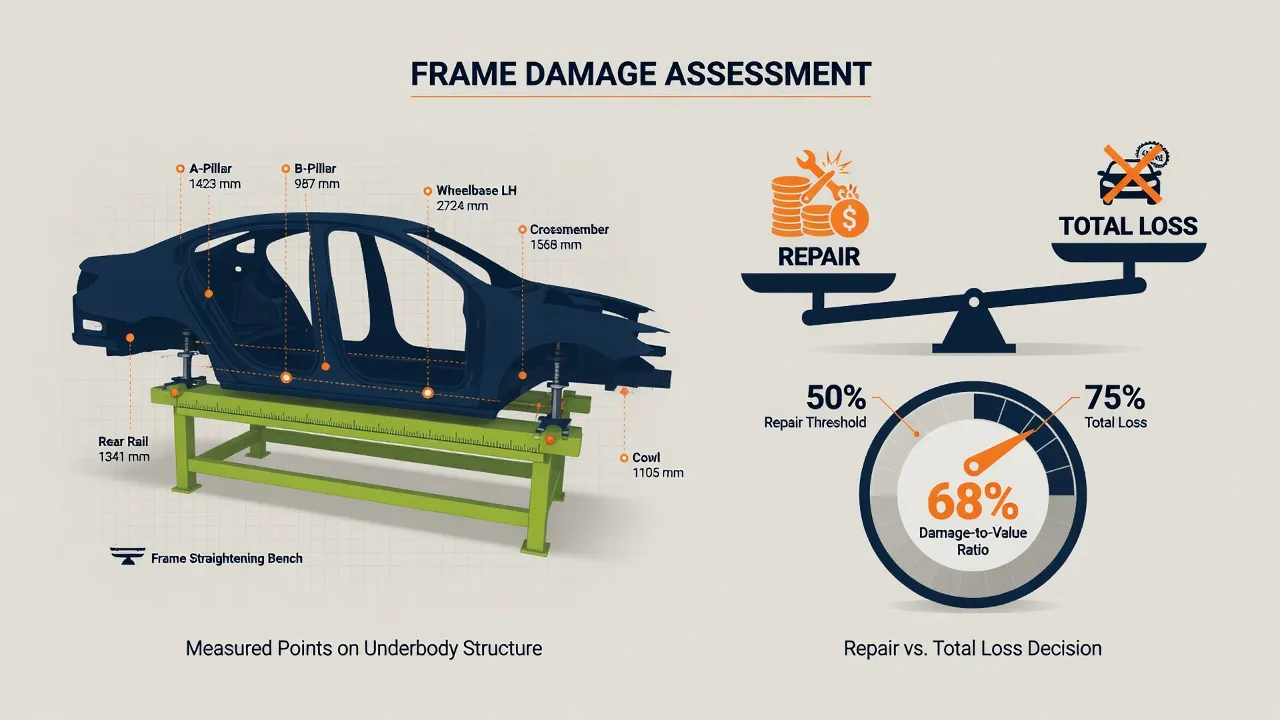
If repair costs approach 70% to 80% of the vehicle's actual cash value, insurance carriers may declare a total loss. Aluminum-heavy vehicles can reach this threshold faster than steel vehicles.
Insurance and Audi certified collision repair
A common friction point after an Audi collision: insurance carriers directing vehicle owners to non-certified shops through Direct Repair Programs (DRPs) with negotiated rates that often exclude Audi-certified facilities.
Car owners have the right to choose their own repair facility in all 50 states. Insurers can suggest DRP shops. They can't require them. If a certified shop charges more than the carrier's estimate, owners can request a supplement — particularly for OEM structural parts or certified procedures.
Several states, including California, require insurers to pay for OEM parts on vehicles three years old or newer. In other states, owners can negotiate OEM structural components on safety grounds, especially for warranty-protected vehicles. Non-OEM structural repairs can void factory warranty coverage. That's documented justification for requiring certified procedures.
When working through insurance claims, car owners should:
- Obtain a written estimate from an Audi-certified facility
- Ensure all OEM parts and certified procedures are itemized
- Submit that estimate to the carrier as the repair baseline
- File a supplement claim with Audi's published repair procedures as documentation if disputed
How to find an Audi collision repair shop near you
Start with Audi's dealer and service locator on the official website. It lists authorized collision repair facilities. Local Audi dealers — even those without in-house body shops — typically maintain referral relationships with nearby certified independents.
Steps to verify a shop's Audi certification
A shop claiming certification should provide:
- Written Audi certification documentation
- Access to view the dedicated aluminum repair area
- Information about which technicians hold Audi aluminum certification and I-CAR Gold Class standing
- Details on ADAS recalibration handling and equipment used
- Confirmation that OEM parts invoices will be provided at repair completion
The AutoBodyShopNear.me directory provides a starting point for locating shops by area.
Real-world scenarios: what certified repair looks like in practice
Scenario 1: The supplemental claim that saved a structural repair
Marcus Chen's 2021 Audi A6 sustained front-end damage. His insurer's DRP shop submitted a $4,200 estimate using aftermarket bumper support components. The Audi-certified facility quoted $7,100 — OEM aluminum parts, ADAS recalibration included. Marcus filed a supplement claim, cited Audi's published repair procedure, and received $6,400 from the carrier. Most of the difference covered.
Scenario 2: The ADAS recalibration that prevented a near-miss
Diana Okafor's 2023 Audi Q3 got a $680 front bumper repair at a general body shop. Two weeks later, her adaptive cruise control started following vehicles too closely. A dealer inspection found the front radar had been reinstalled without proper recalibration — distance measurement was off by 14%. Recalibration at a certified facility took 90 minutes and cost $380. The two-visit total exceeded what a certified shop would have charged from the start.
Scenario 3: The total loss avoided by a thorough structural assessment
Robert Takahashi's 2020 Audi e-tron (approximately $48,000 actual cash value) sustained side impact damage. His insurer's field estimate of $11,400 raised total loss concerns. An Audi-certified facility's measuring bench inspection found the B-pillar deformation within Audi's repair tolerance. Final cost was $14,200 with a supplement covering the gap. He kept the vehicle.
Audi aluminum repair: a closer look at what makes it different
The Audi aluminum repair process differs from steel repair in five critical ways:
1. Separate work environment: Aluminum shavings and dust can't mix with the steel work environment. Even microscopic steel contamination can initiate galvanic corrosion that spreads invisibly beneath paint over time. Certified shops maintain physically separate work zones.
2. No heat straightening: Steel panels can be heated with a torch and reshaped. Aluminum alloys lose significant structural strength when heated beyond certain temperatures. Damaged aluminum structural components are typically replaced, not straightened.
3. Rivet bonding: Many Audi structural joints use adhesive bonding and self-piercing rivets rather than conventional welding. Replacing these joints requires rivet guns calibrated to Audi specifications and approved structural adhesives.
4. Squeeze-type resistance spot welding (STRSW): Where Audi uses welding on aluminum components, it requires squeeze-type resistance spot welding equipment rather than conventional MIG welding. This equipment costs significantly more than standard welders.
5. Post-repair measurement verification: After structural aluminum repair, certified shops verify vehicle geometry on approved measuring systems to confirm it falls within Audi's published tolerances before final assembly.
Sources
- I-CAR — collision repair training and certification standards
FAQ: Audi certified collision repair
What is Audi certified collision repair?
It's work performed by facilities meeting Audi AG's documented requirements for technician training, equipment, and repair procedures. Certified shops use Audi OEM parts for structural repairs, maintain dedicated aluminum work environments, follow published repair procedures, and perform ADAS recalibration after repairs affecting sensor-bearing components.
How is an Audi certified body shop different from a regular body shop?
Primary differences: dedicated aluminum repair capability, access to Audi's proprietary ElsaPro documentation, OEM-calibrated ADAS equipment, and accountability through Audi's audit process. Standard shops may produce acceptable cosmetic repairs. Structural repairs on aluminum-intensive Audi models require specialized equipment and training that most shops don't have.
Will my insurance pay for Audi certified collision repair?
Insurance carriers must pay for complete, safe repair — and completion is defined by Audi's repair documentation. Car owners have the right to choose their own facility. If an insurer's estimate specifies lower-cost procedures that don't meet Audi's requirements, owners can submit supplement claims with documented certification requirements.
Can an Audi be repaired at a non-certified shop?
Cosmetic-only repairs, minor dents on non-structural panels, and glass replacement can be handled by non-certified shops. Any repair involving structural aluminum, ADAS sensors, or safety systems carries meaningful risk outside Audi's certified procedures. Factory warranty may also be affected by repairs deviating from OEM specifications.
How do I find Audi collision repair near me?
Start with Audi's official dealer/service locator. Local Audi dealers can refer owners to certified independent shops. The AutoBodyShopNear.me directory provides a starting point for locating shops by area. Always verify current certification directly before authorizing work.
How much more does Audi certified repair cost?
Typically 20% to 40% more than equivalent non-certified repair. The premium reflects OEM parts pricing, additional aluminum labor time, ADAS recalibration fees, and certified equipment overhead. For structural repairs, the gap tends to be larger. For cosmetic-only work on non-structural panels, the difference may be minimal.
Key takeaways
- Aluminum Space Frame construction demands specialized repair; standard steel techniques and equipment don't safely apply to most Audi structural components
- Certification means documented requirements, dedicated aluminum work areas, I-CAR-recognized training, Audi ElsaPro repair procedures, and OEM ADAS calibration tools
- OEM parts are a safety issue for structural components — not just quality preference; aftermarket parts can alter crash performance
- ADAS recalibration is required, not optional, after any repair touching bumpers, grilles, windshields, or mirrors
- Certified repair costs 20% to 40% more, reflecting genuine procedural differences rather than padding
- Car owners can choose their own shop and file supplement claims when certified facilities charge more than initial insurer estimates
- Verify certification before authorizing repair; ask to see the aluminum work area and confirm current enrollment
Last updated: May 2026. Repair cost ranges are estimates based on national industry data and may vary significantly by geographic market, vehicle model year, and damage severity.