Introduction
You walk back to your car after a quick grocery run and there it is — a door ding you definitely didn't put there. For a lot of dents, paintless dent repair (PDR) can fix it without touching the paint at all. But it only works when the metal and paint are in the right condition.
This guide walks through the full PDR process: what it is, the tools involved, typical costs, and when you're better off going the traditional repair route. Real examples are included so you can compare timelines, outcomes, and costs before booking anything.
What is Paintless Dent Repair (PDR)?
"Paintless dent repair (PDR) is a method that removes dents by reshaping metal panels from behind, or by pulling from the outside, without sanding, filler, or repainting."
The whole idea is controlled metal movement. Trained technicians push the panel back close to its original shape through dozens of small, precise movements — no filler, no repaint. It works best when the paint is still intact, the dent edges are soft, and the metal hasn't been stretched too far out of shape. Door dings, minor parking lot impacts, and hail dents are the sweet spot. Bigger impacts or anything with a sharp crease usually needs conventional body work.
How Does Paintless Dent Repair Work? The Step-by-Step PDR Process
Step 1 - Damage Assessment
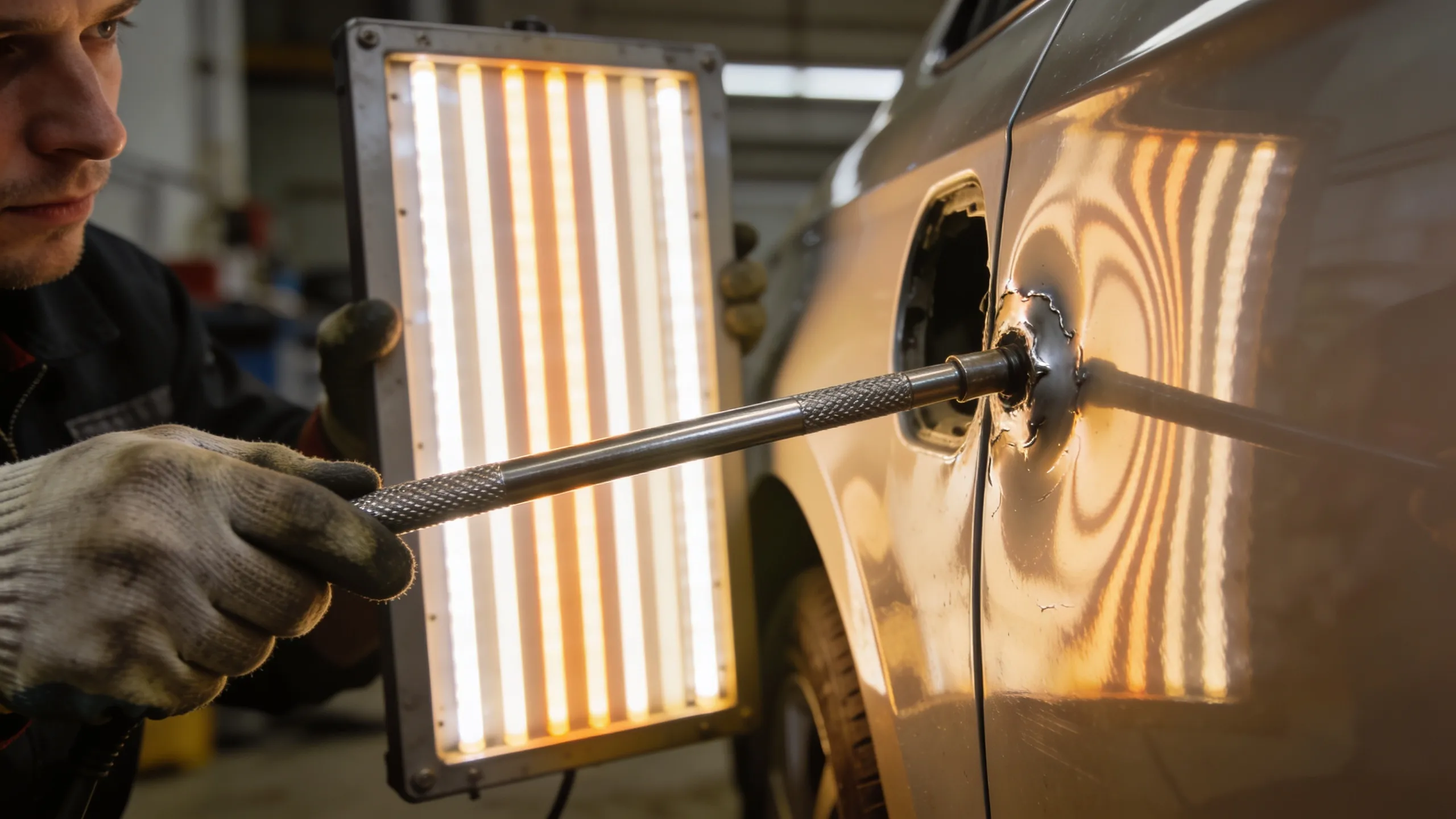
The first thing a technician does is look at the dent under a specialized PDR light — an LED or fluorescent reflection board that makes it easy to see depth, crown, and which direction the metal moved. It's like a map of exactly where the panel needs to be corrected.
From there they check paint condition, dent shape, location, and what the panel is made of. Aluminum can get PDR treatment, but it needs more careful handling than steel. If the paint is cracking, if the metal stretched badly, or if there's a knife-like crease, conventional repair is usually the smarter call.
Step 2 - Gaining PDR Access Points
Next, technicians figure out how to get behind the dent. Access usually comes through window slots, door jambs, trunk openings, wheel well liners, or factory service holes. Sometimes trim pieces, tail lamps, or interior panels come off to make room.
This matters a lot. Good access means the tool can reach the exact spot underneath the dent's lowest point, which is where the pressure needs to go. Limited access doesn't always kill PDR as an option — glue pulling techniques can fill the gap — but it does change the approach.
Step 3 - Applying the PDR Technique
Here's the core of it. Rods and picks are used to make small, controlled pushes from behind the panel. Each push is minor. The goal is to gradually lift the low spots and blend the high and low areas into the surrounding metal.
Crown management is where skill really shows. When metal gets hit, it usually creates a raised ring around the impact zone. Technicians tap those high areas down with knockdown tools while lifting the center — releasing tension and letting the panel settle naturally.
Then it starts over. Read the reflections. Adjust the tool position. Make tiny pushes. Check again. Repeat until the panel looks right under both shop lighting and natural light.
Step 4 - Glue Pull Dent Repair (for Limited Access Areas)
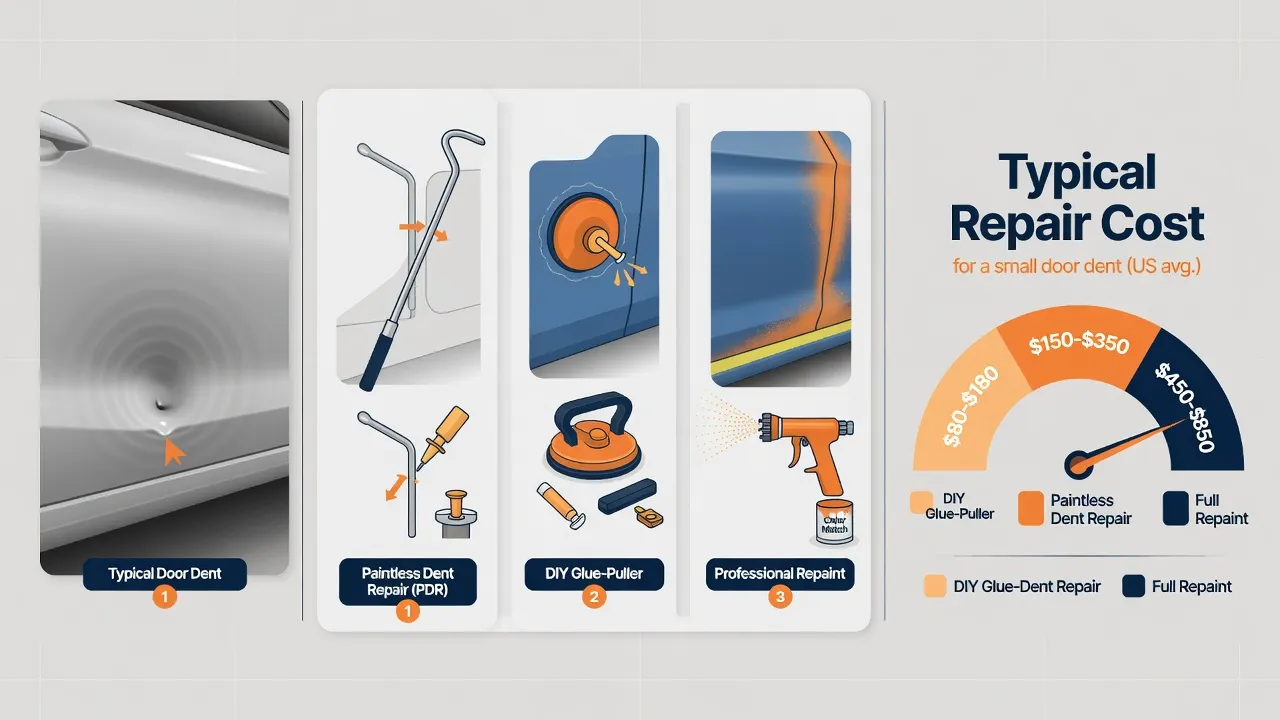
When there's no way to get a rod behind the dent, glue pulling steps in. A plastic tab gets attached to the outside of the dent with hot PDR glue, then pulled with a mini lifter or slide hammer. After each pull, the glue comes off with solvent and the panel gets re-evaluated.
This works well on rails, braces, and double-wall sections where rods can't reach. It's especially effective on broad, shallow dents. Temperature control matters here — go too hot or cold and the glue won't bond right. Non-factory repaint is also a concern since it can be less flexible than the original coating.
Step 5 - Final Inspection and Finishing
The technician goes back to the reflection lights and checks from multiple angles. Any minor high spots get addressed. Removed parts go back on and get function-tested.
Quality shops don't just hand you the keys. They walk you through what was repaired, what limitations existed, and whether any trace of the dent is still visible at extreme viewing angles. You should also see a paint-surface review and confirmation that no adhesive residue was left behind.
Paintless Dent Repair Tools: What Technicians Use
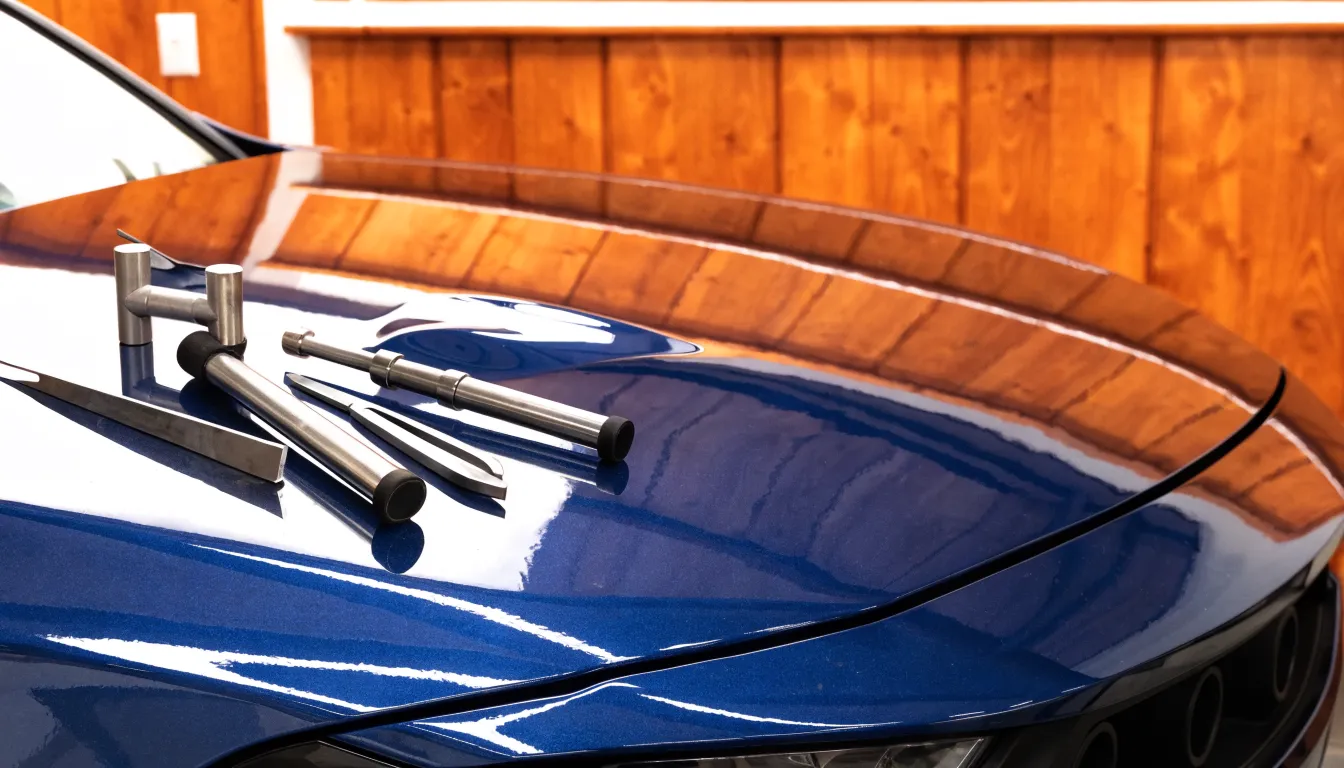
Good results come from skill plus the right equipment. The key tools:
- PDR rods and body picks: Steel tools in various lengths and tip shapes for precise backside pushes
- Whale tails: Flat, wide tools for tight openings and braced areas
- Glue tabs, PDR glue, mini lifters, and slide hammers: Outside pulling for spots with no direct access
- Knockdowns and tap-down hammers: Nylon, polished metal, or plastic-tipped tools that lower raised areas
- Reflection lights and line boards: Visual guides that reveal panel distortion
- Heat sources: Heat guns or induction systems, used carefully, to improve paint flexibility in cold weather
A skilled tech picks tools based on panel thickness, dent depth, and access geometry. There's no one-size-fits-all approach.
When PDR Works and When It Does Not
PDR handles a lot of everyday dents, but it has real limits.
PDR usually works well when:
- Paint is still intact — no cracking or peeling
- Dent edges are smooth, not sharply folded
- Metal hasn't stretched past the point of elastic recovery
- Damage is away from panel edges, or there's still good access
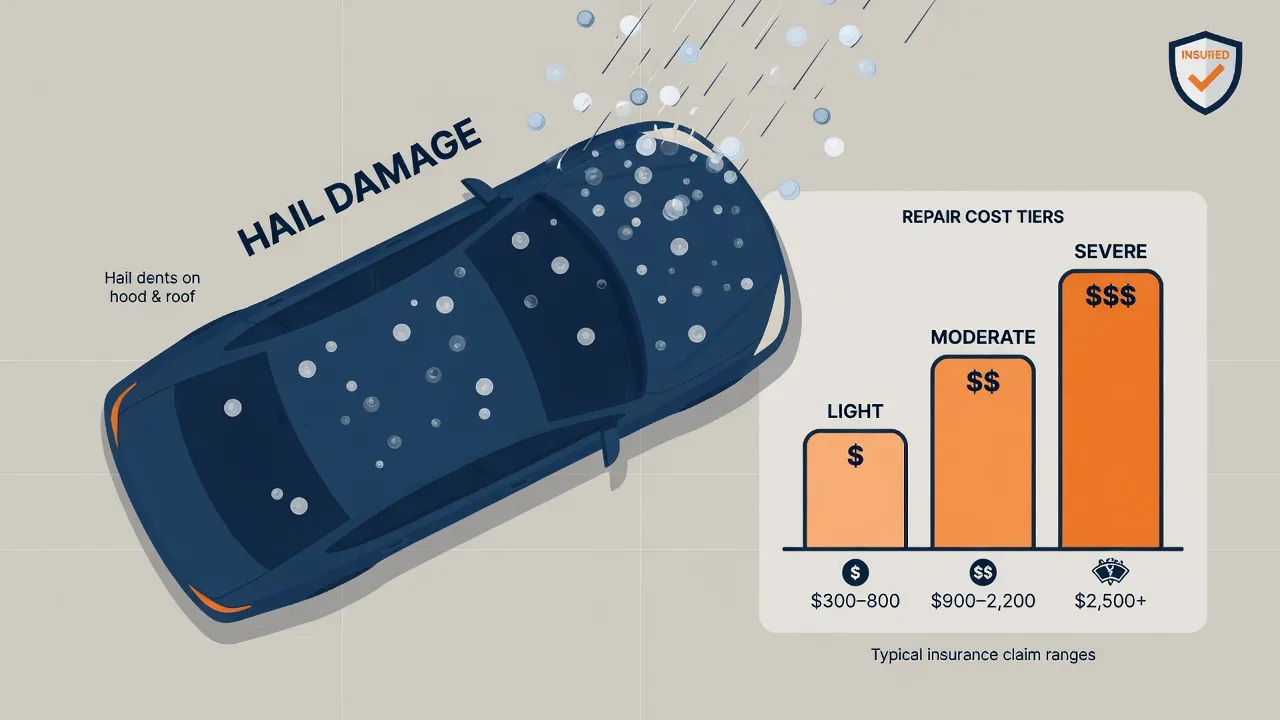
- Hail dents are numerous but shallow
PDR probably isn't the right call when:
- Paint is broken, chipped, or spider-cracked
- The dent has a deep crease with sharp body-line distortion
- The impact stretched the metal significantly
- There's heavy prior body filler or an unstable repaint underneath
- Access is blocked and glue pulling would risk the finish
One more thing: if the impact location suggests possible structural damage, that has to get checked before anything else happens.
PDR Cost: What Car Owners Can Expect to Pay
PDR pricing depends on dent size, depth, panel location, metal type, and how many dents you're dealing with. Shops price by complexity, not just diameter. A shallow two-inch dent in a flat area might cost less than a one-inch dent sitting on a sharp body line.
| Repair Type | Typical PDR Cost | Typical Timeline |
|---|---|---|
| Small door ding (under 1 inch) | $75 to $150 | 30 to 60 minutes |
| Medium dent (1 to 3 inches) | $150 to $300 | 1 to 2 hours |
| Large dent (3 to 6 inches) | $300 to $500 | 2 to 4 hours |
| Hail damage (per panel) | $50 to $150 per dent | Half day to full day |
| Glue pull repair | $100 to $250 | 1 to 2 hours |
Insurance can cover PDR under comprehensive coverage, especially for weather-related damage. Your deductible size determines what comes out of pocket, so compare the repair estimate against your policy terms before filing.
Real Examples: PDR in Action
Same process, different outcomes — because dent type, access, and paint condition change everything.
Marcus T., Denver (hail dents on hood)
After a spring storm, Marcus found 11 hail dents on his 2022 Honda Accord hood. A PDR tech mapped the damage and accessed the backside through wheel well openings. Two hours later, the hood looked factory-new. Cost: $380. Same-day service. His insurer covered it under comprehensive with no depreciation applied.
Sandra K., Phoenix (single shopping cart door ding)
One door ding, driver side. The tech verified intact paint with LED inspection and ran a single rod through the door jamb. Twenty minutes. Ninety-five dollars. Avoiding the repaint route saved her roughly $500.
James R., Chicago (large crease on truck bed)
A fallen tree branch left a softball-sized dent with a deep crease and visible paint stress. The tech looked at it, explained that the metal stretch made PDR unlikely to deliver clean results, and recommended traditional repair instead. James appreciated the straight answer.
Frequently Asked Questions About Paintless Dent Repair
How long does paintless dent repair take?
Single dents usually take 30 minutes to 2 hours, depending on access and depth. Multi-dent hail jobs can run half a day or more. Add time when trim has to come off or when a dent sits on a body line that needs slower, more careful correction.
Does PDR damage the paint?
Done correctly on intact factory paint, no. Techs use controlled pressure, reflection lights, and moderate heat when needed. Older repainted areas are more of a risk since aftermarket paint can be less flexible than the original.
Is paintless dent repair covered by insurance?
Often, yes. Comprehensive coverage usually includes hail and non-collision dents, subject to your deductible. Coverage depends on your specific policy. Get a written estimate and compare it to your deductible before you file.
What size dents can PDR fix?
Size alone doesn't tell the whole story. Techs evaluate depth, sharpness, how far the metal stretched, panel location, and paint condition. A shallow four-inch dent might be fixable while a sharp one-inch crease might not be. The PDR light inspection gives the most accurate answer.
How much does paintless dent repair cost?
Starts around $75 for small dings. Complex large dents can hit $500 or more. Hail pricing may be per dent or per panel. Final cost depends on access difficulty, dent count, metal type, and the shop's labor rates.
Can PDR fix a crease?
Sometimes. Soft, shallow creases with intact paint can often be corrected with careful tool work. Deep, sharp creases usually mean stretched metal, which limits what PDR can do. In those cases, conventional repair or a mixed approach is the typical recommendation.
Key Takeaways
PDR is a controlled, step-based metal reshaping process that preserves original paint when conditions allow. The best results come from accurate assessment, proper access, skilled hands, and honest recognition of when PDR isn't the right tool.
For minor to moderate dents — especially hail damage and door dings — it's often faster and cheaper than repaint-based repair. It's not a universal fix, but when the paint and metal are in good shape, it's one of the most efficient options out there.