The storm lasted twenty minutes. Now your hood looks like a golf ball, there are dimples across the roof and trunk lid, and you're trying to figure out whether this is a $1,500 problem or an $8,000 one. With hail, it can genuinely be either.
The good news: hail damage is one of the most fixable kinds of body damage there is, and if you carry comprehensive coverage, insurance pays for most of it. Here's how the repair actually works, what it costs in 2026, and how to keep the claim from going sideways.
First, Document the Damage
Before you call anyone, photograph the car. Shoot every panel in shade or on an overcast moment, because direct sun hides shallow dents. Get close-ups of anything with cracked paint, broken glass, or damaged trim, and note the date and time of the storm. Hail claims spike after big storms, adjusters move fast, and your photos are the backstop if the first estimate misses panels. Don't sign anything with a repair shop yet either; more on that below.
How Hail Damage Gets Repaired
Paintless Dent Repair Is the Default
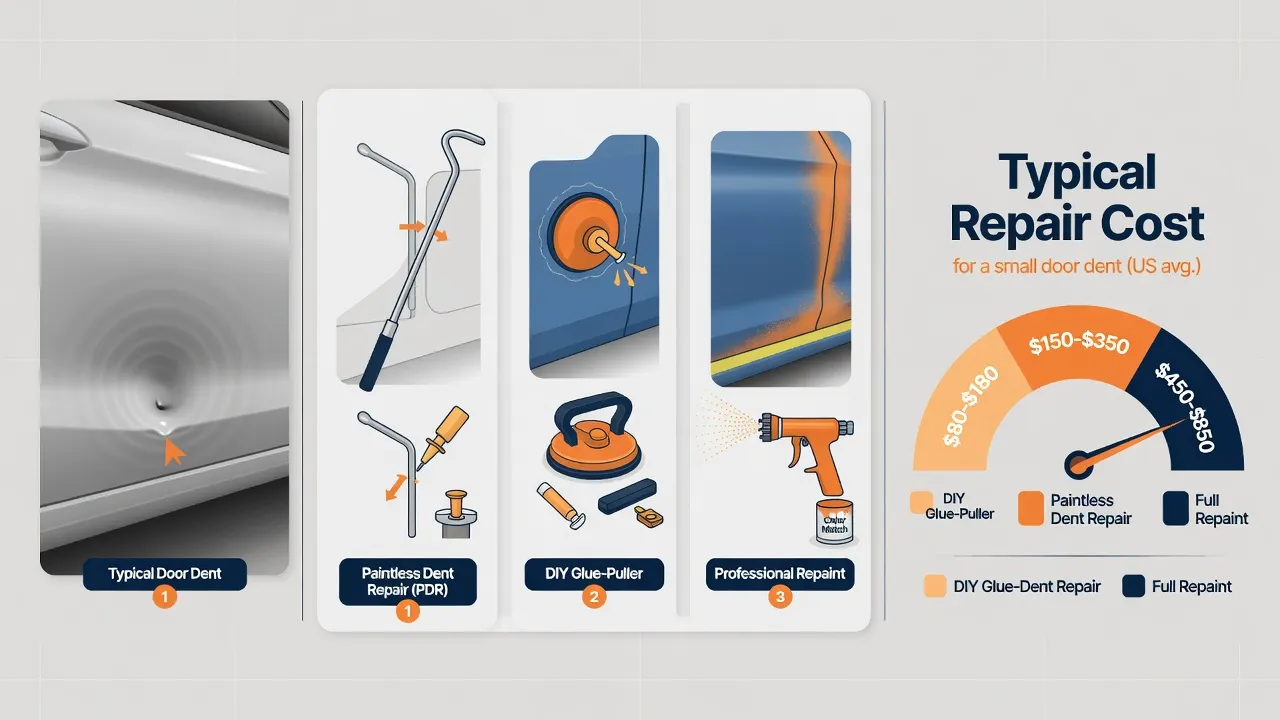
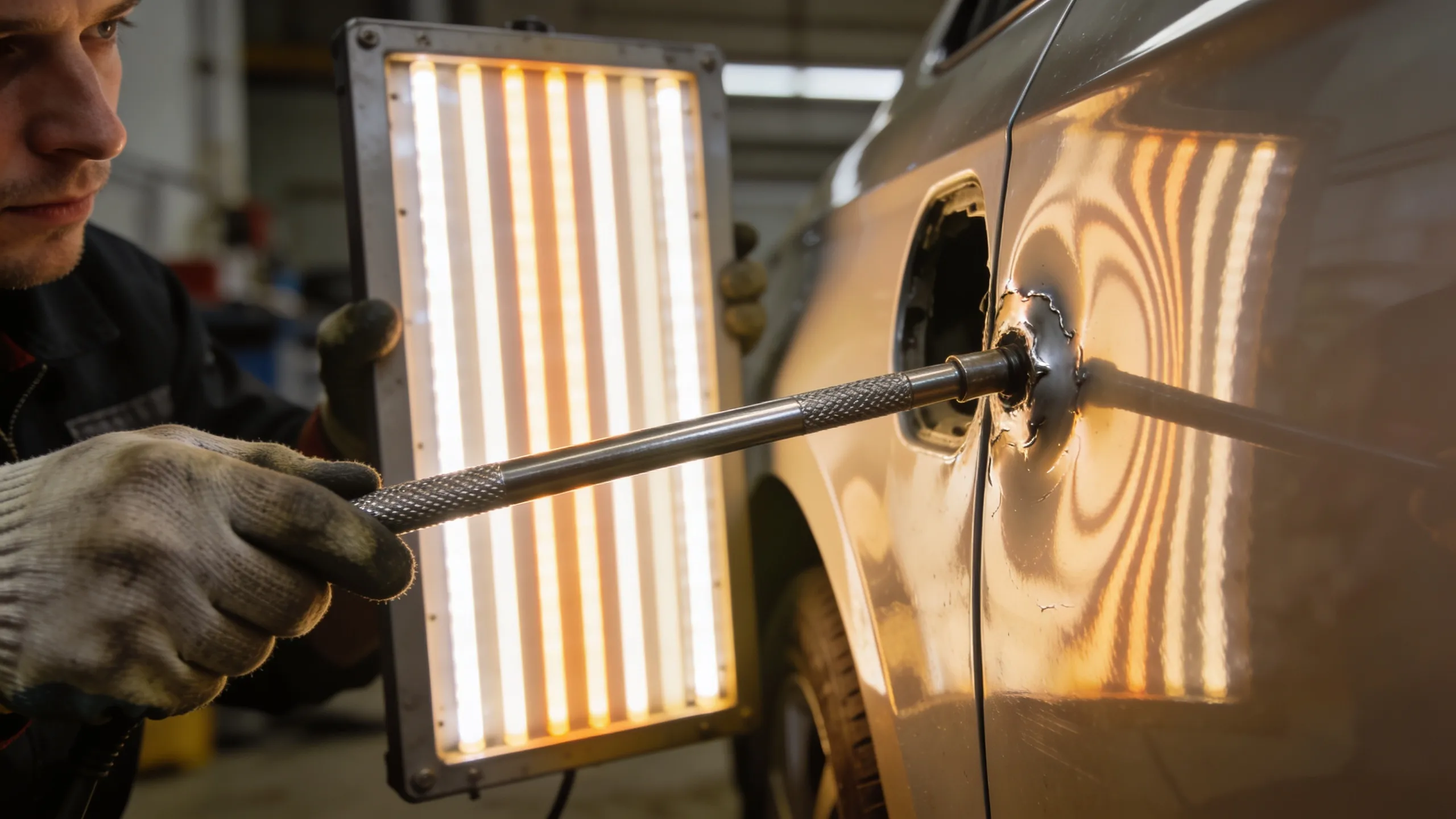
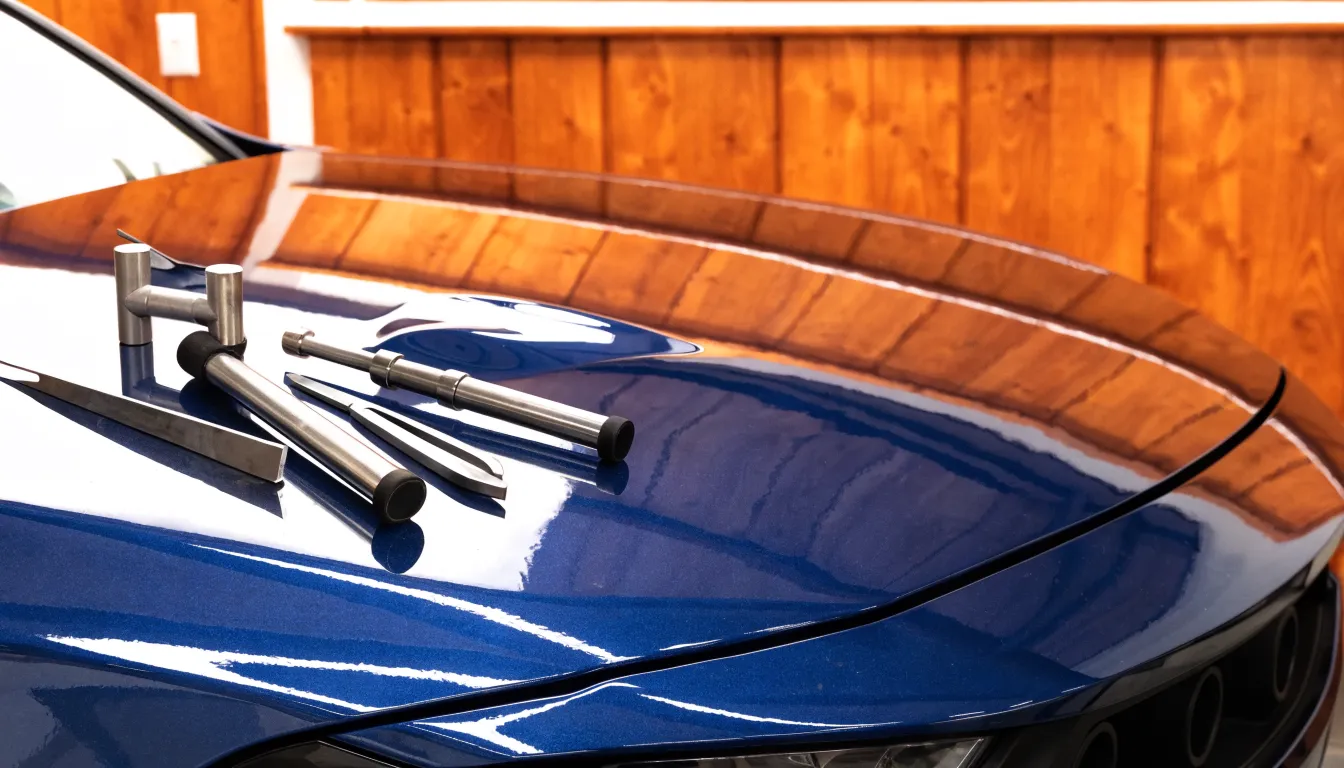
Most hail dents are shallow, round, and leave the paint intact, which makes them ideal candidates for paintless dent repair. Technicians push each dent out from behind the panel with metal rods, or pull from the front with glue tabs where there's no rear access, restoring the metal without repainting anything. Your factory finish stays untouched, there's no filler to shrink or crack later, and insurers actively prefer PDR because it's cheaper and faster than refinishing.
The catch with hail is volume. A hailed car might have 40 dents or 400, and the estimate is built panel by panel from a hail matrix that prices each panel by dent count and dent size. That's why two hail cars from the same storm can have wildly different repair bills.
When PDR Isn't Enough
Large hailstones crack paint, and once the finish is broken, that panel needs conventional repair: filler where necessary, then primer and paint at $350 to $800 per panel, more if the panel gets replaced outright. Dents on panel edges and roof rails, stretched metal from oversized stones, and aluminum panels with limited access can also force conventional work. Add broken glass, cracked mirror caps, and dented trim, and a severe-hail estimate usually ends up a mix: PDR on most panels, repaint or replacement on a few, plus parts.
What Hail Repair Costs in 2026
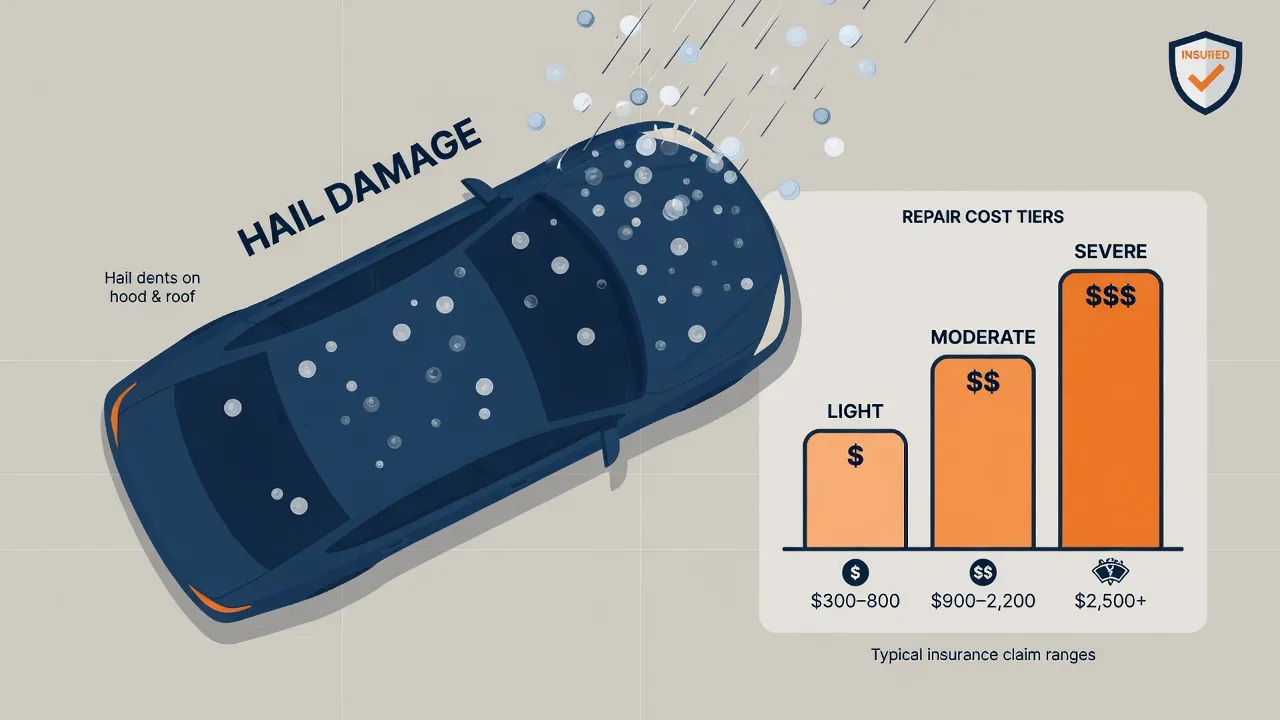
PDR-based hail repair typically runs $1,000 to $8,000, driven mostly by dent count and dent size:
- Light damage (under roughly 50 dents, small and shallow): $1,000 to $2,500
- Moderate damage (50 to 150 dents across most panels): $2,500 to $4,500
- Severe damage (hundreds of dents or oversized hits): $4,500 to $8,000 for the PDR work, plus $350 to $800 per panel for any that need repainting, plus glass and trim
Those numbers surprise people who've priced a single door ding, but the logic is simple: 200 dents is 200 individual repairs. Severe storms also create weeks-long backlogs that keep pricing firm, so estimates written right after a major hail event rarely have room to negotiate.
How Insurance Handles Hail
It's a Comprehensive Claim, Not Collision
Hail falls under comprehensive coverage, the part of your policy that handles events outside your control: weather, theft, deer strikes. If you carry liability-only insurance, you're paying out of pocket, full stop. A comprehensive claim generally doesn't trigger the individual rate surcharge an at-fault accident does, though a bad storm season can raise rates across your whole region whether you file or not.
Your Deductible Comes Off the Top
Comprehensive deductibles typically run $250 to $1,000. On a $4,000 estimate with a $500 deductible, the insurer pays $3,500 and you cover the rest. If your damage is light and the estimate lands near your deductible, filing may not be worth it. And if any shop offers to "waive" or "cover" your deductible, walk away; that trick usually works by inflating the insurance estimate, which is fraud you'd be party to.
When Hail Totals a Car
Insurers total a vehicle when repair cost plus salvage value approaches its actual cash value. State thresholds range from about 60 to 100 percent of ACV, and many insurers use internal triggers around 70 to 75 percent. So a $6,500 hail estimate on a car worth $9,000 is very likely a total loss, even though the car drives perfectly. Hail totals older cars constantly for exactly this reason: the damage is cosmetic but spread across every panel.
If your car is totaled, you have two options. Take the payout and hand over the car, or keep it through owner retention, accepting a reduced payout and a salvage or branded title. Driving a dimpled car with a check in your pocket is a legitimate choice, but a branded title cuts future resale value hard and can complicate insuring the car later, so check your state's rules before deciding.
Filing the Claim Without Losing Money
Report the claim promptly. After a major storm, insurers deploy catastrophe teams and set up drive-through inspection sites, and both estimate appointments and repair slots fill fast. Treat the adjuster's first estimate as a starting point, not a final number: hail estimates almost always grow once panels come off and hidden damage shows up, and the shop handles that through a supplement to the insurer.
You also choose who does the work. Your insurer can recommend its direct-repair shops, and those are often fine, but in every state the choice of body shop is legally yours. Pick one with real hail and PDR experience, and ask directly how they handle supplements and what warranty they put in writing.
Watch Out for Hail Chasers
After every major hail event, traveling PDR crews roll into town, set up tents in parking lots, and knock on doors in damaged neighborhoods. Some are genuinely skilled techs who follow storms for a living. Some are not, and you can't tell the difference from the sales pitch. The red flags are consistent: pressure to sign an assignment-of-benefits contract on the spot, deductible-waiving offers, no verifiable local address, and a "lifetime warranty" from an operation that will be three states away in a month.
A warranty is only worth the odds that the business still exists and is reachable when you need it. A local shop or an established national chain wins that comparison by default.
Should You Even Fix It?
If the car is paid off, most insurers will cut you a check for the estimate minus your deductible and let you decide what to do with it. Pocketing the money and driving the dimpled car is a legitimate option. Just know the trade-offs: unrepaired hail damage gets documented and deducted at trade-in, a future claim involving the same panels gets complicated by the prior-damage record, and any spot where hail chipped the paint will rust if left bare. If you keep the cash, at least touch up every paint break.
Frequently Asked Questions
Will a hail claim raise my insurance rates?
Usually not on its own. Hail is a comprehensive, not-at-fault claim, and most insurers don't surcharge a single one. Multiple comprehensive claims in a short window can affect your renewal, and regional rates often rise after bad storm seasons regardless of whether you filed, which is one more reason filing a legitimate claim is usually the right call.
How long does hail damage repair take?
Light PDR work takes one to three days. Severe damage with repainted or replaced panels runs one to two weeks. After a major storm, add the backlog: waiting two to four weeks just for a repair slot is common, so ask whether your policy includes rental coverage.
Can hail damage total my car?
Yes, and it happens often with older vehicles. Once the repair estimate reaches roughly 70 percent or more of the car's actual cash value, most insurers declare a total loss. You can take the payout or keep the car with a branded title and a smaller check.
Do I have to use the shop my insurance company recommends?
No. Insurer-recommended shops can be convenient because billing is streamlined, but the choice is yours in every state, and any reputable shop can work directly with any insurer, including handling supplements for hidden damage.
Is PDR hail repair as good as factory?
For dents with intact paint, yes. PDR restores the original metal and keeps the factory finish, which no repaint can truly match. Done well, it's undetectable, which is exactly why insurers and dealers rely on it for hail work.