Your car just got hit. Now what? Here's how to find a trustworthy body shop fast — without getting scammed, oversold, or stuck with a bad repair.
Don't Panic (But Don't Rush Either)
After an accident, there's pressure to get things moving. The insurance company might push you toward their "preferred" shops. A tow truck driver might have a suggestion. Your coworker might know a guy.
Take a breath. Unless the car is completely undrivable, you've usually got time to do some research. A few hours spent now can save you thousands of dollars and weeks of headaches later.
The first 24 hours should be about documentation, not decisions. Photograph the damage from multiple angles. Get the other driver's information. File a police report if there's significant damage. Call your insurance company to start the claim.
Insurance-Recommended vs. Your Choice
Here's something insurers don't advertise: you have the legal right to choose any body shop you want. In every state. Period.
Insurance "preferred" or "direct repair" shops have agreements with your insurer. That's not automatically a bad thing — these shops often have streamlined processes and guaranteed work. But the arrangement also means the shop has financial incentives to keep repair costs low. That doesn't always line up with getting the best repair.
- Preferred shops often use aftermarket or recycled parts by default
- They may have volume requirements that affect how much attention your car gets
- Some have limits on time per repair
- The shop's relationship with your insurer can influence repair decisions
That doesn't mean insurance-recommended shops are bad. Many are excellent. But go in with your eyes open, and don't let anyone push you into a shop you haven't checked out yourself.
What to Look for in a Body Shop
Finding a good body shop is a lot like finding a good mechanic — reputation matters more than advertising. Here's what actually signals quality:
- Clean, organized facility. Chaos in the shop usually means chaos in the work.
- Longevity in the community. Shops that have been around 10+ years have survived by doing good work.
- Clear communication. They explain repairs in plain terms, not jargon.
- Written warranty. Reputable shops stand behind their work, typically for as long as you own the car.
- Proper equipment. Modern cars need modern tools, especially for paintwork and electronics.
Certifications That Actually Matter
Not all certifications carry equal weight. These ones do:
- I-CAR Gold Class — Only about 10% of shops earn this. It means technicians complete ongoing training, not just a one-time course.
- OEM Certifications — Manufacturer-specific training for brands like Honda, BMW, Tesla, and others.
- ASE Certification — Industry-standard credentials for individual technicians.
- State licenses — Required in most states. Check that they're current.
If your vehicle has advanced safety systems (ADAS), look specifically for shops certified to recalibrate those systems after repairs. Getting that wrong doesn't just affect the cosmetics — it can compromise safety features you're counting on.
Red Flags to Watch Out For
Some things should send you to a different shop immediately:
- Pressure to decide right now. Good shops don't need to rush you.
- Reluctance to put anything in writing. Everything should be documented.
- Vague descriptions of the work — "We'll figure it out once we get in there" without any specifics.
- No warranty offered. Quality work comes with confidence behind it.
- Cash-only discounts that skip the insurance process. This is often fraud, and you'll have no recourse if something goes wrong.
- Estimates that are dramatically lower than everywhere else. They're either missing damage, planning inferior parts, or padding supplements later.
- Online reviews that keep mentioning the same problems.
Getting Multiple Estimates
Get at least two or three estimates before committing. This isn't just a price exercise — it's about understanding what the repair actually requires.
Be skeptical if one estimate is dramatically lower than the others. Either they've missed damage, they're planning to use inferior parts, or they'll hit you with "supplemental" charges once the car is torn apart.
When comparing estimates, look at more than the total. Check what parts they're using — OEM, aftermarket, or recycled — and whether they've accounted for the same scope of work. Ask about paint quality and warranty terms.
Questions to Ask Before Signing
Get clear answers to these before you commit:
- What parts will you use? OEM, aftermarket, or recycled — and why?
- What's covered under your warranty, and for how long?
- How long will the repair take?
- Do you handle the insurance claim, or do I need to?
- Will you contact me before doing anything not covered in the estimate?
- Do you offer a loaner car or help with rental arrangements?
- Who actually does the work on my car?
- Can I see examples of similar repairs you've completed?
A good shop answers these directly. Vague or defensive responses are a signal to keep looking.
After the Repairs: What to Check
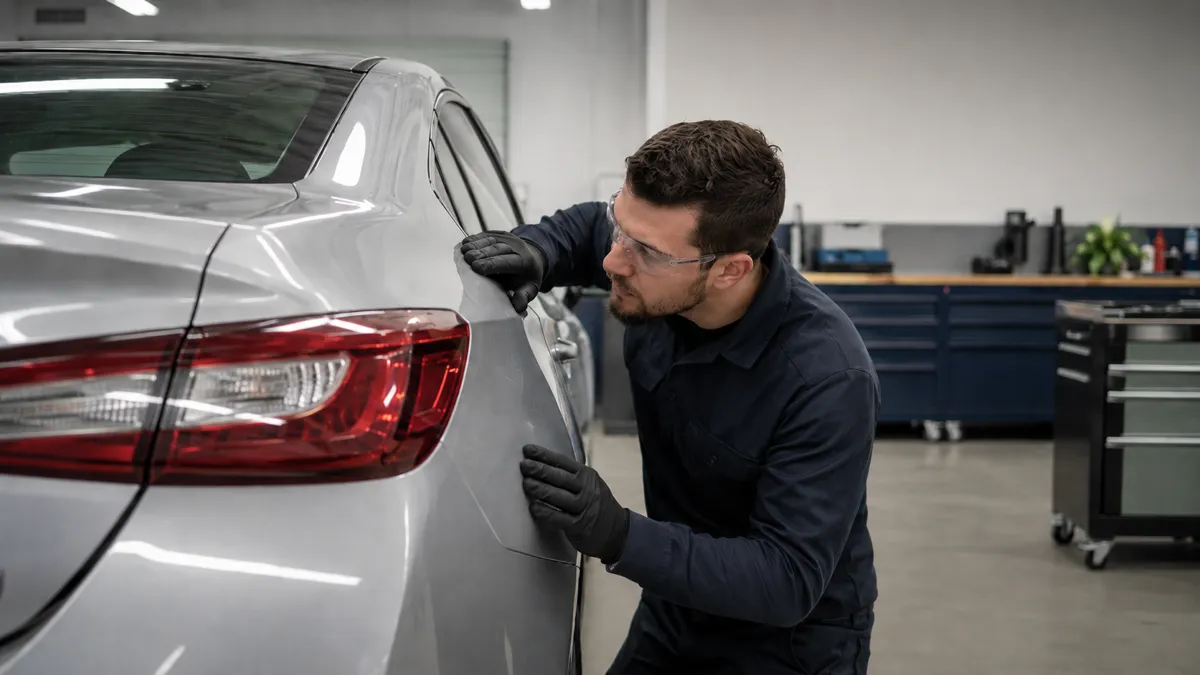
Don't just drive off when you pick the car up. Take a few minutes to look it over:
- Check paint color match in daylight, from different angles
- Open and close all doors, the hood, and the trunk — everything should align properly
- Look for overspray on trim, glass, or rubber seals
- Test all lights, sensors, and electronic systems
- Check panel gaps — they should be consistent on both sides
- Look underneath for anything loose
- Take it for a drive and listen for sounds that weren't there before
Take photos when you pick it up. If problems show up later, you'll have a documented starting point.
If you notice issues, bring them up before you leave. Reputable shops fix problems on the spot or set up a follow-up. If they're dismissive or make excuses, document everything and loop in your insurance company.
The best body shops treat every car like it's their own. They take pride in the invisible work — the structural repairs and corrosion protection you'll never see — because that's what actually determines whether your car is safe.
Finding a good shop takes some effort, but it's worth it. A quality repair protects your car's value, your safety, and your peace of mind. Take your time, ask questions, and trust your gut. If something feels off, it probably is.