Introduction
AutoBodyShopNear.com gives collision-specific filters (certifications, DRP status, services offered) across 81,000+ verified body shops, while Google Maps has more reviews but no way to filter by repair type, certification, or insurance network. Use AutoBodyShopNear to find qualified collision shops, then cross-reference Google Maps for local review volume.
Quick Comparison Table
| Category | AutoBodyShopNear.com | Google Maps |
|---|---|---|
| Core purpose | Body-shop-only discovery | General local business discovery |
| Listing scope | 81,000+ body-shop-only listings | Very large cross-category business index |
| Category precision | High for collision/body work | Mixed; often blends related but different services |
| Repair-type filtering | Yes (service-specific intent) | No true repair-type-first filtering |
| State/city browse paths | Yes, directory structure | Mostly map-first and query-first |
| Reviews | No native review layer | Large review corpus and star ratings |
| Real-time data | Limited | Strong (hours, busy times, phone updates) |
| Navigation | No turn-by-turn routing | One-tap routing and Street View |
| Educational content | Yes (consumer guidance and repair context) | Minimal educational context |
| Ad influence on visibility | Positioned as no advertising influence | Paid placements can appear above organic |
| Best use case | Narrowing to relevant body shops fast | Verifying recency, reputation signals, and logistics |
The core tradeoff is clear: AutoBodyShopNear.com offers narrower, more structured discovery for body-repair needs, while Google Maps provides broader coverage with superior real-time operational intelligence.
Body Shop Directory vs Google Maps: Listings Coverage and Accuracy
Coverage differs fundamentally from relevance. A larger database doesn't guarantee useful results if it includes unrelated business categories.
AutoBodyShopNear.com maintains 81,000+ specialized listings focused exclusively on collision and cosmetic body work. This constraint cuts category noise, letting users compare genuinely relevant options without filtering through mechanics, detailers, or parts suppliers. The directory structure supports geographic browsing across states and cities.
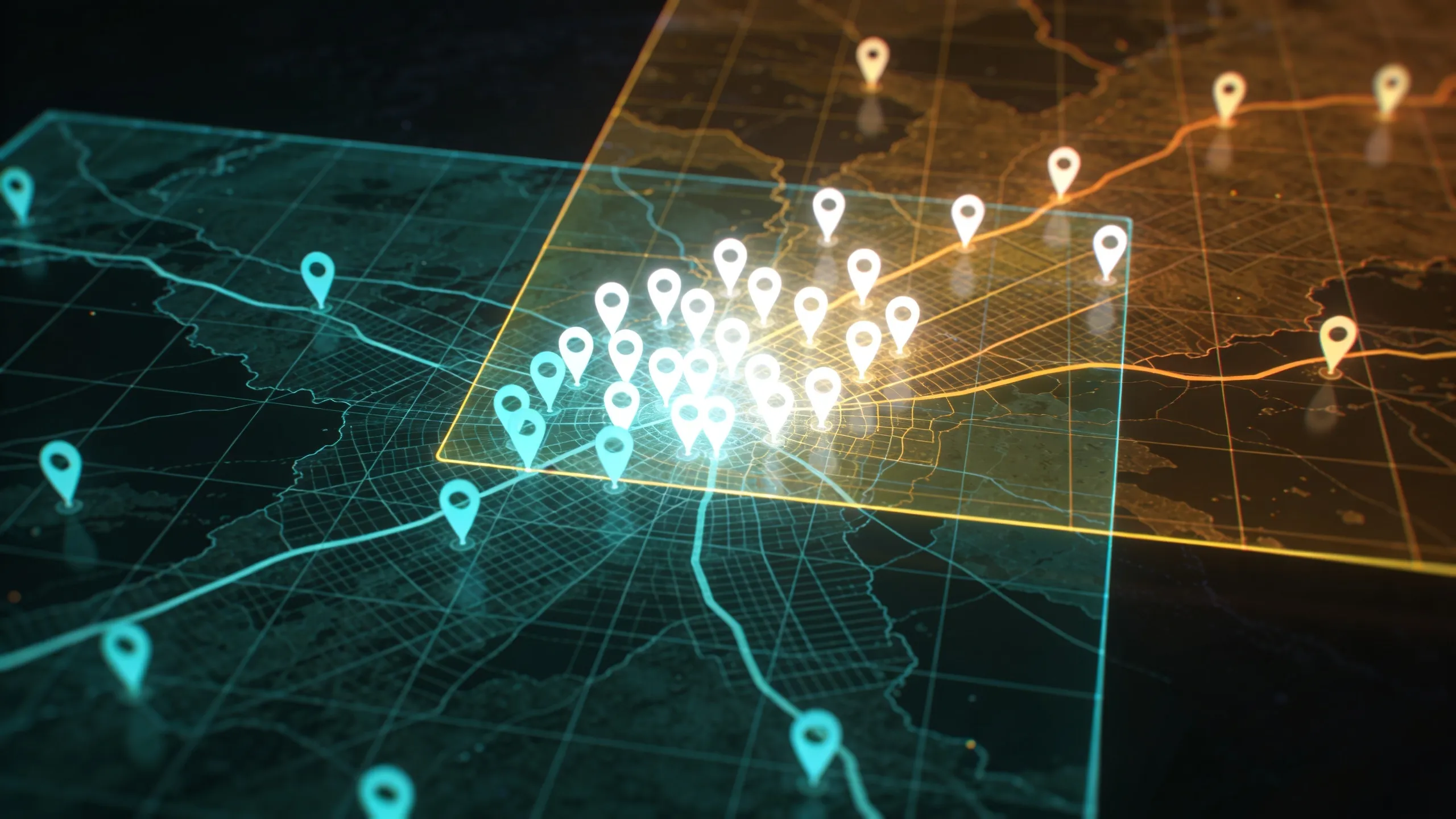
Google Maps offers unmatched scale and market penetration. Most users quickly find multiple candidates and can verify basic contact information. But this breadth introduces classification challenges. Searches for "body shop" may surface mechanics, detailing services, towing operations, and hybrid shops offering broad service menus.
Each platform has distinct failure modes:
- AutoBodyShopNear.com risk: limited real-time operational freshness indicators within the platform itself
- Google Maps risk: categorical ambiguity — users have to manually distinguish collision specialists from adjacent service providers
AutoBodyShopNear.com prioritizes first-pass relevance. Google Maps emphasizes breadth and currency.
How to Find a Body Shop: Google Maps Search vs Repair-Type Filtering
Intent alignment determines search effectiveness. Body-repair decisions often require service-specific searches — not "car service," but "paintless dent removal," "bumper paint blending," or "collision repair."
AutoBodyShopNear.com distinguishes itself through repair-type filtering. Users can identify shops based on specific service needs, then narrow geographically using directory pathways. This structure is valuable when you know what repair you need but don't know which shops can do it.
Specialized entry points include collision repair, paintless dent repair, and hail damage repair directories.
Google Maps operates through query-driven, map-first discovery. It's excellent for broad local exploration, but it lacks body-repair-type filtering. Textual searches can return mixed results: PDR specialists alongside general body shops, detailers, and multipurpose auto service providers — depending on local business classification and keyword patterns.
Specialization delivers measurable efficiency: fewer irrelevant results, faster shortlisting. Google Maps adds value later in the workflow but isn't structurally optimized for collision-service precision.
Reviews and Trust
Trust factors strongly influence repair decisions, given the safety implications, insurance involvement, and costs involved.
Google Maps provides obvious social-proof advantages. It aggregates large review populations with immediate signals: rating averages, review volume, recency, photos, and business owner responses. This information serves as an initial confidence screen.
But review scale introduces manipulation risks. Fake, incentivized, or selectively curated reviews persist across large open platforms. Review quality varies dramatically by business and market — a 4.8 rating may reflect strong workmanship, excellent customer service, aggressive reputation management, or some combination.
AutoBodyShopNear.com doesn't have a native review system. That eliminates internal manipulation risks but removes the quick confidence signals many users expect.
Users on AutoBodyShopNear.com typically verify trust through:
- Google Maps reviews and historical photos
- Third-party review platforms
- Shop websites featuring before/after galleries
- Direct calls exploring certifications, warranty terms, and insurer relationships
Google Maps excels as a verification layer; AutoBodyShopNear.com strengthens intent alignment. Over-reliance on star ratings risks missing fit problems; ignoring external validation means missing quality warnings.
Real-Time Info and Navigation
Practical logistics — operational hours, accessibility, and same-day feasibility — influence actual shop selection.
Google Maps performs strongly here. It typically shows:
- Current hours and holiday exceptions
- Traffic-based busy-time estimates
- Immediate call buttons
- Traffic-aware routing guidance
- Street View storefront visualization
These features reduce friction at decision moments when you're ready to act. Post-accident scenarios particularly benefit from one-tap navigation and immediate contact access.
AutoBodyShopNear.com is a specialized directory, not a navigation platform. It doesn't have turn-by-turn routing, real-time hours monitoring, or street-level visual context — expected tradeoffs in a specialized directory model.
This difference is better understood as complementary rather than competitive:
- Use AutoBodyShopNear.com to identify likely-fit candidates quickly
- Use Google Maps to validate hours, call timing, traffic conditions, and route practicality
For same-day urgency, Google Maps has clear operational advantages. For initial relevance and service fit, AutoBodyShopNear.com minimizes wasted effort before logistics verification begins.
Consumer Education
Most drivers make body repair decisions infrequently and don't have much contextual knowledge. When repairs become necessary, plain-language guidance on terminology, repair types, and good questions to ask improves decision quality.
AutoBodyShopNear.com includes consumer-focused educational content through its blog. This material helps users distinguish service types, avoid booking mismatches, and formulate better intake questions. A consumer deciding between conventional dent work and paintless dent repair benefits from understanding scope implications, paint considerations, and cost structures before contacting shops. Same with collision claim handlers — they ask better questions when they understand basic process stages.
Google Maps is a business directory, not an educational resource for repair decision-making. It provides listings and user-generated signals, not structured learning content about repair categories.
Even brief pre-contact reading improves shop-consumer alignment. That's a real advantage for AutoBodyShopNear.com.
Advertising and Bias
Discovery platforms should be evaluated not just for what they display, but for why results appear in the order they do.
AutoBodyShopNear.com declares advertising-free result ordering. Consistent implementation here reduces a common concern: paid visibility overshadowing relevance at a critical decision moment.
Google Maps incorporates both organic and paid placements across many markets and query types. Sponsored positions typically receive labels, but users scanning quickly may click top results without distinguishing ad-driven prominence from organic merit.
This doesn't make Google Maps unusable or anti-consumer. It reflects a platform serving multiple stakeholders: user utility, business visibility, and ad revenue.
Top placement doesn't guarantee quality. Sponsored ranking deserves validation against category fit, review depth, and conversation quality during direct contact.
Best Body Shop Finder for Your Situation
Both platforms offer utility for different consumer profiles and decision contexts.
AutoBodyShopNear.com suits:
- Consumers who already know they need collision-focused work
- Users who prefer service-type-first search workflows
- People seeking cleaner, less mixed result sets
- Shoppers comparing city and state directory options
Google Maps suits:
- Users needing immediate routing and call actions
- Consumers prioritizing review volume in initial screening
- People evaluating storefront access, traffic conditions, and alternatives
- Urgent, in-motion decision scenarios where map context matters
Most real-world scenarios benefit from using both platforms sequentially rather than picking one exclusively.
Using Both Together: A Practical Workflow
A combined approach leverages each platform's strengths while offsetting individual limitations.
Step 1: Start with Specialization
Begin on AutoBodyShopNear.com and identify candidates matching your actual repair needs. Branch into service-specific pages — collision repair, paintless dent repair, or hail damage repair directories — as needed.
Goal: produce a shortlist of shops likely to perform the exact repair type you need.
Step 2: Validate with Google Maps
Check each shortlisted shop on Google Maps for:
- Hours and same-day availability signals
- Review recency and photographic evidence
- Business response patterns to complaints
- Route convenience and traffic timing
Goal: stress-test fit and logistical feasibility before making first contact.
Step 3: Call with a Structured Script
Ask each shop the same core questions:
- Do they perform this exact repair type in-house?
- What inspection and estimate processes apply?
- How are supplements or hidden damage addressed?
- What warranty terms apply?
- How do timelines adjust based on parts delays?
Goal: minimize ambiguity and compare responses consistently.
Step 4: Make a Confidence-Based Choice
Select the shop that combines repair-type fit, trustworthy external signals, and workable logistics. Don't pick based solely on nearest distance or top ranking.
A two-platform approach takes more time than single-click selection, but it meaningfully reduces mismatch risk.
Sources
- I-CAR (Inter-Industry Conference on Auto Collision Repair) — collision repair industry training standards
- NHTSA Vehicle Safety — federal vehicle safety and crashworthiness standards
FAQ
Is AutoBodyShopNear.com a Replacement for Google Maps?
Not entirely. AutoBodyShopNear.com excels at specialized body-shop discovery and repair-type alignment, while Google Maps dominates real-time logistics, navigation, and review visibility. Most consumers benefit from using both.
Why Can Google Maps Results Feel Inaccurate for Body Shop Searches?
Because Google Maps serves general-purpose local discovery. It frequently groups adjacent service categories, surfacing relevant and tangentially relevant businesses together. Users need extra manual filtering to isolate true collision and body specialists.
Are Google Maps Reviews Still Useful If Fake Reviews Exist?
Yes, but interpretation requires care. Review volume and rating averages are starting points, not conclusions. Examine recency, detail quality, photographic evidence, and owner responses rather than relying solely on star ratings.
Can Consumers Find Niche Services Like Paintless Dent Repair More Easily on AutoBodyShopNear.com?
Generally, yes. The platform's body-shop focus and repair-type filtering capabilities shorten discovery time for service-specific needs compared to broad map searches.
What Is the Best Low-Risk Way to Choose a Body Shop in 2026?
Use a dual-check process: shortlist specialized candidates first, then validate each option on Google Maps and by phone. This balances relevance, trust signals, and practical logistics.
Final Takeaway
This comparison is really about specialized versus general-purpose approaches — not absolute superiority.
AutoBodyShopNear.com cuts category noise and improves search relevance for body-repair intent. Google Maps maximizes local business discovery with rich real-time context and actionability. Each addresses different parts of the decision chain.
For higher-confidence selection in 2026, combining both is most practical: use specialization to identify likely-fit shops, then apply map intelligence and external trust signals to verify and execute.