
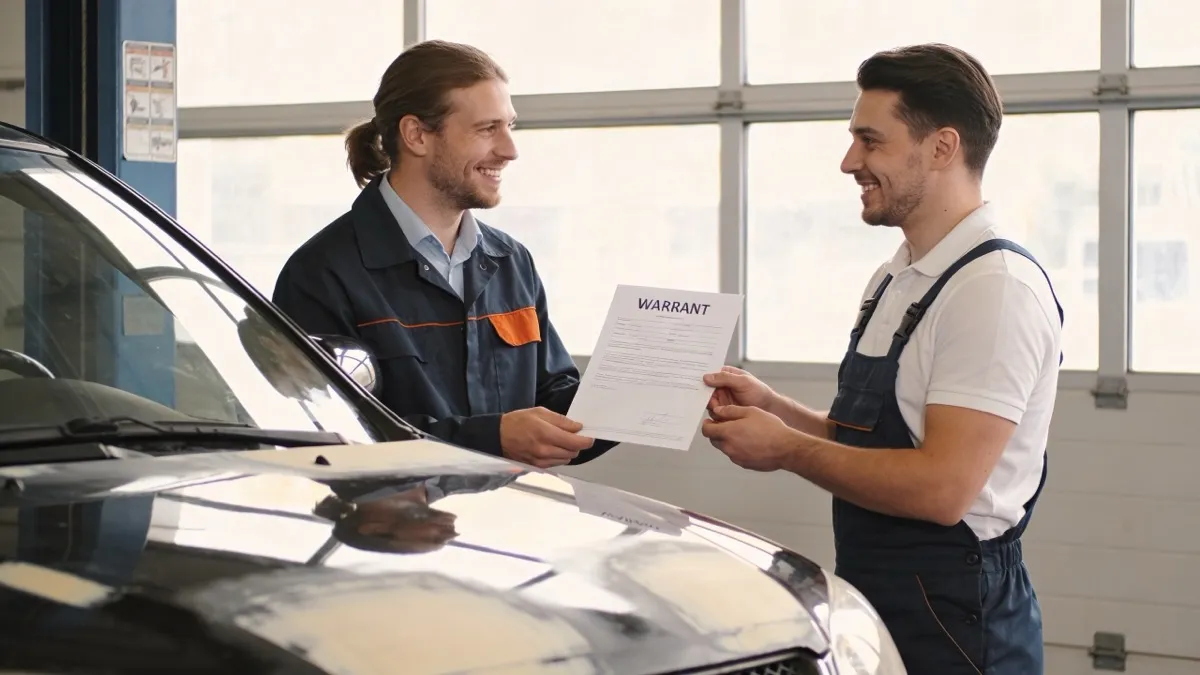
Every body shop offers a warranty, but the fine print matters. Here's what's really covered, what's excluded, and how to tell if the warranty means anything.
Types of Auto Body Shop Warranties
- Workmanship warranty, Covers defects in the repair itself: peeling paint, poor panel alignment, visible body filler cracking
- Parts warranty, Covers defects in the replacement parts used (usually separate from the shop's own work warranty)
- Paint warranty, Specifically covers paint failures like peeling, flaking, or fading caused by improper application
- Lifetime warranty, Covers the repair for as long as you own the vehicle
- Limited warranty, Covers the repair for a defined period, typically 1–5 years
What's Typically Covered Under an Auto Body Warranty
A solid auto body shop warranty covers failures that come directly from the repair work itself:
- Paint peeling, flaking, or bubbling on repaired panels
- Color mismatch that worsens over time (some initial fading is normal)
- Body filler that cracks or separates from the panel
- Panel alignment issues that develop after the repair was made
- Welding failures on structural repairs
- Parts that fail due to manufacturing defects (usually covered by the parts manufacturer directly)
What's NOT Covered
Read the exclusions carefully. This is where many auto body shop warranties fall apart. Common exclusions include damage from new accidents, environmental damage from bird droppings or tree sap, and anything labeled "normal wear and tear."
- Damage from new accidents or impacts after the repair
- Rust caused by stone chips or environmental exposure, not the repair itself
- Fading that matches the rest of the car (natural paint aging over time)
- Damage from automatic car washes with brushes
- Issues caused by modifications made after the repair
- Damage from incorrect products applied to the repaired area (wrong wax, solvent-based cleaners)
The "Lifetime Warranty" Truth
"Lifetime warranty" sounds impressive, but the details matter. Most lifetime warranties only cover workmanship, the shop's labor, not the parts. And "lifetime" means as long as you own the car, not the life of the vehicle itself.
The bigger question is whether the shop will still be around when you need to make a claim. A lifetime warranty from a shop that closes in three years is worth nothing. Established shops with decades behind them back their lifetime warranties because their reputation depends on actually honoring them.
Get the warranty in writing before repairs start. If a shop hesitates to put it on paper, their verbal "lifetime warranty" isn't something you can count on.
Insurance-Backed Guarantees
When you use an insurance company's preferred shop, the insurer often provides their own guarantee on the work, separate from the shop's warranty. This typically covers workmanship for as long as you own the car.
The real advantage of an insurance-backed guarantee is that the insurer won't go out of business. If the original shop closes or refuses to honor the work, the insurer will pay another shop to correct it. That's one genuine benefit of using a direct repair program shop, even if you generally prefer choosing your own.
Protecting Yourself
- Get all warranty terms in writing before you authorize repairs
- Keep every piece of repair documentation, invoices, photos, the written estimate
- Follow any maintenance requirements the warranty specifies (washing methods, avoiding certain products)
- Inspect the repair carefully at pickup and document any concerns on the spot
- Report warranty issues as soon as you notice them, don't wait and hope they resolve
- If a shop won't honor the warranty, contact your state's consumer protection office
"A warranty is only as good as the shop standing behind it. Choose a shop with a track record, get everything in writing, and inspect the work before you drive away."