
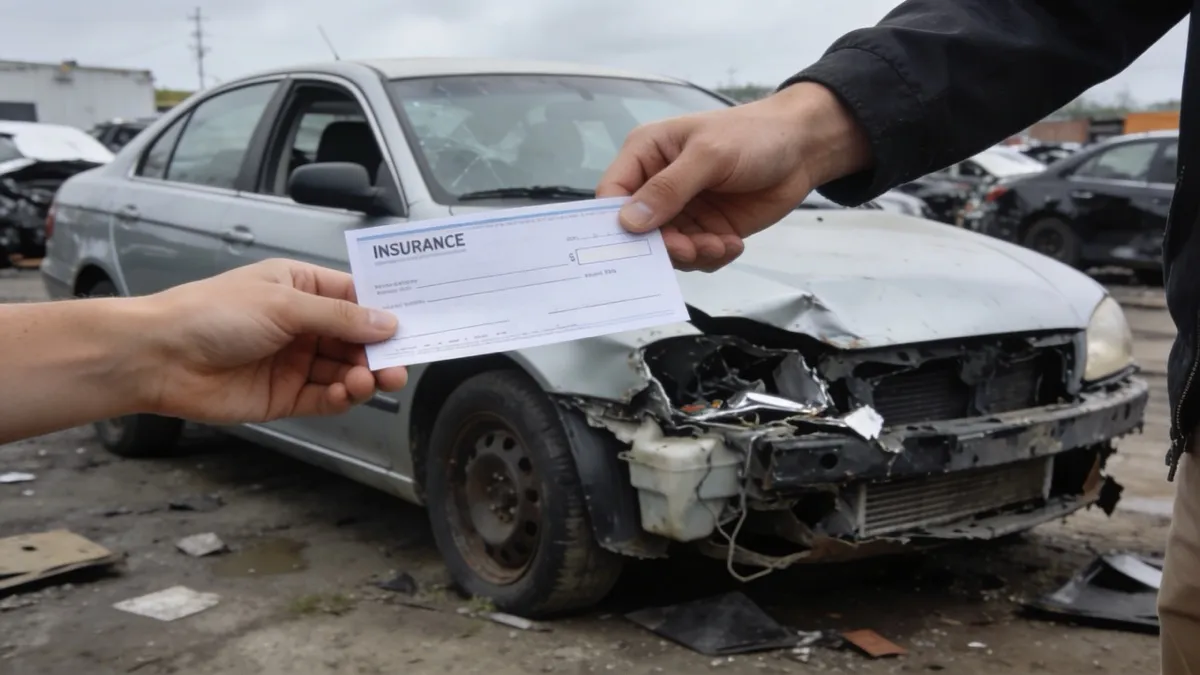
Your insurer called it a total loss. Here's what that actually means, how they calculate the value, and what you can do if the number feels wrong.
What "Total Loss" Actually Means
Hearing that your car is a "total loss" is jarring. It sounds like the car is destroyed beyond recognition. But in insurance terms, it just means the repair cost exceeds a certain percentage of the car's value, and that threshold is often lower than you'd expect.
A total loss declaration means your insurance company has determined that repairing your car would cost more than they're willing to pay relative to the car's current market value. In most states, this happens when repair costs hit 65-80% of the car's value.
This doesn't mean your car is destroyed. A car can be "totaled" with damage that looks relatively minor, especially if it's an older vehicle with lower market value or if the damage involves expensive components like airbags, sensors, or frame rails.
A deployed airbag alone can add $3,000-6,000 to a repair estimate. On a car worth $10,000, that single item can push the claim past the total loss threshold before they even look at body damage.
How They Calculate Your Car's Value
Insurers use the "actual cash value" (ACV) of your car, what it was worth immediately before the accident. They determine this using a combination of tools and comparable sales:
- Valuation databases like CCC, Mitchell, or Audatex that aggregate market data
- Comparable vehicles currently for sale or recently sold in your geographic area
- Your car's specific mileage, condition, options, and maintenance history
- Regional market adjustments, the same car is worth different amounts in different areas
The valuation is supposed to reflect what you could sell the car for on the open market. In practice, insurers sometimes undervalue cars by using comps from farther away or ignoring condition upgrades.
Total Loss Thresholds by State
Each state has its own rules for when a car can be declared a total loss. Some set a specific percentage, if repairs exceed that percentage of the car's ACV, it's a total loss. Others use a "total loss formula" that factors in salvage value.
Check your state's threshold. In states with lower thresholds (around 50-60%), cars are totaled more frequently. If your car is close to the line, providing evidence of higher market value can tip the decision toward repairable.
What If You Disagree With the Value?
You don't have to accept the insurer's first offer. If the valuation seems low, you've several options:
- Gather your own comps, Find 5-10 comparable vehicles for sale in your area and present the average
- Document condition, Receipts for recent maintenance, new tires, or upgrades add value the database might miss
- Request the valuation report, Insurers must show you how they arrived at their number
- Hire an independent appraiser, Most policies include an appraisal clause for disputes
- File a complaint, Your state's department of insurance can intervene if the offer is unreasonable
Can You Keep Your Totaled Car?
Yes, in most states. The insurer deducts the salvage value from your payout, and you keep the car. You'll need to get a salvage title, which affects future resale value and may require a rebuilt inspection before you can register it again.
Keeping a totaled car makes sense only if the actual repair cost is manageable and the car is safe to drive. Some structural damage may look repairable but compromises crash protection. Get an independent assessment before committing.
Gap Insurance: When You Owe More Than It's Worth
If you financed your car and owe more than it's worth, which is common in the first few years of ownership, a total loss means the insurance payout won't cover your loan balance. Gap insurance covers this difference.
Without gap coverage, you're responsible for the remaining loan balance after the insurance payout. On a $35,000 car that's worth $25,000 when it's totaled, that's $10,000 out of your pocket, for a car you no longer have.
What Happens After a Total Loss
- The insurer makes a settlement offer based on your car's ACV minus your deductible
- You negotiate or accept the offer
- You've a limited time (usually 30 days) to remove personal belongings from the car
- The insurer takes possession of the car (or you keep it with a salvage deduction)
- You receive payment, typically within 1-2 weeks of accepting the settlement
- Your title status changes if you keep the vehicle
"A total loss isn't the end of the road, it's a financial negotiation. Know your car's value, understand your rights, and don't accept less than what's fair."