PDR ads are everywhere. But does it actually work for your dent? Here's when PDR saves you money and when it just wastes time.
What Is Paintless Dent Repair?
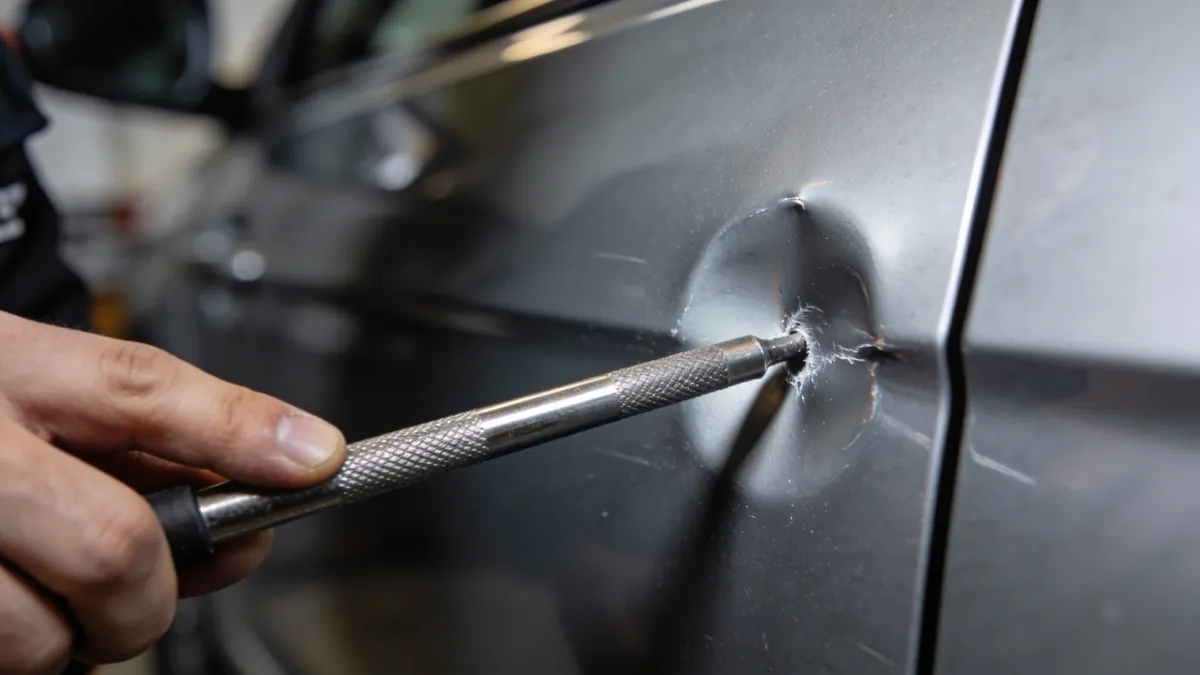
PDR is a technique where skilled technicians use specialized metal rods and tools to push dents out from behind the panel, restoring the original shape without touching the factory paint. No sanding, no filler, no repainting. The panel goes back to its original form.
It works because modern automotive paint is flexible enough to bend and return without cracking, up to a point. The metal underneath has similar memory when the deformation isn't too severe.
When PDR Works Best
- Hail damage. The classic PDR use case: dozens of small dents across multiple panels, all without paint damage.
- Door dings. The dent from someone opening their car door into yours in a parking lot. PDR was basically made for this.
- Minor dents with no paint damage. If the paint surface is intact and the dent is shallow, PDR is the right call.
- Dents on large, accessible panels. Hoods, roofs, doors, and fenders with good access from behind respond well.
For a typical door ding, PDR costs $75–150 and takes 30–60 minutes. Traditional body work for the same dent runs $300–500 and takes 1–2 days. That's a significant difference.
When PDR Won't Work
- Paint is cracked or chipped. Once the paint surface is compromised, PDR alone won't give a clean result. The area needs repainting.
- Sharp creases. Dents with a defined crease line stretch the metal beyond what PDR can restore.
- Edge dents. Dents on panel edges, body lines, or near trim are difficult to access and push back properly.
- Large, deep dents. If the metal has stretched significantly, it can't be pushed back to its original shape.
- Aluminum panels. Some aluminum body panels are less forgiving than steel. PDR is possible but requires more skill, and not every tech has it.
Cost Comparison: PDR vs Traditional
PDR typically costs 40–60% less than conventional body repair for eligible dents. Here's a rough breakdown:
- Single door ding: PDR $75–150 vs traditional $300–500
- Minor fender dent: PDR $150–300 vs traditional $500–900
- Hail damage (full car): PDR $1,500–3,500 vs traditional $4,000–8,000
- Hood dent (palm-sized): PDR $200–400 vs traditional $600–1,200
Beyond cost, PDR preserves your factory paint, which matters for resale value. A repainted panel always shows up in a paint thickness gauge reading. Buyers notice.
Finding a Good PDR Technician
PDR quality depends almost entirely on the technician's skill. This isn't a job where equipment compensates for weak hands. An experienced tech with simple tools will outperform a novice with expensive gear every time. That's just how it is.
- Look for technicians with 5+ years of experience. PDR has a steep learning curve.
- Ask to see before-and-after photos of similar repairs.
- Check reviews that specifically mention PDR work.
- Avoid mobile techs who "guarantee" they can fix anything, reputable techs will tell you upfront if PDR isn't the right fit.
What About DIY PDR Kits?
They work for very shallow dents in ideal locations. On anything more serious, they can make things worse.
A common DIY mistake is using a glue-pull kit and accidentally cracking the paint or creating high spots that look worse than the original dent. If the dent is worth fixing, it's worth paying a professional $100 to do it right.
PDR is one of the few auto repair services where you consistently get more than you pay for. When it works, it's the best option available.